wayground logo

Free Printable Worksheets

NEW

Font size

S
M
L
XL
Worksheets

Weather review

Total questions: 60

Worksheet time: 26mins

Name
Class
Date
1.
What causes Hurricanes?
a)
Warm Ocean Water
b)
Convection
c)
Tornadoes that make it to the Ocean
d)
Earthquakes in the Ocean
2.
A High Pressure system generally brings...
a)
Wet Weather
b)
Clear Skies
c)
Thunderstorms
d)
Tornadoes
3.
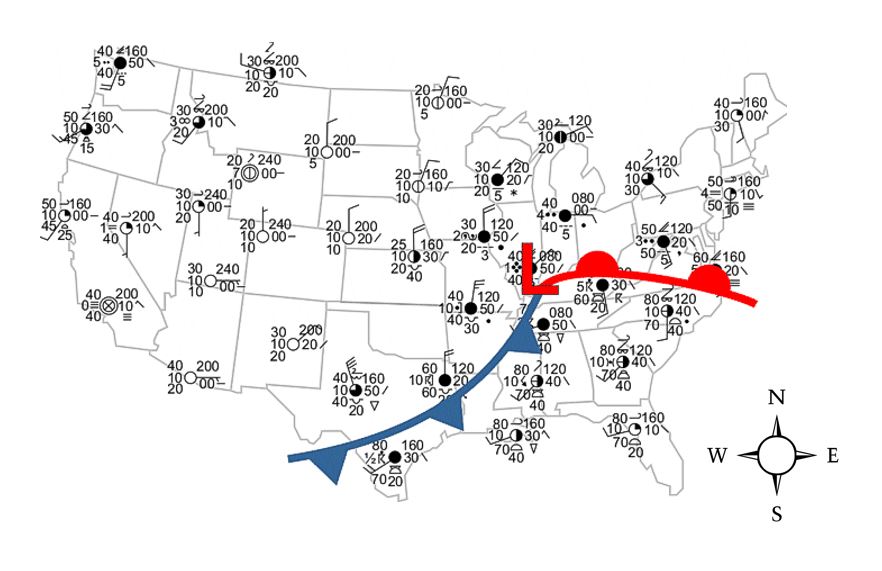
In what direction is the warm front traveling?
a)
North West
b)
North East
c)
South West
d)
South East
4.

Atmospheric conditions with short term changes of a certain place and at a certain time is called

a)

Climate

b)

Weather

c)

Both Climate and Weather

5.

Pressure moves from

a)

Low to High

b)

High to Low

c)

It depends on the temperature

d)

It depends on the wind speed

6.

High Altitude has

a)

low temperatures

b)

high temperatures

c)

temperature remains constant

7.

Which tool measures air pressure?

a)

Wind sock

b)

Thermometer

c)

Barometer

d)

Anemometer

8.
A pattern of warm air rising and cooler air sinking is called
a)
Convention Ride
b)
Coriolis Effect
c)
Convection Cell (current)
d)
Conduction Cell
9.
What is the MAIN cause of winds?
a)
humidity
b)
earth's tilted axis
c)
the gravitational pull of the moon
d)
the unequal heating of the earth's surface
10.
What kind of weather do you expect when the air pressure is LOW?
a)
cool and dry
b)
cloudy and rainy
11.
The sun heats the Earth's surface by which type of heat transfer?
a)
Conduction
b)
Convection
c)
Radiation
d)
Thermohaline
12.

Gas in the atmosphere that protects the Earth from the Sun's rays

a)

atmosphere

b)

troposphere

c)

ozone

d)

nitrogen

13.

The gas that makes up most of Earth’s atmosphere

a)

lifting

b)

troposphere

c)

wind funnel

d)

nitrogen

14.

The highest layer of the atmosphere is

a)

troposhphere

b)

mesosphere

c)

stratosphere

d)

exosphere

15.

Meteor showers occur in the

a)

troposhphere

b)

mesosphere

c)

stratosphere

d)

exosphere

16.
The layers of the atmosphere in order from bottom to top are
a)
troposphere, stratosphere, mesosphere, thermosphere, exosphere
b)
troposphere, mesosphere, atmosphere, thermosphere
c)
mesosphere, thermosphere, troposphere, stratosphere, exosphere
d)
thermosphere, stratosphere, mesosphere, troposphere, exosphere
17.
The layer of the atmosphere containing the ozone layer is
a)
troposphere
b)
stratosphere
c)
thermosphere
d)
mesosphere
18.
The layer of the atmosphere containing our weather is
a)
thermosphere
b)
stratosphere
c)
troposphere
d)
mesosphere
19.
The layer of the atmosphere where meteors burn up
a)
mesosphere
b)
thermosphere
c)
troposphere
d)
stratosphere
20.
Altitude is the  (use the internet for this answer)
a)
distance between the moon and the sun
b)
weight of a mountain divided by the ocean
c)
place where things drop from the sky
d)
height of an object above the ground or sea level
21.
The greenhouse effect causes the Earth's air to
a)
heat up
b)
cool down
c)
blow up
d)
turn brown
22.
The gradual increase in the temperature of the atmosphere is known as ________________.
a)
Greenhouse Effect
b)
Global Warming
c)
Carbon Dioxide Gases
d)
Methane
23.

A large body of air that has a same temperature and humidity is called ___________________

a)

front

b)

air mass

c)

water vapor

d)

poles

24.

A __________________ is the boundary between two air masses.

a)

air mass

b)

water vapor

c)

poles

d)

front

25.

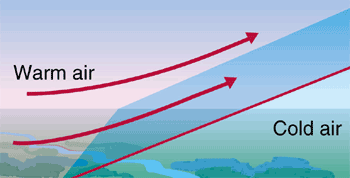
What type of front shown in this picture?

a)

cold front

b)

warm front

c)

air mass

d)

stationary front

26.

Who use maps to show the current weather and how it will change?

a)

meteorologist

b)

doctor

c)

journalist

d)

teacher

27.
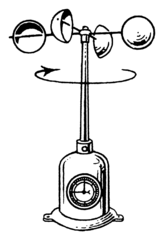
This weather instrument is a...
a)
anemometer
b)
barometer
c)
wind vane
d)
thermometer
28.
This weather instrument is an...
a)
wind vane
b)
anemometer
c)
barometer
d)
thermometer
29.
A severe storm that involves strong winds and forms over warm water is:
a)
tornado
b)
thunderstorm
c)
hurricane
d)
blizzard
30.
A severe storm which involves a funnel cloud forming from a cumulonimbus cloud:
a)
hurricane
b)
tornado
c)
thunderstorm
d)
blizzard
31.
Because the earth is spinning on its axis, the global winds appear to curve. This is known as the __________ ________.
a)
Coriolis Effect
b)
Greenhouse Effect
c)
Climate Effect
d)
Atmosphere Effect
32.

This weather instrument takes pictures of clouds from space...

a)

rain gauge

b)

U.F.O.

c)

satellite

d)

anemometer

33.

Discovery of which weather predicting tool helps forecast weather more accurately.

a)

camera

b)

iPhone 5

c)

satellite

d)

radar

34.

If you know a blizzard is coming, you should buy a lot of...

a)

food and water

b)

movies and DVDs

c)

chocolate and Skittles

d)

sand and rocks

35.

How many mph do winds have to be to create a blizzards?

a)

80

b)

65

c)

35

d)

15

36.

What's the definition of a Blizzard?

a)

A serious injury caused by exposure to extreme cold

b)

A term used to describe how cold air feels when blown by air

c)

A heavy snowstorm with strong winds

d)

A huge amount of snow that slides down the side of a mountain

37.
___________is the result of the weight of a column of air pushing on an area.
a)
air pressure
b)
density
c)
volume
d)
none of the above
38.
As you climb up a mountain what happens to the air pressure?
a)
decreases
b)
increases
c)
stays the same
39.
Cold air exerts _____________ pressure than warm air.
a)
the same
b)
more
c)
less
40.
Air pressure is greater _______.
a)
at the top of the mountain
b)
at the bottom of the mountain
c)
at the center of the mountain
41.
Altitude is greater __________.
a)
at the bottom of the mountain
b)
at the top of the mountain
c)
at the center of the mountain
42.
Density of air is greater ________.
a)
at the top of the mountain
b)
at the bottom of the mountain
c)
at the center of the mountain
43.
Air pressure does not crush objects on earth
a)
because more air pushes down than up
b)
because gravity keeps air pressure away
c)
because air pressure pushes in all directions
d)
because the Earth has an opposing force of gravity
44.
The amount of mass in a unit volume of a substance
a)
mass
b)
pressure
c)
volume
d)
density
45.
Why is it hard to breath at high altitudes?
a)
There is too much oxygen in this location.
b)
There is a higher density of air molecules.
c)
There is a low density of air molecules.
d)
The air pressure is greater than at low altitudes.
46.
Fewer molecules further apart, means density is:
a)
high
b)
low
47.

Where do MARITIME air masses form?

a)

Over water

b)

Over land

48.

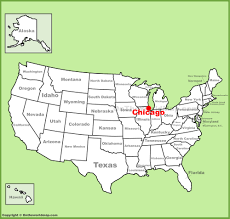
What type of air mass is found over CHICAGO?

a)

Maritime Polar

b)

Maritime Tropical

c)

Continental Polar

d)

Continental Tropical

49.

Which type of air mass is HOT and DRY?

a)

Maritime Polar

b)

Maritime Tropical

c)

Continental Polar

d)

Continental Tropical

50.

Which type of air mass is COLD and HUMID?

a)

Maritime Polar

b)

Maritime Tropical

c)

Continental Polar

d)

Continental Tropical

51.

Which type of air mass is HOT and HUMID?

a)

Maritime Polar

b)

Maritime Tropical

c)

Continental Polar

d)

Continental Tropical

52.

Which type of air mass is COLD and DRY?

a)

Maritime Polar

b)

Maritime Tropical

c)

Continental Polar

d)

Continental Tropical

53.

Hurricanes form in which type of air mass?

a)

Continental polar

b)

Continental tropical

c)

Maritime polar

d)

Maritime tropical

54.

Blizzards form in which type of air mass?

a)

Continental polar

b)

Continental tropical

c)

Maritime polar

d)

Maritime tropical

55.

This is the symbol for a _____________ weather front.

a)

Cold

b)

Warm

c)

Stationary

d)

Occluded

56.

A _____________ weather front occurs when a cold air mass and a warm air mass meet, but cannot move one another so they both stay still for several days.

a)

Cold

b)

Warm

c)

Stationary

d)

Occluded

57.

Why does warm air rise above cold air?

a)

Warm air is less dense

b)

Warm air is more dense

c)

Cold air is stronger than warm air

58.

What is the correct symbol for maritime polar?

a)

MP

b)

Mp

c)

mP

d)

mp

59.
A front is
a)
where warm air is cooling at earth's surface
b)
a line where hot and cold air are separating
c)
a line where two different air masses meet
d)
where cold air is rising and forming rain clouds
60.
What direction is the cold front moving on the map? 
a)
Southwest
b)
Northwest
c)
Southeast
d)
Northeast