wayground logo

Free Printable Worksheets

Font size

S
M
L
XL
Worksheets

Quiz 9 (Ess. 7, 12, 14)

Total questions: 89

Worksheet time: 1hrs 4mins

Name
Class
Date
1.
Hull House
a)
Settlement House in Chicago run by Jane Addams
b)
Settlement House in New York run by Samantha Culiver
c)
Settlement House in San Francisco run by Jeff Bezos
d)
Ellis Island of Chicago
2.
Someone who opposes immigration 
a)
Factory Owners
b)
Nativists
c)
Populists
d)
Trusts
3.
What act explains this picture?
a)
Chinese Exclusion Act
b)
Nativism Act
c)
Quota System
4.
The total or complete control of a service, product or industry that prevents competition
a)
Union
b)
Robber Barron
c)
Monopoly
d)
Captain of Industry
5.
In the late 1800s and early 1900s, what was the difference between "new" immigration and "old" immigration?
a)
"Old" immigrants were from South America, and "new" immigrants were from Africa.
b)
Old" immigrants were from Asia, and "new" immigrants were from South America.
c)
"Old" immigrants were from western Europe, and "new" immigrants were from eastern and southern Europe.
d)
"Old" immigrants were from eastern and southern Europe, and "new" immigrants were from western Europe.
6.
Which Muckraker exposed problems with the meat-packing industry in the book 'The Jungle'?
a)
Jacob Riis
b)
Ida B. Wells
c)
Upton Sinclair
d)
Ida Tarbell
7.
Muckrakers were
a)
progressive reformers who sought legal changes to problems
b)
politicians who passed laws cleaning up the "muck" in society
c)
governors who wanted to get rid of monopolies
d)
journalists who wrote about the problems in society
8.
Who wrote the “History of the Standard Oil Company,” in 1902 and showed how Rockefeller’s rise was based on unfair business practices? 
a)
Ida B. Wells 
b)
Ida Tarbell 
c)
Jacob Riis
d)
Upton Sinclair
9.
Photographed conditions of the urban poor in “How the Other Half Lives.” Examined the conditions of the poor in America’s cities. 
a)
Upton Sinclair 
b)
Lincoln Steffens 
c)
Jacob Riis 
d)
Frank Norris 
10.
1904 - Exposed corruption in city and state gov’t in his book, “The Shame of the Cities.”
a)
Lincoln Steffens 
b)
Jacob Riis 
c)
Upton Sinclair 
d)
WEB DuBois 
11.
Someone who opposes immigration 
a)
Factory Owners
b)
Nativists
c)
Populists
d)
Trusts
12.

Match this term


Monopoly

a)

Company controls the market

b)

Antimonopoly law that supported union

c)

Union Tactic

d)

Own many businesses

13.

Match this term


Sherman Antitrust

a)

Union tactic

b)

Antimonopoly law that supported unions

c)

First federal law against monopolies

d)

company controls the market

14.

Match this term


Trust

a)

Tennessee labor conflict

b)

workers organization

c)

own many businesses

d)

company controls the market

15.

Match this term


Clayton Antitrust

a)

Tennessee labor conflict

b)

First federal law against monopolies

c)

Antimonopoly law that supported unions

d)

Workers organization

16.
The process whereby a minority group gradually gives up its own culture and adopts the culture of the majority is known as
a)
assimilation.
b)
innovation.
c)
diffusion.
d)
acculturation.
17.
Immigrants adapted to life in the United States how?
a)
By settling in groups of people who shared the same culture.
b)
By living in crowded tenements in large cities.
c)
By becoming cowboys and cattle ranchers in the west.
d)
By learning the ways of Native Americans and moving to reservations.
18.

Immigrants from Europe entered through which immigration center?

a)

Ellis Island

b)

Angel Island

19.

Immigration station on the East Coast in the New York Harbor

a)

Ellis Island

b)

Angel Island

20.

Once in America, most new immigrants settled in what type of environment?

a)

Ethnic neighborhoods and big cities

b)

suburbs of big cities

c)

rural farmland

21.
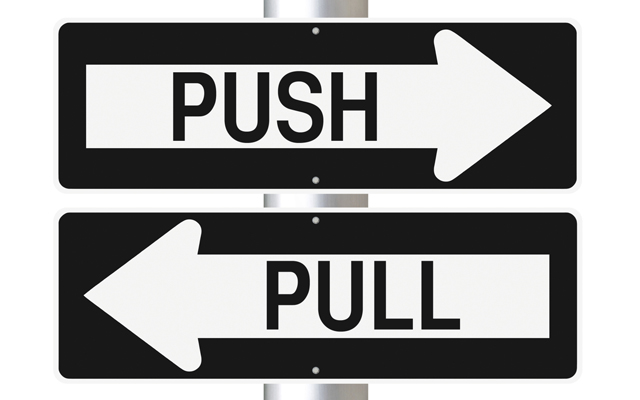
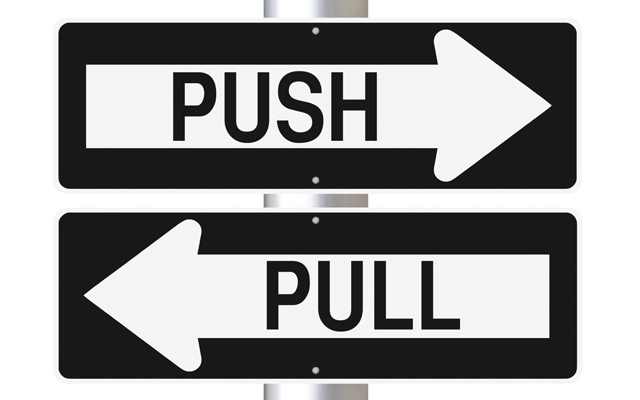
Push factors are....
a)
good things that draw a person to another country
b)
reasons that drive a person out of their country
c)
reasons people migrate to a new area
22.
Pull factors are....
a)
good things that draw a person to another country.
b)
reasons people leave an area
c)
reasons that drive a person out of their country
23.

The settlement of the dispute over Japanese immigration by President Theodore Roosevelt was called the

a)

Root-Takahira Agreement

b)

Great White Fleet

c)

Gentleman's Agreement

d)

Panama Canal Crisis

24.

In the late 1800s a group of reformers known as _____ worked to improve society.

a)

Progressives

b)

Seventeenth Amendment

c)

muckrakers

d)

settlement

25.

Wisconsin’s Republican governor _____ decreased the power of political machines and used university professors and other experts to help write new laws and work in state agencies.

a)

Robert M. La Follette

b)

William Marcy Tweed

c)

Progressives

d)

Seventeenth Amendment

26.
This famous famous conservationist was also the 26th president of the United States.
a)
John J Audobon
b)
Gifford Pinchot
c)
Theodore Roosevelt
d)
Izaak Walton
27.
What nickname did Roosevelt get after breaking up monopolies with the Sherman Anti-Trust Act?
a)
Trustbuster
b)
Monopolybuster
c)
Theodore Roosevelt Destroyer of Trusts
d)
Slayer of trusts and eradicator of monopolies
28.
This word means support for different sides during war; there were the Allied and Central powers during WWI.
a)
Nationalism
b)
Imperialism
c)
Alliances
d)
Militarism
29.
This word means strengthening a country's military; it's a cause of World War I.
a)
Nationalism
b)
Militarism
c)
Alliances
d)
Imperialism
30.
When World War I began, the official United States policy was
a)
to enter on the side of the Allied Powers
b)
the enter on the side of the Central Powers
c)
to remain militarily and politically neutral
d)
to support the Central Powers by providing war materials
31.
What term describes building an empire by conquering other nations?
a)
Isolationism
b)
Repubicanism
c)
Militarism
d)
Imperialism
32.
What did Wilson believe about navigation of seas
a)
the US should dominate navigation
b)
there should be freedom of the seas
c)
the allies should have free access
d)
there should be a number of trade barriers
33.

The control and exploitation of a country by a more powerful country is known as what?

a)

Imperialism

b)

Socialism

c)

Communism

d)

Liberalism

34.

Intense loyalty and pride in one’s country is known as which of the following?

a)

Imperialism

b)

Nationalism

c)

Unilateralism

d)

Communism

35.
What type of fighting used submarines to sink any ship that entered enemy waters?
a)
Lusitania
b)
unrestricted submarine warfare
c)
Uboat
d)
force
36.
What was the goal of Woodrow Wilson's 14 points?
a)
to achieve world peace
b)
to punish germany
c)
to start WW2
d)
to reward Russia
37.
What organization did Wilson want to establish?
a)
United Nations
b)
European Union
c)
League of Nations
d)
NAFTA
38.
What was the peace treaty called at the end of WWI?
a)
Treaty of Brest-Litovsk
b)
Treaty of International Peace
c)
Treaty to End All Wars
d)
Treaty of Versailles
39.

Leading opponent of the United States becoming involved in the League of Nations.

a)

Henry Cabot Lodge

b)

Woodrow Wilson

c)

Alvin York

d)

John J. Pershing

40.
This is the process of taking money borrowed from the bank or a broker, and putting it into the stock market
a)
Buying on Margin 
b)
Speculation 
c)
Buying on Credit 
d)
Overconsumption 
41.
A way of borrowing money from a bank or finance company so that you can have what you want and pay for it later
a)
Speculation 
b)
Buying on Credit 
c)
Buying on Margin 
d)
Overproduction 
42.
When a large number of customers line up to withdraw cash from deposit accounts from a financial institution
a)
Speculation 
b)
Black Friday 
c)
Bank Run 
d)
Underconsumption 
43.
This cause led many businesses to close, because they were producing more goods than consumers were willing to buy.
a)
Overproduction 
b)
Underconsumption 
c)
Buying on Credit 
d)
Stock Speculation 
44.
A sudden dramatic decline of stock prices, resulting in a significant loss of wealth.
a)
Bull Market 
b)
Speculation 
c)
Bank Run 
d)
Stock Market Crash 
45.

What effect did the Great Depression have on the American economy?

a)

It led to high unemployment and underproduction.

b)

It brougth about large business investments and low taxes.

c)

It created too much money in cirulation and high stock prices.

d)

It increased employment and real estate vaules

46.
What natural disaster happened in the Great Plains to make the Great Depression worse?
a)
Dust Bowl
b)
Dust Plate
c)
Dust Tornado
d)
Dust Sharknado
47.

A person who purchases goods and services for personal use.

a)

Buyer

b)

Seller

c)

Endorser

d)

Consumer

48.

Raised tariffs on imported goods in1930

a)

Clayton Antitrust Act

b)

Sedition Act

c)

GI Bill

d)

Hawley-Smoot Tariff

49.

laissez-faire

a)

opposed to government regulation of business

b)

government should control major industries

c)

government should be eliminated

d)

nations should avoid trade

50.

In 1932, during the last year of his presidential term, Pres. Hoover created the Reconstruction Finance Corporation to help faltering railroads, banks, life insurance companies, & other faltering financial institutions. Why did he support this idea?

a)

Hoover was a big believer in federal government intrusion into the economy

b)

Hoover had a self interest in support of the RFC because he owned several major railroads

c)

Hoover thought his support of the RFC would help him beat Franklin Roosevelt in the upcoming presidential election

d)

Hoover believed once these companies were stabilized, the benefits would “trickle down” to smaller businesses & bring recovery

51.

Why did thousands of unemployed World War I veterans march to Washington, D.C. in 1932?

a)

They wanted President Hoover impeached and removed from office

b)

They supported Gen. Douglas MacArthur, who had recently been fired by Pres. Hoover

c)

They advocated for the federal government to pass a minimum wage law

d)

They demanded the federal government pay them their promised bonus immediately

52.
who was Herbert Hoover?
a)
a president during the Great Depression
b)
a cook  during the Great 
c)
a man who fought in the civil war
d)
worked in the stock market
53.
"________ _________" is known as the idea that people should succeed through their own efforts.
a)
Positive Attitude
b)
Rugged Individualism
c)
Direct Relief
d)
Charity and Giving
54.
Hoover's project, the Boulder Dam, was constructed on the ___________ River.
a)
Kansas
b)
Colorado
c)
Denver
d)
Mississippi
55.
Many people lost their jobs during the Great Depression.  The national government responded with President Franklin Roosevelt's "New Deal," which
a)
provided programs to help people make money to provide for their needs. 
b)
helped reduce the national debt, providing more capital for businesses
c)
forced people to join the military forces to make money for their needs. 
d)
forced people to use charities to help them provide for their needs. 
56.
What institution opposed parts of the New Deal because it believed it gave the federal government an unconstitutional amount of power over the states and economy?
a)
Congress
b)
Supreme Court
c)
Stock Market
d)
Executive Branch
57.
What was FDR’s plan to add justices to the Supreme Court called?
a)
The Yes Man Trials
b)
Court Packing Scheme
c)
Operation Puppet
d)
Court Repatriation
58.
What was the main criticism of the Court-Packing Scheme?
a)
Congress allowed it
b)
Too much of an expansion of executive power
c)
The Court would be too small
d)
Only state governments could pack the court
59.
Who was the U.S. Army Chief of Staff during World War II?
a)
George Marshall
b)
Douglas MacArthur
c)
Omar Bradley
d)
George Patton
60.
Who was the dictator of Germany? 
a)
Adolf Hitler
b)
Benito Mussolini 
c)
Joseph Stallin 
d)
Prime Minester (General) Tojo
61.
Who was the dictator of Italy? 
a)
Adolf Hitler
b)
Benito Mussolini
c)
Joseph Stallin 
d)
Prime Minister (General) Tojo
62.
Who was the real ruler (dictator) of Japan?
a)
Adolf Hitler
b)
Benito Mussolni
c)
Joseph Stallin
d)
Prime Minister (General) Tojo
63.

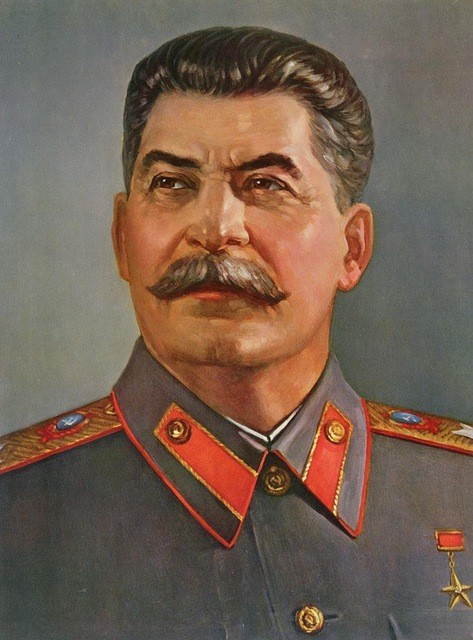
Josef Stalin was the leader of what country?

a)

Japan

b)

United States

c)

Germany

d)

USSR

64.

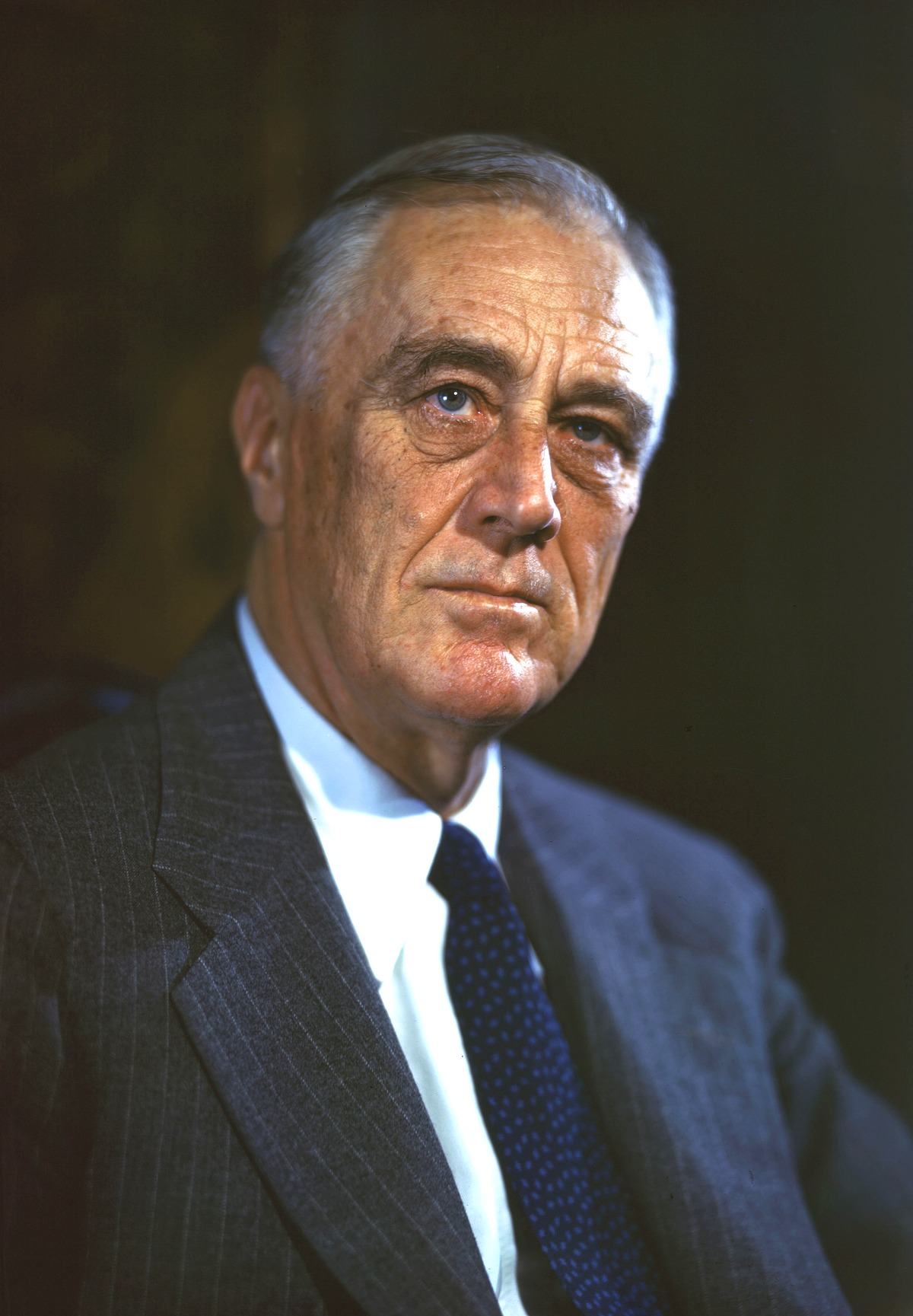
Franklin D. Roosevelt was the leader of what country?

a)

France

b)

Great Britain

c)

America

d)

Japan

65.

This leader is from Missouri and ordered the Atomic bomb dropped on Hiroshima and Nagasaki.

a)

Harry S. Truman

b)

Franklin D. Roosevelt

c)

George Patton

d)

Dwight D. Eisenhower

66.

This individual was general over all Allied forces in Europe.

a)

Douglas MacArthur

b)

Chester Nimitz

c)

George Patton

d)

Dwight D. Eisenhower

67.
What two nations were in competition with each other during the Cold War?
a)
Spain and Portugal
b)
England and France
c)
Germany and Italy
d)
United States and Soviet Union
68.

What were the defining characteristics of the Cold War?

a)

Prohibition, Flappers, Jazz

b)

Arms Race, Space Race, Red Scare

c)

Holocaust, Nazi Germany, Pearl Harbor

d)

Poverty, Unemployment, Dust Bowl

69.

The Soviet Union was a ___________________ country.

a)

Capitalist

b)

Socialist

c)

Communist

70.

What was created by the Soviet Union in response to NATO

a)

Warsaw Pact

b)

Berlin Wall

c)

Central Powers

d)

The Kremlin

71.
In 1949, the United States and eleven other countries agreed to form which alliance?
a)

SEATO
     
b)
ANZUS   
c)
NATO 
d)
OPEC
72.
What were the Truman Doctrine and the North Atlantic Treaty Organization (NATO) of the United States' responses to?
a)
The threat of Nazis in the 1930s
b)
The fear of economic depression after WWI
c)
The concern about the partition of India in 1947
d)
The Communist threat after WWII.
73.

Cold War anti-communist alliance led by the United States that included Japan, South Korea, and Thailand

a)

North Atlantic Treaty Organization

b)

Warsaw Pact

c)

Southeast Asia Treaty Organization

d)

Axis Powers

74.

American General who led America's Southeast Asian forces in World War 2, led the occupation and rebuilding of Japan, and commanded the United Nation forces in the Korean War.

a)

Dwight D. Eisenhower

b)

Douglas MacArthur

c)

Harry Truman

d)

George Marshall

75.

The NAACP legal strategy focused on _______ and was led by _________

a)

Schools, Thurgood Marshall

b)

Schools, Earl Warren

c)

Restaurants, Thurgood Marshall

d)

Public Restrooms, Dwight Eisenhower

76.

In _______ the governor, Orval Fabus, used the __________ to turn away the "Little Rock Nine"

a)

Little Rock, Police

b)

Birmingham, FBI

c)

Little Rock, National Guard

d)

Selma, National Guard

77.

On December 1, 1955, _______ resisted segregation on buses in Montgomery and led to a ____________ led by ______________.

a)

Rosa Parks, Boycott, Dr. King

b)

Eisenhower, riot, Abernathy

c)

Rosa Parks, sit-in, Dr. King

d)

Little Rock Nine, Boycott, Dr. King

78.

Ruled segregation in schools was NOT equal

a)

Brown v Board

b)

Plessy v Ferguson

c)

Korematsu v United States

d)

Schneck v United States

79.

President who forced Little Rock's Central High School to desegregate with the military

a)

Dwight D. Eisenhower

b)

Harry S. Truman

c)

Franklin D. Roosevelt

d)

John F. Kennedy

80.

What famous phrase came out of the Plessy v. Ferguson Supreme Court case?

a)

"Separate but equal"

b)

"Give me liberty or give me death."

c)

"May the force be with you."

d)

"I'll be back."

81.
The separation of people, usually based on race or religion is known as -
a)
discrimination
b)
segregation
c)
desegregation
d)
integration
82.

Equal rights given to all citizens by the United States Constitution are called:

a)

legal rights

b)

human rights

c)

unalienable rights

d)

civil rights

83.

The first high school in Tennessee to desegregate and was met with resistance from many white citizens was..

a)

Central High School

b)

Clinton High School

c)

Montgomery High Schjool

d)

Knox High School

84.

The organization whose members agreed to mutually defend other Communist nations is called--

a)

Korean Pact

b)

Warsaw Pact

c)

NATO

d)

Satellite Nations

85.
What caused McCarthyism?
a)
President Truman making atomic bombs.
b)
Japanese spies.
c)
Bombing China.
d)
Increased fear of communism.
86.
Which political trend characterized the era of McCarthyism?
a)
the effort to end the welafre system and remove regulations on US businesses
b)
the willingness to provide political asylum to persecuted people worldwide
c)
the effort to transform the United States into asociety based on civil equality
d)
the use of false accusation of communism as a weapon against political opponents
87.
"Attorney General Palmer Deports 249 Foreigners" (1919)
"Nixon Accuses Alger Hiss of Espionage" (1948)
"Rosenbergs Executed for Treason" (1953)
How do these headlines demonstrate what is happening during the 20th Century?
a)
the rights of the accused were expanded
b)
membership rose dramatically in groups considered to be subversive
c)
censorship was a primary policy of the government
d)
fear of communist activties prompted government actions 
88.
What was the name of the first satellite to orbit Earth?
a)
Sputnik
b)
Skylab
c)
Challenger
d)
Curiosity
89.

Who led the Montgomery Bus Boycott after Rosa Parks was arrested for refusing to give up her seat?

a)

Malcolm X

b)

Rosa Parks

c)

W.E.B. DuBois

d)

Martin Luther King