
NEW
Font size
 Worksheets
Industrial Revolution
Total questions: 44
Worksheet time: 35mins

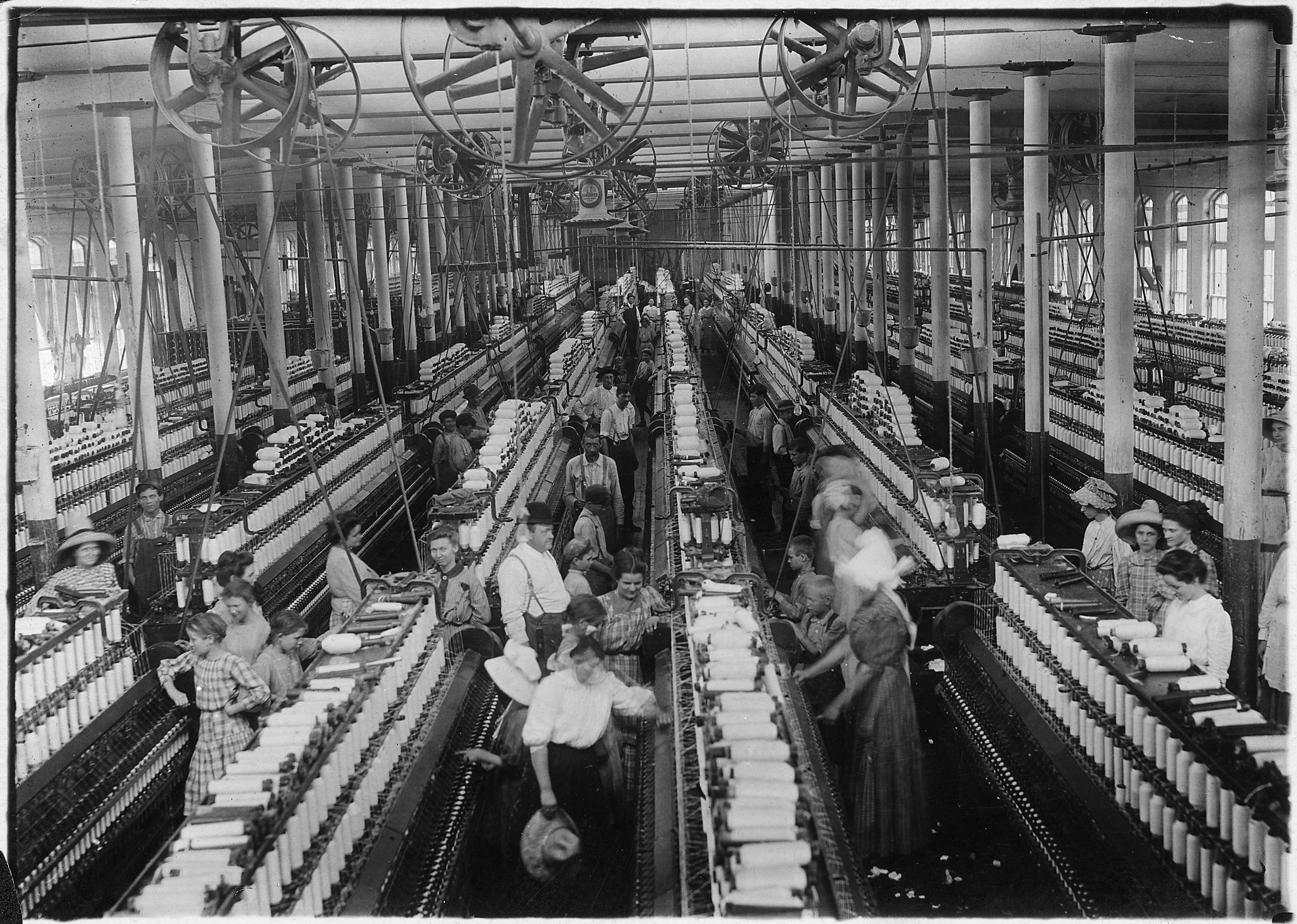

What raw materials were plentiful in European countries that helped advance the Industrial Revolution?
Steel and Oil
Iron Ore and Coal
Rubber and Plastic
All the above
What industries were growing at very high rates during the early industrial revolution? These would also be good job opportunities.
Railroads and Textile Factories
Coal and Iron Ore Mining
Canal and Ocean Transportation
All the above
The process of an area growing larger, with an increase in population, production of goods and services, and availability of a variety of options to fulfill one's wants and needs is called
industrialization
urbanization
materialism
commercialism
The ability to have necessities of life, such as food, clothing, and shelter and wants like vacations, concerts, and other amusements is referred to as
middle class
upper class
standard of living
purchasing power
The four factors of production that were vital to the Industrial Revolution and the start of any business include each of the following EXCEPT
land
labor
capital
entrepreneurs
investors
During the Industrial Revolution, a new social and economic class that developed was the
serfs
rich, or the upper class
expanded lower class
middle class
Which of the following best describes industrialization?
nations began to rely on one another for trade of various goods and resources after the beginning of the Industrial Revolution
smaller nations needed assistance from their larger neighbors, so they formed trade alliances
more and more people began to move to cities, away from rural areas
advancement in technology to produce goods on a larger scale and a reliance on manufacturing of goods instead of individuals producing goods themselves
Why was England the site of the beginnings of the Industrial Revolution?
England was the most powerful nation in the world
It wasn't; history has unfairly given England credit for the Industrial Revolution
England had an abundance of natural resources such as coal, iron ore, and waterways where water wheels and steam engines could be built
England was centrally located to many areas like France, Germany, Spain, and Ireland, giving them an advantage to bring in resources and talent from many places
Which idea is most closely associated with laissez faire economics?
communes
trade unionism
subsistence agriculture
free trade
Adam Smith would most likely agree with which statement?
Revolution is the only solution to economic problems.
Five-year plans are necessary in order to industrialize.
All nations would benefit from an agricultural economy.
Government should follow a laissez-faire policy.
Laissez-faire capitalism as attributed to Adam Smith called for
heavy taxation of manufacturers
strict government control of the economy
minimal government involvement in the economy
government investments in major industries
Which characteristic is associated with an economy based on the principles of laissez-faire?
prices based on supply and demand
production quotas established by the central government
distribution of goods determined by the customs of a traditional society
some goods exchanged for other goods of equal value
Adam Smith’s Wealth of Nations stressed the importance of
tradition
supply and demand
large corporations
government ownership
What is a key principle of a market economy?
The means of production are controlled by the state.
Supply and demand determine production and price.
Employment opportunities are determined by social class.
Businesses are owned by the people collectively.
Which heading best completes the partial outline below?
I. ___________________________________
A. Market system
B. Profit incentive
C. Entrepreneurs
Forms of Government
Characteristics of Capitalism
Structure of the Guild System
Elements of Culture
During the 1800s, the writings of Marx, Engels, and Dickens focused attention on the problems faced by
factory owners
investment bankers
farm laborers
industrial workers
“. . . They [the Communists] openly declare that their ends can be attained [achieved] only by the forcible overthrow of all existing social conditions. Let the ruling classes tremble at a Communist revolution. The proletarians have nothing to lose but their chains. They have a world to win. Working men of all countries, unite!”
— Friederich Engels and Karl Marx, Communist Manifesto, 1848 from the NYS Global History and Geography Regents Exam, August 2002.
These views, expressed by Engels and Marx, were developed in reaction to the
unification of Germany
Commercial Revolution
Congress of Vienna
Industrial Revolution
Where did Karl Marx predict a revolution of the proletariat would occur first?
industrial Europe
independent Latin America
colonial Africa
agricultural Russia
Karl Marx and Friedrich Engels encouraged workers to improve their lives by
electing union representatives
participating in local government
overthrowing the capitalist system
demanding pensions and disability insurance
In the late 1800s, one response of workers in England to unsafe working conditions was to
take control of the government
return to farming
set minimum wages
form labor unions
Karl Marx predicted that laissez-faire capitalism would result in
a return to manorialism
a revolution led by the proletariat
fewer government regulations
an equal distribution of wealth and income
Speaker A:Government should not interfere in relations between workers and business owners.
Speaker B:The workers will rise up and overthrow the privileged class.
Speaker C:Private property will cease to exist. The people will own the means of production.
Speaker D:A favorable balance of trade should be maintained by the use of tariffs.
Which two speakers represent Karl Marx’s ideas of communism?
A and B
B and C
B and D
C and D
In The Communist Manifesto, Karl Marx and Friedrich Engels expressed the idea that
religion should be the most important factor in society
power should be determined by a person’s wealth
profits from work should belong to the workers
supply and demand should control prices
Laissez-faire economists of the 19th century
argued that
the government should regulate the economy
and foreign trade
individuals should be allowed to pursue their
self-interest in a free market
governments should develop a state-run
banking system to prevent instability
anarchy would result if universal male
suffrage was granted
“. . . A place more destitute of all interesting
objects than Manchester, it is not easy to
conceive. In size and population it is the second city in the kingdom, containing above fourscore thousand [80,000] inhabitants. Imagine this multitude crowded together in narrow streets, the houses all built of brick and blackened with smoke; frequent buildings among them as large as convents, without their antiquity, without their
beauty, without their holiness; where you hear from within, as you pass along, the everlasting din of machinery; and where when the bell rings it is to call wretches to their work instead of their prayers, . . . ”
— Robert J. Southey, Letters from England, 1807
The conditions described in this passage occurred during the
Age of Discovery
Renaissance
Industrial Revolution
Green Revolution
Which two major ideas are contained in the
writings of Karl Marx?
survival of the fittest and natural selection
class struggle and revolutionary change
separation of powers and checks and balances
monotheism and religious tolerance
Which event had the greatest influence on the development of laissez-faire capitalism?
fall of the Roman Empire
invention of the printing press
Industrial Revolution
Green Revolution

