
 Worksheets
Wave Speed
Total questions: 60
Worksheet time: 47mins



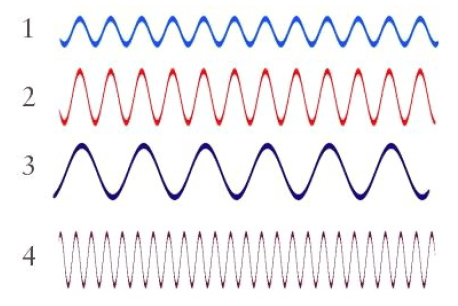
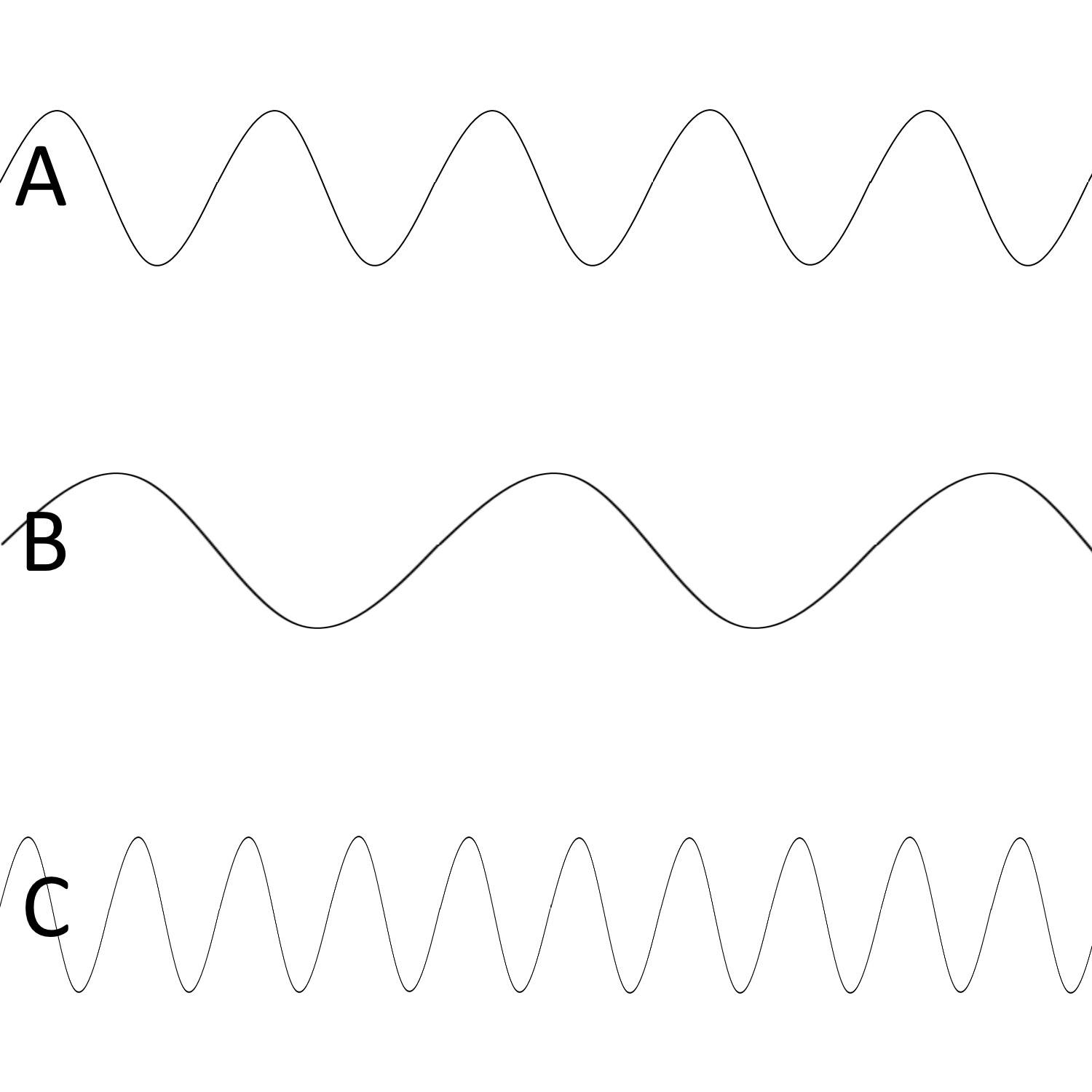


If a wave is traveling at 60m/s and has a wavelength of 3m. What is the frequency?
10Hz
20Hz
180Hz
18Hz
What is the speed of a wave with a frequency of 20Hz. and a wavelength of .4m ?
100m/s
25m/s
.8m/s
8m/s
What is the wavelength of a wave traveling at 1600m/s and a frequency of 400Hz?
400m
4m
640,000m
64m
What is the frequency of a wave with .15m wavelength traveling at 40m/s?
6m/s
2.66m/s
266.6m/s
600m/s
A wave moving at 2600m/s with a wavelength of 400m has what frequency?
6.5 Hz
1040000Hz
.15Hz
6Hz
Select all that apply: centi-
1/100
0.01
100
0.1
0.001
Convert 56 centimetres to metres.
0.56 metres
5.6 metres
0.056 metres
560 metres
5600 metres
Convert 56 metres to centimetres.
0.56 centimetres
5.6 centimetres
0.056 centimetres
5600 centimetres
560 centimetres
Convert 56 centimetres to millimetres.
0.56 millimetres
5.6 millimetres
560 millimetres
5600 millimetres
Convert 56 kilometres to metres.
560 metres
5600 metres
5.6 metres
56000 metres
0.056 metres
Convert 56 metres to kilometres.
560 metres
5600 metres
5.6 metres
56000 metres
0.056 metres
Convert 56 megametres to kilometres.
560 kilometres
5600 kilometres
5.6 kilometres
56000 kilometres
0.056 kilometres
Convert 56 megametres to metres.
560,000,000 metres
56,000,000 metres
5.6 metres
56,000 metres
0.056 metres
Convert 56 micrometres to metres
0.000056 metres
0.0056 metres
5.6 metres
560 metres
0.56 metres
Convert 56 millimetres to kilometres
0.000056 kilometres
0.0056 kilometres
5.6 kilometres
560 kilometres
0.56 kilometres
Which of the following is the correct equation for kinetic energy?
Ek = 21mv2
Ek = mv2
Ee = 21ke2
Ek = 21mv
Which of the following is the correct equation for mass?
v22Ek = m
v2Ek = m
v2Ek = m
vEk = m
Which of the following is the correct equation for velocity?
m2Ek= v
mEk= v
m2Ek= v
m2Ek= v
What is the unit of work?
Newton
Joule
Watt
meter
Which equation is incorrect?
F = sW
W = F × s
s = FW
F = W×s
Which of the following is the correct equation for distance?
F = sW
W = F × s
s = FW
s= W×F
Which of the following is the correct equation for work done?
W = sF
W = F × s
W = Fs
s= W×F
If an object is moved a distance of 50 cm with a force of 0.65 N, how much work is done, in joules (J)?
0.325
32.5
0.77
1.3
If an object is moved a distance of 4 metres with a force of 45 N, how much work is done, in joules (J)?
180
1800
0.09
11.25
Nuclear power stations generate electricity through nuclear fission. Electricity can also be generated by burning shale gas. Shale gas is natural gas trapped in rocks. Shale gas can be extracted by a process called fracking. There is some evidence that fracking causes minor earthquakes. Burning shale gas adds carbon dioxide to the atmosphere. Which of the following is NOT an advantage of nuclear power compared with the use of shale gas to generate electricity.
no carbon dioxide emitted
nuclear power doesn’t cause earthquakes
more energy released per kg of fuel
nuclear power plants produce radioactive waste
How far does an object move in metres (m) if a force of 700 newtons is applied and 50 joules of work is done?
0.071
17.5
28,000
0.71
The main use of this fuel is transport.
coal
oil
natural gas
Burning this fuel can cause acid rain.
oil
coal
natural gas
If a roller-coaster cart moving towards the top of a track has 40 J of kinetic energy and 30 J of gravitational potential energy, how much gravitational potential energy will it have at the top of the track?
70 J
40 J
30 J
10 J
Which of the following is an example of a mechanical transfer of energy?
A battery powering a light bulb.
A candle generating heat
A candle generating light
A ball falling towards the Earth
If a falling ball has, at one point in its fall, 20 J of gravitational potential energy and 60 J of kinetic energy, how much kinetic energy will it have when it strikes the Earth?
80 J
60 J
20 J
40 J
Which of the following is false?
Energy is the product of an activity
Energy cannot be created or destroyed
When gravity pulls an object towards the ground, energy is transferred mechanically
A car's engine produces useful kinetic energy and wasted thermal energy
Which of the following is not a store of energy?
friction
magnetic
electrostatic
nuclear
Which of the following correctly solves for height?
Ep=mgh
h=gmEp
h=Epgm
h=gmEp
Which of the following correctly solves for gravitational field strength?
Ep=mgh
g=hmEp
g=Ephm
g=hmEp
Which of the following correctly solves for mass?
Ep=mgh
m=ghEp
m=Epgh
m=ghEp
State the equation which links gravitational field strength, mass, height, and gravitational potential energy
Ep=ghm
Ep=mgh
Ep=hmg
Ep=mgh
Convert 0.78 kilojoules to joules.
7,800 joules
780 joules
78 joules
7.8 joules
0.078 joules
Convert 56 centimetres to metres.
560 metres
5600 metres
5.6 metres
0.56 metres
0.056 metres
Select all that apply: kilo-
1/1000
1000
0.01
103
10-3
Select all that apply: centi-
1/1000
100
0.01
0.001
1/100
Select all that apply: milli-
1/1000
1000
0.1
0.001
1/100
Calculate the time it takes for 18 joules of energy to be transferred, if power is 9 watts.
2 seconds
0.5 seconds
162 seconds
20 seconds
Calculate the time it takes for 74 kilojoules of energy to be transferred, if power is 8 watts.
9250 seconds
9.25 seconds
0.108 seconds
592 seconds
Calculate energy if in 89 centiseconds a system outputs 57 kilowatts of power.
50730 joules
5073 joules
1.56 joules
0.6404494 joules

