wayground logo

Free Printable Worksheets

NEW

Font size

S
M
L
XL
Worksheets

SPACE REVIEW

Total questions: 40

Worksheet time: 32mins

Name
Class
Date
1.
What is a small body of ice, rock & cosmic dust loosely packed together?
a)
meteor
b)
meteoroid
c)
asteroid
d)
comet
2.
Where is the asteroid belt located?
a)
past the orbit of Neptune
b)
between Mars & Jupiter
c)
surrounding our solar system
d)
between Earth & Mars
3.
Which object begins to melt as it gets close to the sun?
a)
asteroid
b)
meteoroid
c)
comet
d)
meteorite
4.

The largest planets in our solar system are called gas giants.

a)

True

b)

False

5.

Our solar system is larger than the Milky Way.

a)

True

b)

False

6.

Which of the following correctly places these in order from LARGEST to SMALLEST?

a)

galaxy -- local group/cluster -- planet -- solar system -- universe

b)

universe -- local group/cluster -- galaxy -- solar system -- planet

c)

planet -- solar system -- galaxy -- local group/cluster -- universe

d)

universe -- galaxy -- solar system -- local group/cluster -- planet

7.

A Group of stars, and or star systems, star clusters, dust and gas held together by gravity is known as:

a)

Universe

b)

Galaxy

c)

Solar System

d)

Planet

8.
What is the name of our galaxy?
a)
Snickers
b)
Andromeda
c)
Local Group
d)
Milky Way
9.

Which is the largest object in our solar system?

a)

Moon

b)

Mars

c)

Venus

d)

Sun

10.
Why do other stars appear so much smaller than the sun?
a)
They are much smaller
b)
They are so far away
c)
They are not as bright
d)
They are dwarf stars
11.
What color of star is the hottest?
a)
Blue
b)
Red
c)
Yellow
d)
Orange
12.
What color of star is the coolest?
a)
Red
b)
Yellow
c)
Blue
d)
White
13.
True or False
Constellations are stars that appear to be in a pattern.
a)
True
b)
False
14.

Consider the color of the sun. Based on this color, what is the sun's approximate surface temperature?

a)

10,000-30,000

b)

6000-7500

c)

30000-60000

d)

<3500

15.

Felix examined several photos of stars. To compare their temperatures, he looked at the colors of the stars. He organized the photos in order from coolest to hottest. Which of these answers shows the correct order?

a)

red, yellow, white, blue

b)

white, blue, yellow, red

c)

yellow, white, blue, red

d)

blue, yellow, white, red

16.

Which of the following statements best relates a star’s color to its surface temperature?

a)

blue stars have a relatively low temperature

b)

red stars have a relatively high temperature

c)

blue-white stars have a relatively low temperature

d)

yellow stars have a relatively low temperature

17.

Based on evidence in the table, which star would appear the dimmest from Earth’s surface?

a)

Star A

b)

Star B

c)

Star C

d)

Star D

18.

A scientist discovers a new star. It is blue-white and is about 20,000 K. Which star is it most similar to?

a)

Sun

b)

Rigel

c)

Vega

d)

Canopus

19.
As the earth rotates on its axis, the constellations and stars in them appear to _________.  
a)
move across the sky
b)
stand still in the sky
c)
move around each other
d)
rotate
20.
Constellations may be only visible during certain seasons due to the Earth’s orbit around the____.  
a)
Earth
b)
Mars
c)
Planets
d)
Sun
21.
Day and night is caused by the _____________ of earth on its axis.
a)
revolution
b)
orbit
c)
rotation
22.
The Earth's _______ is an imaginary line that goes from the North Pole to the South Pole.
a)
vernal equinox
b)
axis
c)
solar eclipse
d)
solar flare
23.
Which of the following is true?
a)
Earth is the center of the solar system
b)
The sun orbits the earth
c)
Gravity exists only on Earth
d)
The sun is the center of the solar system
24.
To "revolve" means to _________________
a)
rotate
b)
spin
c)
move
d)
orbit
25.
Asteroids are composed mostly of _________.
a)
ice
b)
dirt
c)
rock
d)
gas
26.
What causes seasons?
a)
The distance of a planet from the sun
b)
The gravitational pull of the Earth and Moon
c)
The tilt and revolution of Earth around the sun
d)
Changing temperatures on Earth
27.
What happens when the area you live in tilts away from the sun?
a)
It is summer
b)
It is spring
c)
It is fall
d)
It is winter
28.
If it is winter in the Northern Hemisphere, what season is it in the Southern Hemisphere?
a)
Spring
b)
Fall
c)
Winter
d)
Summer
29.
 True or False: The moon does not produce its own light.
a)
True
b)
False
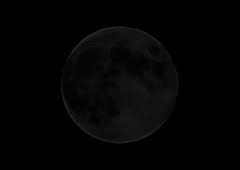
30.
Name the moon phase
a)
First Quarter
b)
Last Quarter
c)
New Moon
d)
Full Moon
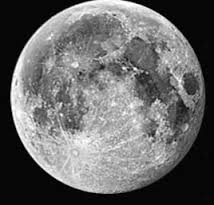
31.
Name the moon phase
a)
First Quarter
b)
Last Quarter
c)
New Moon
d)
Full Moon
32.
Name the phase of the moon for letter a
a)
First Quarter
b)
Last Quarter
c)
Waxing Gibbous
d)
Waning Gibbous
33.
What is illuminating the Moon?
a)
Nuclear Fusion
b)
Sunlight
c)
Mirrors
d)
Flood Lights
34.
The cycle of the moon lasts about a _.
a)
day
b)
year
c)
week
d)
month
35.

Which of the following words describe the phases of the moon?

a)

new moon, quarter, half, three quarters, full

b)

new moon, first quarter, full, 3rd quarter

c)

dark, light, half, quarter, blue

d)

first quarter, second quarter, third quarter, fourth quarter

36.
Which of the following is NOT true of all the inner planets?
a)
They are made of solid rock.
b)
They are called gas giants.
c)
They do not have rings.
d)
They have impact craters.
37.
Which of the following separates the outer planets from the inner planets?
a)
Asteroid Belt
b)
Great Red Spot
c)
Kuiper Belt
38.
Shorter revolutions
a)
Inner planets
b)
Outer planets
c)
Both
d)
Neptune
39.
Solid, rocky surface
a)
Inner planets
b)
Outer planets
c)
Both
d)
Saturn
40.
What is the correct order of the planets from the sun? 
a)
Mercury, Venus, Earth, Mars, Jupiter, Saturn, Uranus, Neptune
b)
Mercury, Earth, Venus, Mars, Jupiter, Saturn, Uranus, Neptune
c)
Mercury, Venus, Earth, Mars, Saturn, Jupiter, Uranus, Neptune. 
d)
Mars, Venus, Earth, Mercury, Jupiter, Saturn, Uranus, Neptune.