
Font size
 Worksheets
Transform Plate Boundary Exam Review
Total questions: 14
Worksheet time: 10mins

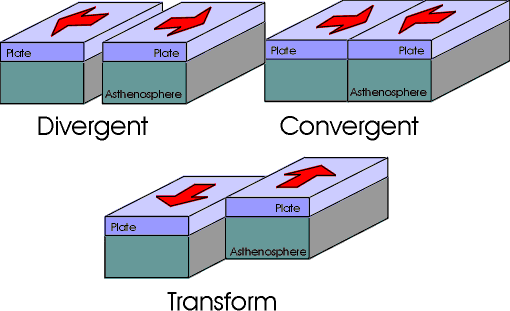
What is this image of?
Divergent Plate Boundary
Transform Plate Boundary (San Andreas Fault)
Convergent Plate Boundary

Tectonic Plate movement is caused by ______________.
the rotation of the Earth
ocean tides
convection currents in the mantle
the moon's gravity

What type of Boundary is this? What event will occur at this boundary?
Transform / Earthquakes
Subduction / Volcano Eruption
Tornado / Rain
Mountain Building / Volcanism
Approximately 90% of the seismic energy released by all earthquakes everywhere on Earth is released along which type of tectonic plate boundary?
Convergent
Divergent
Transform
What is the temporary state in which loose soil and rock materials take on the property of quicksand?
Aftershock
Liquefaction
Seismic Gap
Tsunami
Seismic waves tend grow larger and slow down as they encounter which type of ground material? (multi-select)
Solid rock
Soil
Sand
Bedrock
In high earthquake risk areas, structures should be built on solid bedrock.
True
False
What factors will affect the amount of damage sustained during an earthquake? (multi-select)
Magnitude of the earthquake
Direction the earthquake is coming from
Ground material the earthquake is traveling through
Materials used to construct building in the earthquake affected area
Duration of the earthquake
Earthquake-related computer models allow communities to make informed decisions about where to build and how to construct buildings to withstand ground movement in the event of an earthquake.
True
False
Using earthquake-related computer models, scientists can predict the magnitude and time an earthquake will occur.
True
False
Earthquake waves are detected, measured, and recorded by instruments called
Chronometers.
Seismographs.
Richter scales.
oscilloscopes.
All of the following are reasons some buildings are damaged more than others during an earthquake EXCEPT....
The strength of the building materials.
How close the building was to the earthquake's epicenter.
What type of soil the building sat on.
The people living inside of the building.
The design of the building.

