wayground logo

Free Printable Worksheets

NEW

Font size

S
M
L
XL
Worksheets

Photosynthesis & The Chemistry of Life

Total questions: 59

Worksheet time: 2hrs 58mins

Name
Class
Date
1.
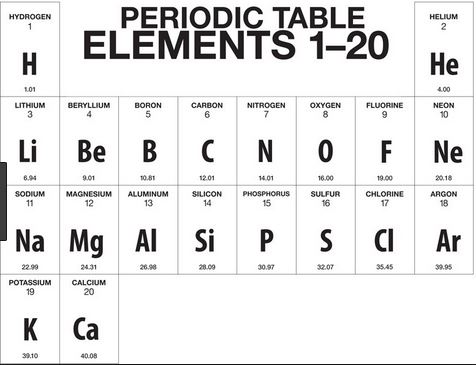
How many neutrons are in a Gold atom?
a)
79
b)
196
c)
118
d)
275
2.

What is the atomic mass of Gold?

a)

79

b)

197

c)

117

d)

275

3.
How many electrons does an Iodine atom have?
a)
53
b)
126
c)
73
d)
179
4.
How many neutrons does an Oxygen atom have?
a)
8
b)
16
c)
24
d)
7.999
5.

How many protons are in Gold

a)

79

b)

197

c)

118

d)

276

6.

How many Neutrons are in Neon

a)

10

b)

21

c)

20

d)

30

7.

How many protons are in Neon

a)

10

b)

20

c)

21

d)

30

8.

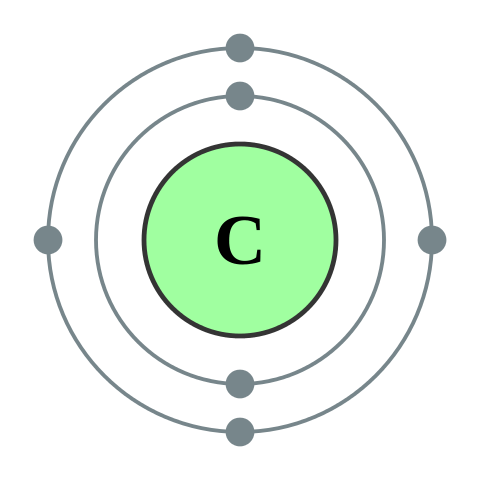
How many valence electrons does carbon have?

a)

4

b)

5

c)

6

d)

7

9.

How many valence electrons does Helium Have?

a)

1 Valence electron

b)

2 Valence electron

c)

3 Valence electron

d)

4 Valence electron

e)

5 Valence electron

10.

How many valence electrons does Nitrogen Have?

a)

1 Valence electron

b)

2 Valence electron

c)

3 Valence electron

d)

4 Valence electron

e)

5 Valence electron

11.
What is the function of ATP in living things?
a)
provides energy for cells
b)
stores genetic information
c)
provides structure in the nucleus
12.
Which structures shown in the Figure make up the ADP molecule?
a)
A and B
b)
A, B and C
c)
A, B, C, and D
d)
C and D
13.
What does the "TP" in ATP stand for?
a)
2 phosphates
b)
tri (3) phosphates
c)
Two proteins
d)
tri (3) proteins
14.
A neutron has a charge of
a)
+1
b)
+2
c)
-1
d)
0
15.
The charge of a proton is 
a)
positive
b)
negative
c)
neutral (no charge)
16.
How are covalent bonds formed?
a)
Sharing of electrons
b)
Transfer of electrons
17.
How are ionic bonds formed?
a)
Transfer of electrons
b)
Sharing of electrons
18.
Which of the following is the correct equation for PHOTOSYNTHESIS?
a)
carbon dioxide + water --> oxygen + glucose
b)
carbon dioxide + glucose + water --> oxygen 
c)
oxygen + water --> carbon dioxide + glucose
d)
glucose+ oxygen ---> water + carbon dioxide 
19.
What is the pigment in chloroplasts that performs photosynthesis?
a)
Chlorosynthesis
b)
Chlorophyll
c)
ADP
d)
Electron Transport
20.
Transpiration is a type of ______.
a)
Liquidation
b)
Condensation
c)
Evaporation
21.
Where do the light reactions happen?
a)
mitochondria membrane
b)
thylakoid membrane
c)
stroma
d)
central vacuole
22.
What is the main purpose of the light dependent reactions?
a)
To provide the energy for the calvin cycle
b)
To capture energy and make sugar
c)
To reflect green light
d)
To make sugars
23.
What are the two products of the light reactions that are needed for the calvin cycle?
a)
NAD and NADPH
b)
NADP + and Glucose
c)
NADPH and ATP
d)
Oxygen and NADPH
24.
What gas does the process of photosynthesis release into the atmosphere?
a)
oxygen
b)
carbon dioxide
c)
water
d)
nitrogen
25.

What supplies the electron that is lost in chlorophyll?

a)

oxygen

b)

water

c)

glucose

d)

rubisco

26.

Which of the following equations represents the overall chemical reaction for photosynthesis?

a)

6O2+ 6H2O → C6H12O6+ 6O2

b)

C6H12O6 + 6H2O→ 6O2+ 6O2

c)

6CO2+ 6H2O→ C6H12O6+ 6O2

d)

6O2 + 6H2O→ C6H12O6 + 6CO2

27.
It is important to create a concentration of H+  in the thylakoid space so that the H+ can diffuse through_________ to create ______.
a)
ATP synthase, ATP
b)
NADH, NADPH
c)
proton pump, protons
28.
What is diffusion?
a)
when molecules move 
b)
when molecules move from a high concentration to a low.
c)
no movement 
d)
molecules move everywhere
29.
Where do the dark reactions take place? 
a)
thylakoid membrane
b)
lumen
c)
stroma
30.
What does NADPH do? 
a)
carries electrons to the Calvin cycle
b)
carries electrons to the ETC
31.
What happens to NADPH and ATP after they are used in the Calvin Cycle?
a)
they recycle back to the light reactions
b)
they are used to make G3P
32.
What is made during the light independent reactions?
a)
ATP
b)
NADPH
c)
sugar
d)
fat
33.
TRUE or FALSE.  The Calvin Cycle can happen during the day.
a)
True
b)
false
34.
What is the name of the simple sugar that is produced in photosynthesis?
a)
Sucrose
b)
Dextrose
c)
Glucose
d)
Lactose
35.

What is the atomic mass of Neon?

a)

10

b)

20

c)

11

d)

9

36.
How many protons are in Beryllium?
a)
4
b)
9
c)
5
d)
2
37.
How many neutrons does a Hydrogen atom have?
a)
1
b)
2
c)
3
d)
0
38.
What is the primary function of the light reactions of photosynthesis?
a)
To produce glucose
b)
To produce NADPH and ATP
c)
To use ATP
d)
To produce RuBP
39.
Which of the following is NOT a product of the light reactions?
a)
ATP
b)
NADPH
c)
Oxygen
d)
Glucose
40.
What is the function of NADP+?
a)
It absorbs light
b)
It is an electron carrier
c)
It is a light-reflecting pigment
d)
It acts as long-term energy storage
41.
Which substance from the light-dependent reactions of photosynthesis is a source of energy for the light-independent reactions?
a)
ADP
b)
H2O
c)
NADPH
d)
pyruvic acid
42.
What is the ultimate source of energy for life on Earth?
a)
glucose
b)
sunlight
c)
ATP
d)
H2O
43.
It is important to create a concentration of H+  in the thylakoid space so that the H+ can diffuse through_________ to create ______.
a)
ATP synthase, ATP
b)
NADH, NADPH
c)
proton pump, protons
44.
According to this absorption spectrum, what color is not used by the chlorophyll pigments?
a)
green
b)
blue
c)
yellow
d)
red
45.
What is the main purpose of the light reactions?
a)
To provide the energy and electrons for the calvin cycle
b)
To capture energy and make sugar
c)
To reflect green light
d)
To make sugars
46.
Which organelle performs PHOTOSYNTHESIS?
a)
Chloroplast
b)
Mitochondria
c)
ribosomes
d)
vacuoles
47.
What is the pigment in chloroplasts that performs photosynthesis?
a)
Chlorosynthesis
b)
Chlorophyll
c)
ADP
d)
Electron Transport
48.
What gas does the process of photosynthesis release into the atmosphere?
a)
oxygen
b)
carbon dioxide
c)
water
d)
nitrogen
49.
What are the reactants of photosynthesis?
a)
carbon dioxide and oxygen
b)
water and oxygen
c)
carbon dioxide and water
d)
water and glucose
50.
Which gas is removed from the atmosphere during photosynthesis?
a)
hydrogen
b)
oxygen
c)
nitrogen
d)
carbon dioxide
51.

What is a cation's charge?

a)

positive

b)

negative

c)

neutral

d)

depends on the element

52.

What is an anion's charge?

a)

positive

b)

negative

c)

neutral

d)

depends on the element's charge

53.
a)
12
b)
7
c)
8
d)
14
54.
What type of bond is this? Lithium with Fluorine?
a)
ionic
b)
covalent
55.

What are valence electrons?

a)

The total number of electrons in an atom

b)

The number of electrons in the outermost shell

c)

The number of electrons in the second shell

d)

The number of protons in the outermost shell

56.
In the given scenario what will happen?  An egg is placed in pure water for 48 hours.
a)
The egg will gain water and swell.
b)
Water will move in and out of the cell equally, and the cell with neither shrink nor swell.
c)
The egg will lose water and shrink.
57.
Which way will the water molecules move during osmosis?
a)
Out of the cell, so the cell shrinks.
b)
Out of the cell, so the cell swells.
c)
Into the cell, so the cell shrinks.
d)
Into the cell, so the cell swells.
58.

Which solution is more concentrated?

Solution 1:

500 mL of water

100 g of salt


Solution 2:

500 mL of water

90 g of salt

a)

Solution 1

b)

Solution 2

c)

They have the same concentration

d)

I have no idea

59.

What is the name of the best NBA team?

a)

Lakers

b)

Clippers

c)

Warriors

d)

Knicks