
 Worksheets
Becoming A World Power
Total questions: 62
Worksheet time: 41mins
1. Why did the United States get involved in the Spanish American War?
To help the Spanish gain control over Cuban rebels.
Reconcentration Camps
to protect American sugar plantations in Cuba
the explosion of the USS Maine

Policy of having little to do with the political affairs of other nations.
Communism
Expansionism
Isolationism
Don't Bother Me
When a nation gets involved in foreign affairs.
Domination
Isolationism
Imperialism
Internationalism
Powerful countries seeking to control the economic & political affairs of weaker countries.
Dictatorship
Imperialism
Expansionism
Sectionalism

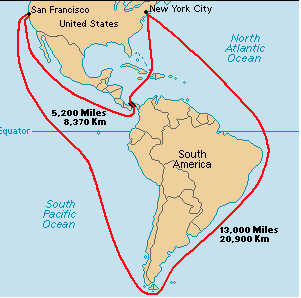
This was built through the isthmus of Panama.
Tappan Zee Bridge
Erie Canal
Golden Gate Bridge
Panama Canal
What was one advantage of the Panama Canal?
Established a safe place to swim.
Increase travel time.
Created new fishing spots.
Reduced the cost of shipping goods.
President Roosevelt claimed the U.S. had the right to intervene in Latin America to preserve law & order.
NASA
T.R. Intervention
Roosevelt Corollary
Quartering Act


The U.S. issued the “Open Door Policy” with China, why?
It allowed the U.S. and other nations who weren’t allowed to trade with China to begin to trade with them.
To protect Americans & property in cuba
It exploded & Americans blamed the Spanish - Congress declared war on Spain
Filipino revolutionary leader called the George Washington of the Philippines
Jose Marti
Emilio Aguinaldo
Pancho Villa
Philippe Varilla
Speak Softly and Carry a Big Stick was the phrase tied to which foreign policy?
Roosevelt Corollary
Dollar Diplomacy
Morally Diplomacy
The Open Door Policy

The 19th-century belief that the expansion of the US throughout the American continents was both justified and inevitable.
Due Process
Manifest Destiny
American Progress
Mercantilism
In 1887 the Americans sent many Indian children in boarding schools away from their mothers in order to ...
teach them English
make them Christians
cut them off their customs and language
all of the above
What was the true purpose of the Indian Boarding Schools?
The teach Native Americans how to farm and work in a factory
To "civilize" Native Americans
To give willing Native Americans a chance to learn English
To teach Native Americans how to preserve their cultural heritage
Who led the rebellion against the U.S in the Philippines and was seen as the George Washington of that nation?
Emilio Aguinaldo
Vladimir Putin
George Washington
Theodore Roosevelt
FIRST Policy telling Europe to stay out of the western hemisphere
Monroe Doctrine
Roosevelt Corollary
Domestic Policy
Imperialism
SECOND policy that made America the world's policeman especially in Latin America.
Monroe Doctrine
Roosevelt Corollary
Domestic Policy
Imperialism
All of the following were reasons for US annexation of Hawaii EXCEPT
We had sugar plantations in Hawaii
It was strategically located between the US and Asia
As a vacation spot
To allow trade and military ships a place to refuel.
Action taken by the Hawaii League to avoid paying tariffs.
The Open Door Note
The Bayonet Constitution
The Teller Amendment
The Mexican Revolution
Agreement made after the Spanish American War that gave the US the right to intervene in Cuba
Platt Amendment
Teller Amendment
Dollar Diplomacy
The Paris Peace Treaty
What country controlled Panama before the US built the canal?
Spain
Nicaragua
France
Colombia

Newspaper headlines such as those above most directly contributed to which of the following?
The capture of the terrorists by American authorities.
The selection of Theodore Roosevelt as a vice-presidential candidate.
The declaration of war against Spain by the U.S. Congress.
The attack by the U.S. Navy on Manila Bay.
"We hold that the policy known as imperialism is hostile to liberty and tends toward militarism, an evil from which it has been our glory to be free. We regret that it has become necessary in the land of Washington and Lincoln to reaffirm that all men, of whatever race or color, are entitled to life, liberty, and the pursuit of happiness .... "We earnestly condemn the policy of the present national administration in the Philippines. It seeks to extinguish the spirit of 1776 in those islands .... We denounce the slaughter of the Filipinos as a needless horror. We protest against the extension of American sovereignty by Spanish methods. We demand the immediate cessation of the war against liberty, begun by Spain and continued by us. We urge that Congress be promptly convened to announce to the Filipinos our purpose to concede to them the independence for which they have so long fought and which of right is theirs."
-Platform of the American Anti-Imperialist League, October 17, 1899.
With which of the following would supporters of this excerpt most likely agree?
The peoples of Asia had a right to govern themselves without outside interference.
The United States had a duty to bring a new civilization and religion to the former Spanish colonies.
The people of the Philippines were unprepared and unfit to govern themselves.
The United States should control weak countries that might fall to other great powers.
"Chronic wrongdoing, or an impotence which results in a general loosening of the ties of civilized society, may in America, as elsewhere, ultimately require intervention by some civilized nation, and in the Western Hemisphere the
adherence of the United States to the Monroe Doctrine may force the United States, however reluctantly, in flagrant cases of such wrongdoing or impotence,
to the exercise of international police power ... "We would interfere with them only in the last resort, and then only if
it became evident that their inability or unwillingness to do justice at home and abroad had violated the rights of the United States or has invited foreign aggression to the detriment of the entire body of American nations."
-Theodore Roosevelt, Speech to Congress, Dec. 6, 1904.
This excerpt most directly reflects the continuation of the policy that
the United States should remain neutral and impartial in European conflicts.
the United States should exercise international police power.
the independent nations of the Americas should remain free from European intervention.
the United States should civilize and educate other nations in the Americas.
What did President Roosevelt do when Colombia wouldn't let him build a canal in its northern province?
overthrew the government
backed a revolution and helped create Panama
backed a revolution and helped create Honduras
built it somewhere else
The Open Door Policy was the principle that all countries would be allowed to trade with what country?
Japan
Puerto Rico
Cuba
China
Remember the ________ was the rallying cry demanding a declaration of war on Spain in 1898.
Michigan
Pearl Harbor
Maine
New York
All of the following were reasons for U.S. imperialism in the late 1800s to early 1900s except
desire for new markets.
feeling of superiority.
taking over the British Empire.
building a modern navy.
All of the following were results of the Treaty of Paris (which ended the Spanish-American War) except
U.S. acquired the Philippines from Spain.
Puerto Rico became an independent nation.
U.S. acquired Puerto Rico and Guam.
Cuba became an independent nation.

Mark all of the following answer choices that represent the impact of westward expansion on native americans.
Forced relocation from traditional lands to reservations
reduced buffalo population through warfare and disease
Made transportation easier with the creation of the transcontinental railroad
opposition by Native Americans
assimilation and lifestyle changes
This was joint resolution of the United States Congress, enacted on April 19, 1898, in reply to President William McKinley's war message. It placed a condition of the United States military in Cuba. According to the clause, the U.S. could not annex Cuba but only leave, "control of the island to its people." It remained enforced until 1899, when the Platt Amendment was passed.
Teller Amendment
Roosevelt Corollary
Monroe Doctrine
Cuban Crisis Amendment
He was the 26th President of the United States; hero of the Spanish-American War; Panama Canal was built during this administration; he said, "Speak softly and carry a big stick," (1858-1899); He was considered by many to be the nation's first conservation president.
Theodore Roosvelt
William McKinley
Warren G. Harding
Grover Cleveland
The adding of a region to the territory of an existing political unit.
Imperialism
Annex
Moral Diplomacy
Dollar Diplomacy
Hawaii was taken over by business men lead by...
Sandford B. Dole
Theodore Roosevelt
Grover Cleveland
the Queen of Hawaii
Which territory was promised independence after the Spanish American War but was actually denied independence?
Guam
Philippines
Cuba
Puerto Rico
A burden is a...
power
responsability
problem
solution
MORE THAN ONE ANSWER: According to the poem, "The White Man's Burden", the author believes that the natives are...
lazy and dangerous
smart and hard working
uneducated
special
When Mr. Kiplings says, "half devil, half child", in the poem, The White Man's Burden, he means that...
the White Man is evil and infintile
The natives are crazy and uneducated
The natives are children of the devil and small

The use of sensationalized and exaggerated reporting by newspapers or magazines to attract readers
Nationalism
Imperialism
Yellow Journalism
Expansionism

An artificial waterway built to provide a shortcut between the Atlantic and Pacific Oceans, opened in in 1914
Roosevelt Corollary
Panama Canal
Yellow Journalism
Open Door Policy
To say that foreign countries seized “spheres of influence” in China means that they...
had secret agreements with the Chinese government.
created a new territorial government to prevent the U.S. from entering the trade market.
gained control of trade and resources in specific areas of China.
established a circular discussion forum.

