wayground logo

Free Printable Worksheets

NEW

Font size

S
M
L
XL
Worksheets

Weather Vs Climate

Total questions: 50

Worksheet time: 50mins

Name
Class
Date
1.

The typical weather in the rain forest is warm and rainy.

a)

true

b)

false

2.
What does this picture show?
a)
weather
b)
climate
3.
Each school year for 30 years, the amount of rain that fell at a school was measured and recorded. Tracking rainfall over a long period provides the most information about which characteristic of an area?
a)
Climate
b)
Temperature of one day
c)
Weather
d)
Type of soil
4.

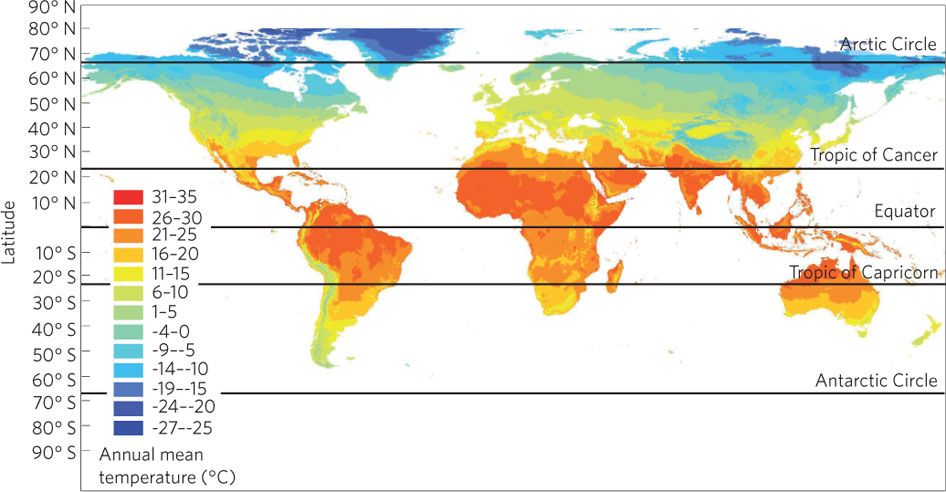
Temperatures in the Artic are usually below freezing year round.

a)

true

b)

false

5.
Meteorologists forecast this.
a)
Climate
b)
Weather
6.
Which of the following best describe the term 'weather'?
a)
day to day changes in the atmosphere
b)
long-term pattern in the weather
c)
measured over many years
d)
wind and rain
7.
What can change entire ecosystems and create extinctions in species?
a)
Climate
b)
Weather
8.
Conditions change by season.
a)
Climate
b)
Weather
9.

Describe a temperate climate.

a)

dry and cold year round

b)

warm year round, high humidity and rainfall

c)

not too warm or cold, not too wet or dry

10.

Describe a tropical climate.

a)

dry and cold year round

b)

warm year round, high humidity and rainfall

c)

not too warm or cold, not too wet or dry

11.
What are the 3 major climate zones in order from equator to the poles?
a)
polar, temperate, tropical
b)
tropical, temperate, polar
c)
temperate, polar, tropical
d)
temperate, tropical, polar
12.

Describe a tropical climate.

a)

dry and cold year round

b)

warm year round, high humidity and rainfall

c)

not too warm or cold, not too wet or dry

13.

Describe a polar climate.

a)

dry and cold year round

b)

warm year round, high humidity and rainfall

c)

not too warm or cold, not too wet or dry

14.
Is it weather or climate?
a)
Weather
b)
Climate
15.

Despite the morning clouds late in the afternoon, the sun appeared and the temperature increased.

a)

Weather

b)

Climate

16.
What weather condition could be measured by a Celsius thermometer?
a)
Precipitation
b)
Temperature
c)
Wind Speed
d)
Cloud Cover
17.
a)
25° C
b)
22° C
c)
15° C
d)
20°C
18.
All of the following tools are useful in measuring local weather conditions EXCEPT
a)
thermometers
b)
rain gauges
c)
wind socks
d)
telescopes
19.
a)
There was more rain on warm days than on cool days
b)
There were fewer clouds on Thursday than on Monday
c)
The temperature decreased as the cloud cover increased.
d)
The temperature increased over the course of the week. 
20.
A violently rotating column of air called a _____ when it comes in contact with the ground.
a)
hurrican
b)
tornado
c)
trade wind
d)
local wind
21.
What part of the illustration shows Evaporation? 
a)
1
b)
2
c)
3
d)
4
22.
An anemometer is used to measure...
a)
air pressure
b)
humidity
c)
precipitation
d)
wind speed
23.
An instrument used to measure the amount of rainfall
a)
barometer
b)
thermometer
c)
rain guage
d)
wind sock
24.
An instrument used to show the direction of wind and measure the speed
a)
rain guage
b)
Thermometer
c)
barometer
d)
wind sock
25.
An instrument that measures air pressure
a)
thermometer
b)
barometer
c)
rain guage
d)
wind sock
26.
Rain, sleet, hail, and freezing rain are all...
a)
precipitation
b)
condensation
c)
evaporation
d)
perspiration
27.

Is this an example of a type of weather or climate?


Desert

a)

Weather

b)

Climate

28.

Is this an example of a type of weather or climate?


Rainy

a)

Weather

b)

Climate

29.

Is this an example of a type of weather or climate?


Tropical

a)

Weather

b)

Climate

30.

Is this an example of a type of weather or climate?


Temperate

a)

Weather

b)

Climate

31.

Is this claim true that weather changes everyday?

a)

True

b)

False

32.
What type of weather is a tornado?
a)
severe weather
b)
not severe weather
33.
Which month has the highest average temperature?
a)
August
b)
July
c)
June
d)
May
34.
Does January or March have the lowest average temperature?
a)
January 
b)
March
c)
They are the same
35.
Climate is ______.
a)
what the air is like outside
b)
the temperature of a day
c)
pattern of weather in a place over many years.
36.
What is condensation?
a)
melting
b)
the climate of a region
c)
water vapor in the air that turns back into a liquid
37.
A liquid changes into a gas during _____.
a)
condensation
b)
precipitation
c)
evaporation
38.
What do you think will happen to a water puddle when the sun comes out and the temperature is warmer? 
a)
The water will turn into a gas.
b)
The water will turn into a solid.
c)
The water will turn into a liquid.
39.
What stage of the water cycle does number 1 in the picture show?
a)
condensation
b)
precipitation
c)
evaporation
d)
storage
40.
What stage of the water cycle does number 2 in the picture show?
a)
condensation
b)
precipitation
c)
storage
d)
evaporation
41.
What stage of the water cycle does number 3 in the picture show?
a)
condensation
b)
precipitation
c)
evaporation
d)
storage
42.
What stage of the water cycle does number 4 in the picture show?
a)
condensation
b)
precipitation
c)
evaporation
d)
storage
43.

Which Climate Zone is the arrow pointing to?

a)

Polar

b)

Temperate

c)

Tropical

44.

Which Climate Zone is the arrow pointing to?

a)

Polar

b)

Temperate

c)

Tropical

45.

Which Climate Zone is the arrow pointing to?

a)

Polar

b)

Temperate

c)

Tropical

46.

Which Climate Zone is the arrow pointing to?

a)

Polar

b)

Temperate

c)

Tropical

47.

Which Climate Zone is the arrow pointing to?

a)

Polar

b)

Temperate

c)

Tropical

48.

Which Climate Zone is the arrow pointing to?

a)

Polar

b)

Temperate

c)

Tropical

49.

The places near the ___ have a very high temperature.

a)

poles

b)

oceans

c)

equator

d)

land

50.

A ___ is a scientist that studies the atmosphere to predict and understand the weather.

a)

geologist

b)

paleontologist

c)

meteorologist

d)

biologist