wayground logo

Free Printable Worksheets

Font size

S
M
L
XL
Worksheets

Weather

Total questions: 100

Worksheet time: 2hrs 8mins
Name
Class
Date
1.
Precipitation is....
a)
rain
b)
snow
c)
sleet
d)
all of these are correct
2.
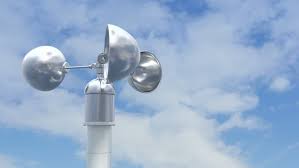
An anemometer is used to measure...
a)
rain fall
b)
snow
c)
wind speed
d)
wind direction
3.
This tool is used to measure the amount of rainfall.  What is it called?
a)
snow gauge
b)
rain gauge
c)
ruler
d)
thermometer
4.
Weather is the current conditions outside.
a)
True
b)
False
5.
Which tool measures air temperature?
a)
Thermometer
b)
Anemometer
c)
Wind Vane
d)
Wind sock
6.
Why would a meteorologist use a wind sock? 
a)
To measure wind direction
b)
To measure temperature
c)
To measure wind speed
d)
To measure rainfall
7.
A scientist who studies weather is called ...
a)
a meteorologist
b)
an astronomer
c)
a biologist
d)
a weatherologist
8.
What can happen when an area does not get enough rain?
a)
Drought
b)
Flood
c)
Sleet
d)
Hail
9.
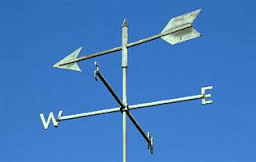
Why do meteorologist use this tool?
a)
To measure temperatue
b)
To measure wind direction
c)
To measure snow fall
d)
To measure rainfall
10.
Mountains can affect weather; so it can be raining on one side and sunny on the other side.
a)
True
b)
False
11.

Why do winds change during the day and night near a beach?

a)

The warm air over land sinks and stays there

b)

The warm air over water sinks and stays there

c)

The temperature over air and the land change

d)

Cool air sinks over the land and stays there

12.

How does air move?

a)

Warm air rises and cool air sinks

b)

Warm air sinks and cool air rises

13.

What kind of weather would you expect when you have decreased air pressure?

a)

Warm temperatures

b)

Cool temperatures

c)

Clear conditions

d)

Cloudy conditions

14.

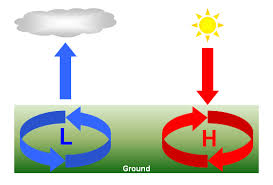
What kind of weather would you expect in a low pressure system?

a)

Rain

b)

Clear skies

15.

What kind of weather would you expect in a high pressure system?

a)

Warm temperatures

b)

Cool temperatures

c)

Clear conditions

d)

Cloudy conditions

16.

What kind of weather would you expect in a high atmospheric pressure system?

a)

Rain

b)

Clear skies

17.

How do air masses move across the US?

a)

The trade winds move the air masses from west to east

b)

The jet stream moves air masses from west to east

c)

The trade winds move the air masses from the Atlantic Ocean to the Pacific Ocean

d)

The Gulf Stream air moves around the Gulf of Mexico

18.

How does wind move?

a)

From area of high pressure to low pressure

b)

From areas of low pressure to high pressure

19.

Why do we have winds on Earth?

a)

Because of the trade winds

b)

Because of earth’s orbit around the Sun

c)

Because earth receives the sun's rays unevenly

20.

What type of weather conditions are needed for a hurricane to form?

a)

cold ocean currents, high air pressure

b)

warm ocean currents, low air pressure

21.
Precipitation is....
a)
rain
b)
snow
c)
sleet
d)
all of these are correct
22.
An anemometer is used to measure...
a)
rain fall
b)
snow
c)
wind speed
d)
wind direction
23.
This tool is used to measure the amount of rainfall.  What is it called?
a)
snow gauge
b)
rain gauge
c)
ruler
d)
thermometer
24.
Why do meteorologist use this tool?
a)
To measure temperatue
b)
To measure wind direction
c)
To measure snow fall
d)
To measure rainfall
25.
What can happen when an area does not get enough rain?
a)
Drought
b)
Flood
c)
Sleet
d)
Hail
26.
A scientist who studies weather is called ...
a)
a meteorologist
b)
an astronomer
c)
a biologist
d)
a weatherologist
27.
Why would a meteorologist use a wind sock? 
a)
To measure wind direction
b)
To measure temperature
c)
To measure wind speed
d)
To measure rainfall
28.
Which tool measures air temperature?
a)
Thermometer
b)
Anemometer
c)
Wind Vane
d)
Wind sock
29.
Weather is the current conditions outside.
a)
True
b)
False
30.

How does air move?

a)

Warm air rises and cool air sinks

b)

Warm air sinks and cool air rises

31.

What kind of weather would you expect when you have decreased air pressure?

a)

Warm temperatures

b)

Cool temperatures

c)

Clear conditions

d)

Cloudy conditions

32.

What kind of weather would you expect in a low pressure system?

a)

Rain

b)

Clear skies

33.

What kind of weather would you expect in a high pressure system?

a)

Warm temperatures

b)

Cool temperatures

c)

Clear conditions

d)

Cloudy conditions

34.

What kind of weather would you expect in a high atmospheric pressure system?

a)

Rain

b)

Clear skies

35.

How do air masses move across the US?

a)

The trade winds move the air masses from west to east

b)

The jet stream moves air masses from west to east

c)

The trade winds move the air masses from the Atlantic Ocean to the Pacific Ocean

d)

The Gulf Stream air moves around the Gulf of Mexico

36.

How does wind move?

a)

From area of high pressure to low pressure

b)

From areas of low pressure to high pressure

37.

Why do we have winds on Earth?

a)

Because of the trade winds

b)

Because of earth’s orbit around the Sun

c)

Because earth receives the sun's rays unevenly

38.

What type of weather conditions are needed for a hurricane to form?

a)

cold ocean currents, high air pressure

b)

warm ocean currents, low air pressure

39.
A severe storm that involves strong winds and forms over warm water is:
a)
tornado
b)
thunderstorm
c)
hurricane
d)
blizzard
40.
A severe storm which involves a funnel cloud forming from a cumulonimbus cloud:
a)
hurricane
b)
tornado
c)
thunderstorm
d)
blizzard
41.
This severe weather involves lightning, rain, and forms from a cumulonimbus cloud.
a)
thunderstorm
b)
tornado
c)
hurricane
d)
blizzard
42.
This weather tool measures wind speed 
a)
thermometer
b)
barometer
c)
anemometer
d)
psychrometer
43.
Which weather tool measures air pressure?
a)
thermometer
b)
barometer
c)
anemometer
d)
psychrometer
44.
What is the most abundant gas found in the atmosphere?
a)
Carbon Dioxide
b)
Nitrogen
c)
Oxygen
d)
Water Vapor
45.
Humidity is the...
a)
Amount of Water Vapor in the Air
b)
Amount of Wind in the Air
c)
Amount of Precipitation in the Air
d)
Amount of Pressure in the Air
46.
________________ are made of water vapor that condenses in the troposphere.
a)
dew
b)
clouds
c)
evaporation
d)
transpiration
47.
__________ a two-thermometer instrument slung around a rod or pole that is also referred to as a wet dry bulb used to measure relative humidity.
a)
thermometer
b)
barometer
c)
sling psychrometer
d)
anemometer
48.
Warm air near the Earth’s surface rises and then cools and drops, this creates a _________________ in the atmosphere.
a)
run-off
b)
Greenhouse Effect
c)
convection current
d)
water cylce
49.
Because the earth is spinning on its axis, the global winds appear to curve. This is known as the __________ ________.
a)
Coriolis Effect
b)
Greenhouse Effect
c)
Climate Effect
d)
Atmosphere Effect
50.
Where does a hurricane form?
a)
Over a cold body of water
b)
Over a warm body of water
c)
Over cold land
d)
Over warm land
51.
Where does a hurricane form?
a)
Over a cold body of water
b)
Over a warm body of water
c)
Over cold land
d)
Over warm land
52.
What kind of weather is usually associated with a low pressure system?
a)
Sunny weather
b)
Precipitation (rain, snow, etc.)
53.
What kind of weather is usually associated with a high pressure system?
a)
Sunny weather
b)
Precipitation (rain, snow, etc.)
54.
In what direction do winds always blow?
a)
From areas of high pressure to areas of low pressure
b)
From areas of low pressure to areas of high pressure
55.
What layer does weather occur in?
a)
mesosphere
b)
troposphere
c)
thermosphere
d)
stratosphere
56.
Where is the ozone layer located?
a)
Thermosphere
b)
Troposphere
c)
Stratosphere
d)
Mesosphere
57.
What measures temperature?
a)
barometer
b)
anemometer
c)
thermometer
d)
psychrometer
58.
What type of cloud looks like cotton and is in the lower altitudes?
a)
Cumulus
b)
Stratus
c)
Cirrus
59.

Which way do winds move???

a)

West to East

b)

South to North

c)

North to South

d)

East to West

e)

They Don't Move

60.

In a high pressure systems

a)

there are few clouds because the air in moving downward

b)

there are many clouds because the air is very humid

c)

there are few clouds because the air is moving outward

d)

there are many clouds because the air is moving upward

61.

A front is

a)

where warm air is cooling at earth's surface

b)

a boundary where hot and cold air are separating

c)

a boundary where two different air masses meet

d)

where cold air is rising and forming rain clouds

62.

Air masses are named for ______.

a)

the type of air they contain

b)

animals

c)

people

d)

where they form

63.
A cold front usually brings what kind of weather?
a)
snow  
b)
sunny and fair
c)
heavy rain and/or thunderstorms 
d)
 cool and dry 
64.

What is an air mass?

a)

a place where weather always changes in an extreme way

b)

a large body of air with the same temperature and moisture

c)

any cloud that produces rain, sleet, snow or hail

d)

any kind of air, as long as it is always wet and freezing

65.

What is the purpose of a barometer?

a)

Tells you that it is going to rain.

b)

Measures the amount of wind.

c)

Measusres the amount of clouds in the sky.

d)

It measure the amount of pressure in the air.

66.

What is the purpose of a barometer?

a)

Tells you that it is going to rain.

b)

Measures the amount of wind.

c)

Measusres the amount of clouds in the sky.

d)

It measure the amount of pressure in the air.

67.
Which weather tool measures wind?
a)
anemometer
b)
therometer
c)
wind vane
d)
barometer
68.
Ryan is working on his Science Fair project. He plans to measure the amount of rainfall that has fallen in his neighborhood over the past two weeks. What instrument should he use?
a)
Rain gauge
b)
Wind Vane
c)
Barometer
d)
Thermometer 
69.
The weather forecast tomorrow says there will be a 15 mph wind, a high temperature of 52 degrees and a pressure of 720 mb. What three instruments will a meteorologist use to make this prediction?
a)
anemometer, barometer, thermometer
b)
barometer, hygrometer, thermometer
c)
thermometer, satellite image, hygrometer
d)
anemometer, satellite image, barometer
70.
Which tool measures humidity or the amount of moisture in the air?
a)
wind vane
b)
barometer
c)
anemometer
d)
hydrometer
71.
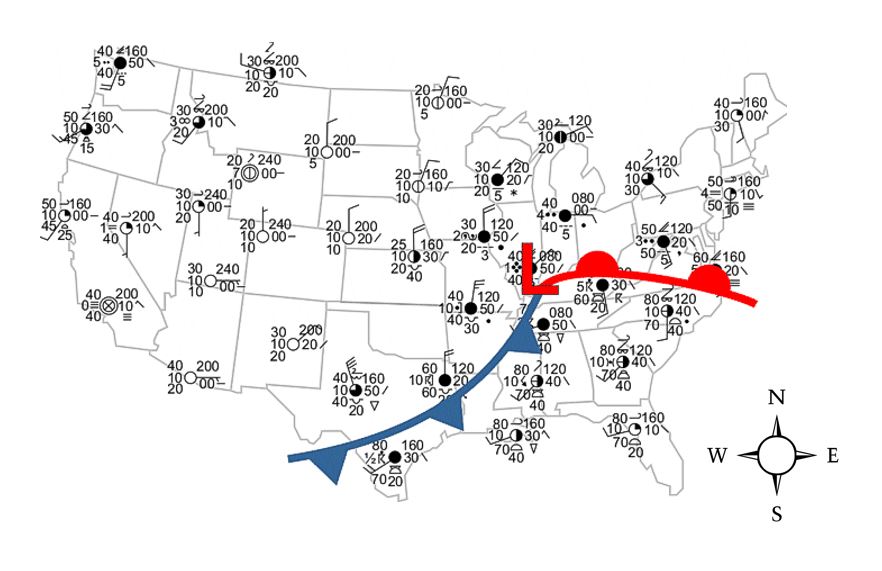
What does this symbol on a weather map indicate? 
a)
High pressure system
b)
Low pressure system
c)
Cold front
d)
Warm front
72.
What does this symbol indicate on a weather map? 
a)
High pressure system
b)
Low pressure system
c)
Cold front
d)
Warm front
73.
What kind of pressure predicts clear weather?
a)
high
b)
low
c)
cold
d)
stationary
74.

What would you expect from a Continental Polar air mass?

a)

moist, warm air

b)

dry, cold air

c)

dry, warm air

75.
What would you expect from a Maritime Tropical air mass? 
a)
dry, warm air
b)
moist, cold air
c)
moist, warm air
76.
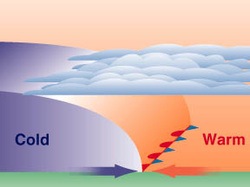
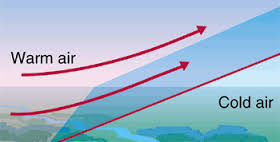
What type of front is this? 
a)
warm front
b)
cold front
c)
stationary front
d)
occluded front
77.
What type of front is this?
a)
warm front
b)
cold front
c)
stationary front
d)
occluded front
78.
What type of storm front is this? 
a)
warm front
b)
cold front
c)
stationary front
d)
occluded front
79.
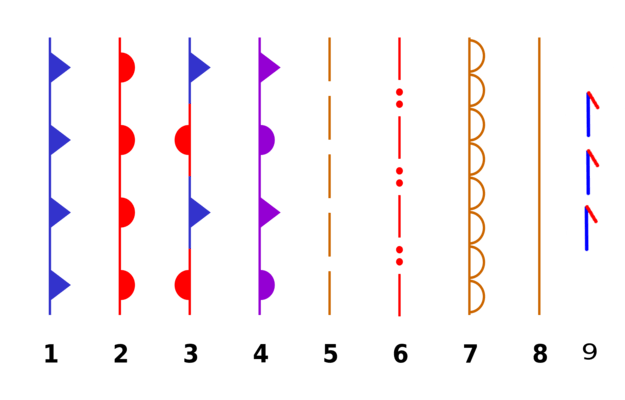
What does symbol # 3 mean?
a)
stationary front
b)
occluded front
c)
warm front
d)
cold front
80.
A front is
a)
where warm air is cooling at earth's surface
b)
a line where hot and cold air are separating
c)
a line where two different air masses meet
d)
where cold air is rising and forming rain clouds
81.
Which most likely produces clear, cool weather?
a)
zero air pressure
b)
stable air pressure
c)
a low pressure system
d)
a high pressure system
82.
_____________ air is more dense and tends to sink
a)
cold
b)
warm
c)
moist
d)
dry
83.
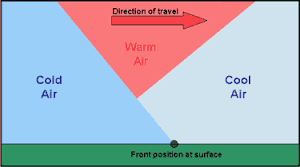
Which type of front is pictured?
a)
Cold front
b)
Warm front
c)
Occluded front
d)
Stationary front
84.
Which type of front is pictured?
a)
Cold front
b)
Warm front
c)
Occluded front
d)
Stationary front
85.
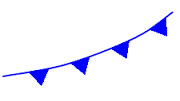
What symbol is this?
a)
warm front
b)
cold front
c)
stationary front
d)
occluded front
86.
Which system results in rainy or stormy weather?
a)
high pressure
b)
low pressure
c)
hurricane
d)
weather system
87.
Which system results in drier, fairer weather?
a)
high pressure
b)
low pressure
c)
hurricane
d)
weather system
88.
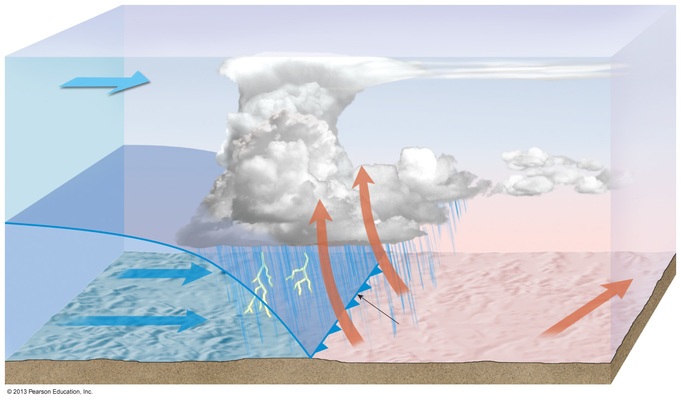
When a cold front is approaching, what happens?
a)
warm air is pushing under cold air causing humid weather and lower temperatures
b)
warm air is pushing under cold air causing humid weather and higher temperatures
c)
warm air rises, cools, and causes rain and thunderstorms
d)
cold air is pushed over warm air causing rain and thunderstorms
89.
The symbol on a weather map for a cold front is what?
a)
a line with triangles on it
b)
a line with semi-circles on it
c)
a line with squares on it
d)
a line with circles on it
90.
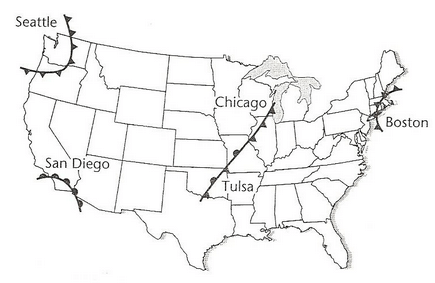
Which type of front is near Seattle?
a)
cold front
b)
warm front
c)
occluded front
d)
stationary front
91.
Which front is located near San Diego?
a)
cold front
b)
warm front
c)
occluded front
d)
stationary front
92.
Which type of front is located near Boston?
a)
warm front
b)
cold front
c)
stationary front
d)
occluded front
93.
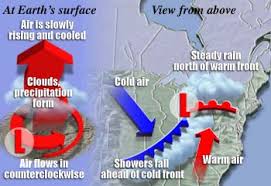
What direction is the warm front moving on the map? 
a)
North
b)
South
c)
East
d)
West
94.
What direction is the cold front moving on the map? 
a)
Southwest
b)
Northwest
c)
Southeast
d)
Northeast
95.
Which front leads to steady rain for several days?
a)
warm front
b)
cold front
c)
stationary front
d)
occluded front
96.

Which one shows a warm front?

a)
b)
c)
d)
97.
Which type of front is pictured?
a)
Cold front
b)
Warm front
c)
Occluded front
d)
Stationary front
98.
In a high pressure systems
a)
there are few clouds because the air in moving downward
b)
there are many clouds because the air is very humid
c)
there are few clouds because the air is moving outward
d)
there are many clouds because the air is moving upward
99.
A front is
a)
where warm air is cooling at earth's surface
b)
a boundary where hot and cold air are separating
c)
a boundary where two different air masses meet
d)
where cold air is rising and forming rain clouds
100.
Air masses are named for ______.
a)
the type of air they contain 
b)
animals
c)
 people
d)
 where they form