
NEW
Font size
 Worksheets
Acid/Base Titrations
Total questions: 15
Worksheet time: 3hrs 36mins
What is the main purpose of acid-base titrations?
To test if reactants react.
To calculate the concentration of unknown analyte.
To calculate the concentration of known analyte.
To test quality of reactants.
What is the role of an indicator in a reaction?
To help reactants react successfully.
To bind to the analyte to form a products.
To show when the reaction has reached or past the equivalence point.
To provide a surface for the reaction to occur.
What is an equivalence point?
It is the point when enough analyte has been added.
It is the point when the amount of added titrant is equal to the amount of analyte in the solution.
It is the point when the volume of titrant is equivalent the volume of analyte.
It is the point when the concentration of titrant added is equivalent to the volume of analyte.

Ascorbic acid, H2C6H6O6(s), is a diprotic acid with K1 = 7.9 × 10⁻⁵ and K2 = 1.6 × 10⁻¹². In a 0.005 M aqueous solution of ascorbic acid, which of the following species is present in the lowest concentration?
H3O+(aq)
H2C6H6O6(aq)
HC6H6O6-(aq)
C6H6O62-(aq)
In the titration of a weak acid of unknown concentration with a standard solution of a strong base, a pH meter was used to follow the progress of the titration. Which of the following is true for this experiment?
The [H+] at the equivalence point equals the ionization constant of the acid.
The pH at the equivalence point depends on the indicator used.
The graph of pH versus volume of base added rises gradually at first and then much more rapidly.
The graph of pH versus volume of base added shows no sharp rise.

Which of the following best approximates the Ka value for this weak acid?
1 x 10⁻⁴
1 x 10⁻⁵
5x 10⁻⁶
5 x 10⁻⁷
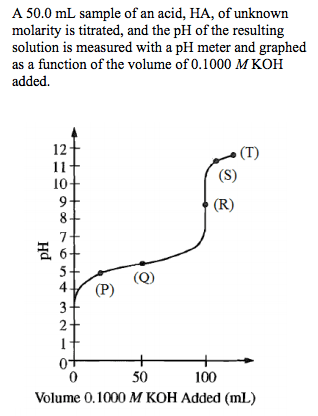
Which point on the titration curve corresponds to the point at which the moles of the added strong base are equal to the moles of the weak acid initially present?
Q
R
S
T
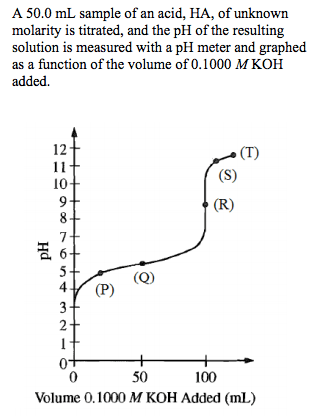
At point P in the titration, which of the following species has the highest concentration?
HA
A–
H3O+
OH–
Which of the following best represents a 0.100-molar solution of H2SO4 in water?
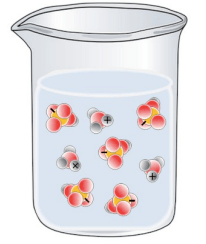
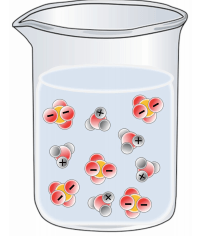
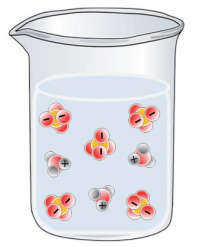
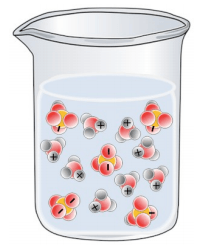
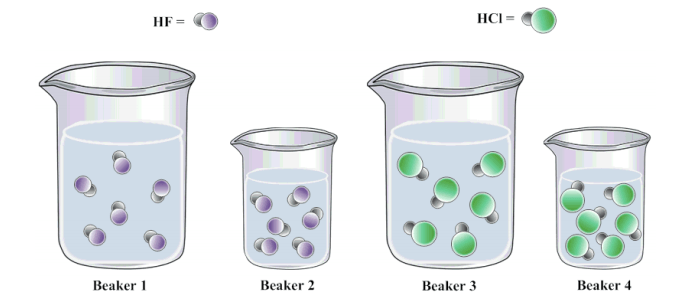
Equal moles of the indicated acids are dissolved in the amounts of water shown in the beakers below. In which solution will the percent ionization of the acid be the lowest?
Beaker 1
Beaker 2
Beaker 3
Beaker 4
Equal volumes of 0.10-molar H3PO4 and 0.20-molar KOH are mixed. After equilibrium is established, the type of ion in solution in largest concentration, other than the K+ ion, is
H2PO4 –
HPO4 2–
PO4 3–
OH-
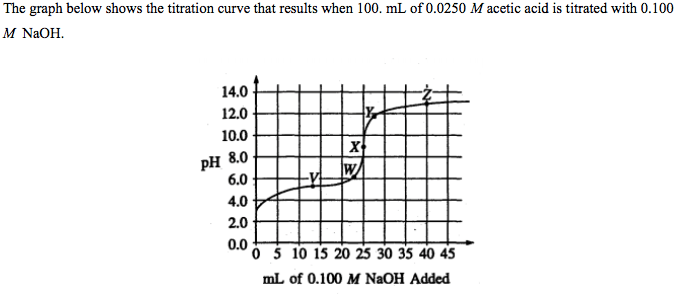
What part of the curve corresponds to the optimum buffer action for the acetic acid/acetate ion pair?
Point V
Point Z
Along all of section WY
Along all of section YZ
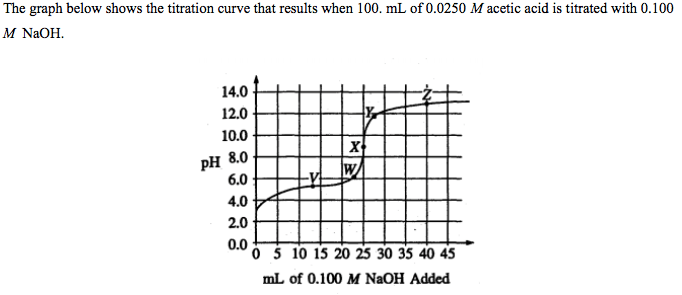
Which of the following indicators is the best choice for this titration?
Methyl orange (pH range of color change is 3.2 - 4.4)
Methyl red (pH range of color change is 4.8 - 6.0)
Bromothymol blue (pH range of color change is 6.1 - 7.6)
Phenolphthalein (pH range of color change is 8.2 - 10.0)

