wayground logo

Free Printable Worksheets

Font size

S
M
L
XL
Worksheets

4th Grade Q2 NGSS SQSA Benchmark Review

Total questions: 84

Worksheet time: 1hrs 3mins

Name
Class
Date
1.

What are the three main types of rocks?

a)

sandstone, limestone, marble

b)

igneous, metamorphic, sedimentary

c)

obsidian, coal, basalt

d)

conglomerate, obsidian, metamorphic

2.

What are the layers of soil? Click all that apply.

a)

topsoil

b)

bedrock

c)

sub soil

d)

sand

3.

Which one is not a way to identify minerals?

a)

color

b)

fracture

c)

metallic

d)

cleavage

e)

hardness

4.

Which rock are most fossils found?

a)

amber

b)

igneous

c)

sedimentary

d)

imprints

5.

Which of the following would have the most volume?

a)

A gallon of milk

b)

a coffee cup

c)

a water bottle

d)

a Capri Sun

6.

You made some hot chocolate and it was 99°C. After waiting about 10 minutes it was 75°C. What temperature do you think it would be after 10 more minutes?

a)

10°C

b)

50°C

c)

80°C

d)

100°C

7.

If you had to tell me the texture of an object, what word could you use?

a)

loud

b)

smooth

c)

heavy

d)

shiny

8.

Which group share the same physical properties?

a)

orange juice, orange, sand

b)

sand, marble, orange juice

c)

marble, ball, orange

d)

orange, sand, water

9.

Which of these could you observe?

a)

The student was hungry

b)

The student loved Math

c)

The student was thinking about reading a book

d)

The student didn't finish their homework

10.

Look at the image and choose the correct statement.

a)

The peaches have more mass

b)

The peaches and lemons have the same mass.

c)

The lemons have a greater volume.

d)

The lemons have more mass.

11.

Air is made of matter. Do you agree or disagree?

a)

I disagree, because I can't see it

b)

I agree, because it takes up space

c)

I disagree, because I can see it

d)

I agree, because it doesn't take up any space

12.

What can you measure using this graduated cylinder?

a)

area

b)

mass

c)

volume

d)

length

13.

What tool would you use to measure mass?

a)

ruler

b)

pan balance

c)

thermometer

d)

graduated cylinder

14.

The three states of matter are:

a)

solid, ice, liquid

b)

solid, air, liquid

c)

gas, solid, water

d)

liquid, gas, solid

15.

The molecules in a solid are:

a)

tight and close together

b)

moving around as fast as they can

c)

slightly spaced out

d)

spread far apart from each other

16.
The smallest unit of matter is:
a)
atom
b)
molecule
c)
gram
d)
mass
17.
When you bake cookies, what kind of reaction is occuring?
a)
chemical reation
b)
physical reaction
18.
Anything that has mass and takes up space is called
a)
density
b)
volume
c)
atoms
d)
matter
19.
How much "stuff" is in something is called its:
a)
volume
b)
mass
c)
atoms
d)
matter
20.
Which is not a state of matter?
a)
solid
b)
liquid
c)
helium
d)
gas
21.
Which property of matter tells what something feels like?
a)
color
b)
shape
c)
texture
d)
solubility 
22.
What property of matter tells if light bounces off of something?
a)
texture
b)
reflectivity
c)
magnetism
d)
solubility 
23.
What is the property that tells us that the mass of materials stays the same when they undergo a physical or chemical change?
a)
Conversation Starter
b)
Condensation of Mass
c)
Conservation of Matter
d)
Liquidation of Materials
24.
Which metal does NOT usually have magnetism?
a)
iron
b)
cobalt
c)
copper
d)
nickel
25.
Which item makes a good electrical insulator?
a)
paperclip
b)
metal wire
c)
shirt
d)
foil
26.
Which item is a good thermal conductor?
a)
a styrofoam cup
b)
a copper pot
c)
a towel 
d)
a wooden spoon
27.
What is it called when matter changes from a solid to a liquid?
a)
melting
b)
evaporating
c)
condensation
d)
freezing
28.
What is called when matter turns from a liquid to a gas?
a)
melting
b)
evaporating
c)
condensation
d)
freezing
29.
When a tree is put into a wood chipper, what type of change occurs?
a)
chemical change
b)
physical change 
30.
When you find mass, you use a:
a)
petri dish
b)
scale
c)
balance
d)
dropper
31.
What do you call this science tool: 
a)
beaker
b)
graduated cylinder
c)
test tube
d)
petri dish 
32.
Which is NOT a sign of a chemical change occurring?
a)
gas is released
b)
light is released
c)
there is fire
d)
the shape of something changes
33.

Which country consumes the most oil each day?

a)

Brazil

b)

Russia

c)

India

d)

U.S.

34.

What year is coal estimated to run out?

a)

2086

b)

2088

c)

2090

d)

2066

35.

What is the fastest growing energy source?

a)

hydrogen

b)

oil

c)

solar

d)

wind

36.

How much longer is our oil supply estimated to last us?

a)

20-30 years

b)

100-150 years

c)

50-80 years

d)

10-15 years

37.

Bioenergy is a fancy name for?

a)

running

b)

using the force of growing plants for energy

c)

using plants as fuel

d)

movement of wind in the clouds for energy

38.

A magnet will pick up an object that is made of...

a)

plastic

b)

iron or steel

c)

glass

d)

copper

39.

What would happen if you touched a south pole end of a magnet to a north pole end of another magnet?

a)

they would be attracted to each other

b)

they would be repelled from each other

40.

Which direction does a compass always point?

a)

north

b)

south

c)

east

d)

west

41.

The strongest parts of the magnet are ...

a)

fronts

b)

backs

c)

poles

d)

middle

42.

The diagram shows an arrangement of three magnets. The poles of the magnets are labelled A, B, C, D, E and F respectively.


Which one of the following arrangements of the three magnets is possible?

a)
b)
c)
d)
43.

What does repel mean?

a)

magnets move toward each other

b)

magnets do not have magnetism

c)

magnets move away from each other

d)

magnets stick together

44.
What subject is attracted to a magnet?
a)
Silver
b)
Water
c)
Metal
d)
Iron
45.

What property? hard, soft or somewhere in between

a)

Color

b)

Luster

c)

Hardness

d)

Streak

e)

Cleavage and Fracture

46.

What property? color of the mark that a mineral makes when it is scraped on a white tile

a)

Color

b)

Luster

c)

Hardness

d)

Streak

e)

Cleavage and Fracture

47.

What property? how a mineral breaks

a)

Color

b)

Luster

c)

Hardness

d)

Streak

e)

Cleavage and Fracture

48.

Hardest mineral

a)

diamond

b)

talc

c)

chalcopyrite

d)

mineral

49.

Softest mineral

a)

diamond

b)

talc

c)

chalcopyrite

d)

mineral

50.

What property? shiny, dull, glassy, metallic or oily looking

a)

Color

b)

Luster

c)

Hardness

d)

Streak

e)

Cleavage and Fracture

51.
Water freezes at what temperature ?
a)
0o F
b)
100o C
c)
32o C
d)
0o C
52.
Water boils at what temperature?
a)
132o  F
b)
212o C
c)
100o C
d)
None of the above
53.
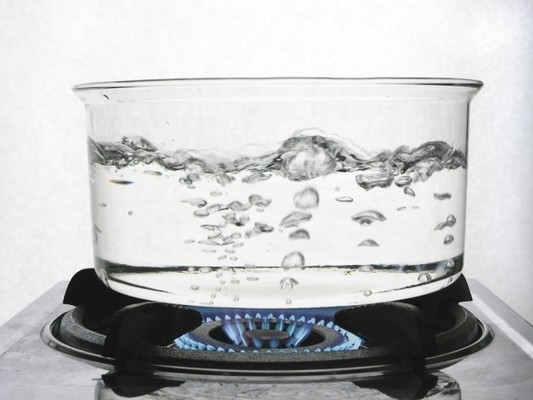
When matter changes from liquid water into bubbles of water vapor.
a)
texture
b)
boils
c)
harness
d)
melts
54.

What type of energy is transformed in the Energy Conversion shown in the image below?

a)

Nuclear Energy

b)

Chemical Energy

c)

Thermal Energy

d)

Electrical Energy

55.

Which of the following is an example of a Thermal Insulator?

a)

Iron

b)

Aluminum

c)

Wood

d)

Copper

56.

Which of the following is an example of a Thermal Conductor?

a)

Plastic

b)

Styrofoam

c)

Wood

d)

Copper

57.

Heat always travels from...

a)

Warm to cool

b)

Cool to warm

c)

Warm to warm

d)

Cool to cool

58.

"The ability to make things happen" is the definition of what word?

a)

motion

b)

energy

c)

friction

d)

matter

59.
A metal spoon heating up in a bowl of hot soup
a)
Conduction
b)
Convection
c)
Radiation
60.
Getting a sunburn on while spending the day on the beach
a)
Conduction
b)
Convection
c)
Radiation
61.
Burning your tongue on a hot soup
a)
Conduction
b)
Convection
c)
Radiation
62.
Feeling the hot air when opening the oven
a)
Conduction
b)
Convection
c)
Radiation
63.
The movement of liquid in a lava lamp
a)
Conduction
b)
Convection
c)
Radiation
64.
The sand burning your feet while walking on the beach on a hot day
a)
Conduction
b)
Convection
c)
Radiation
65.
Sitting by a campfire 
a)
Conduction
b)
Convection
c)
Radiation
66.
Pancakes cooking on a pan
a)
Conduction
b)
Convection
c)
Radiation
67.
Popcorn cooking in a microwave
a)
Conduction
b)
Convection
c)
Radiation
68.
Turning on a ceiling fan to cool down a room
a)
Conduction
b)
Convection
c)
Radiation
69.
A hot air balloon rising 
a)
Conduction
b)
Convection
c)
Radiation
70.
What is potential energy?
a)
the energy an object has due to its position or condition
b)
the energy an object has due to its motions
c)
the energy an object has due to its chemical composition
d)
theh energy an object has due to its atomic structure
71.
The amount of kinetic energy an object has depends on its -
a)
mass and volume
b)
volume and friction
c)
mass and speed
d)
speed and density
72.
When you hear music, what is your ear actually detecting?
a)
notes from the speaker
b)
waves created by vibrations
c)
electrical currents traveling through the air
d)
sound atoms coming from the sound
73.

Which statement best defines Mechanical Energy?

a)

Energy produced by a machine or moving part.

b)

Energy that is produced by an electrical current in a circuit.

c)

Energy from the sun.

d)

Energy that travels in waves due to vibrations.

74.
What energy do you produce riding your bike? __________
a)
Sound Energy
b)
Mechanical Energy
c)
Light Energy
d)
Electrical Energy
75.
All of the following are examples demonstrating mechanical energy EXCEPT –
a)
an oven cooking food.
b)
a fan blowing out air. 
c)
a boy riding a bicycle.
d)
a girl writing with a pen.
76.
1. What is it called when you generate electricity with a dam and water?
a)
Geothermal Energy
b)
Hydroelectric energy
c)
Radiation energy
77.
2. What is it called when humans generate electricity by using the heat of the Earth?
a)
Geothermal Energy
b)
Hydroelectric Energy
c)
Radiation Energy
78.
3. What is a generator?
a)
A machine that creates radiation.
b)
A machine that turns mechanical into electrical energy.
c)
A type of wind energy
79.
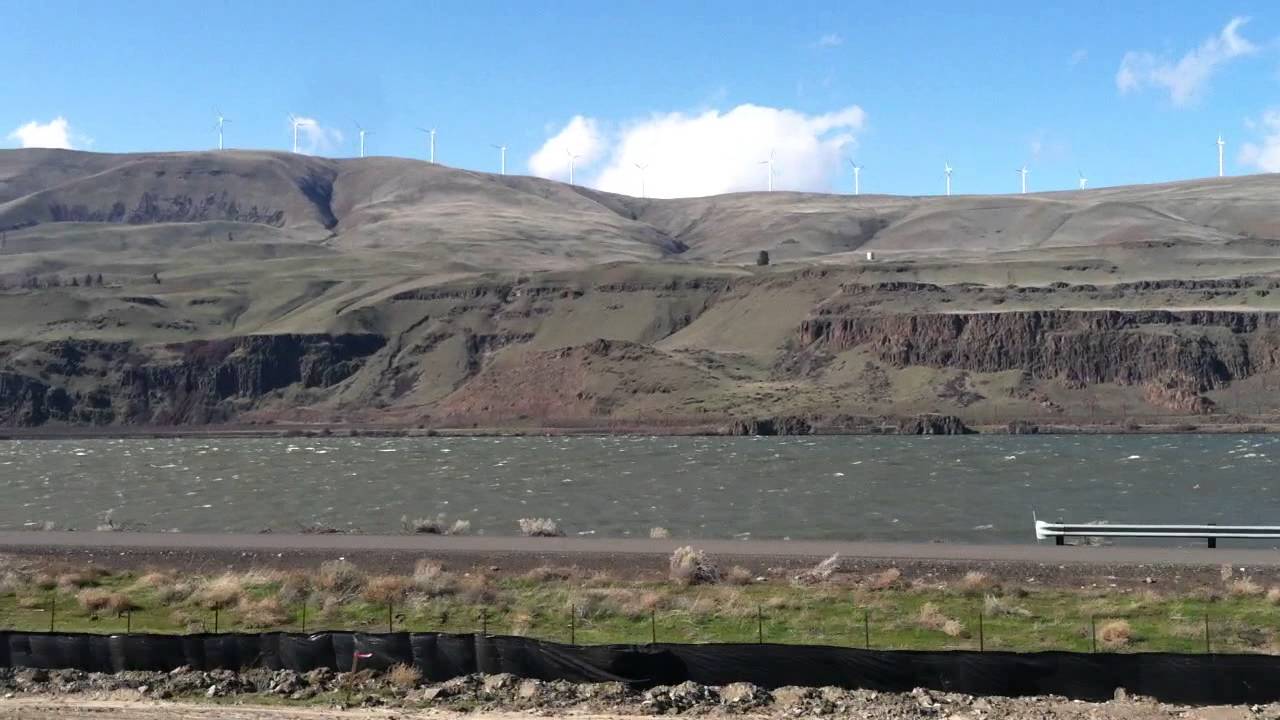
6. This form of electrical energy generating is called...
a)
Hydroelectric
b)
Geothermal
c)
Wind
d)
Non-Renewable
80.

What do wind turbines, hydro electric dams, and ethanol plants have in common

a)

All produce electrical current without pollution

b)

All use generators to produce electrical current

c)

All convert gravitational potential energy to electric current

d)

All convert thermal energy to electrical energy
81.
Energy can be classified into..
a)
Renewable and non renewable
b)
Natural and non renewable
c)
Renewable and Natural
d)
All of them
82.
The law of conservation of energy states that when one form of energy is transformed into another, energy is:
a)
Not created or destroyed
b)
Destroyed
c)
Created
d)
Turned in to Peanut Butter
83.
The energy source that uses the intense heat from Earth’s interior that warms the magma beneath Earth’s surface is called
a)
Kinetic Wave Energy
b)
Solar Energy
c)
Geothermal energy
d)
Hydrogen Power
84.

This uses the kinetic energy of moving air that is harnessed by the use of wind turbines.

a)

Turbine

b)

Fossil fuels

c)

Hydroelectric energy

d)

Wind energy