Wayground logo

Free Printable Worksheets

Font size

S
M
L
XL
Worksheets

Matter

Total questions: 41

Worksheet time: 31mins
Name
Class
Date
1.
What is a homogeneous mixture?
a)
a mixture that is the same throughout.
b)
a mixture that is made up of one type of atom.
c)
a mixture that is made up of one type of compound
d)
a mixture that cannot be separated through physical changes
2.
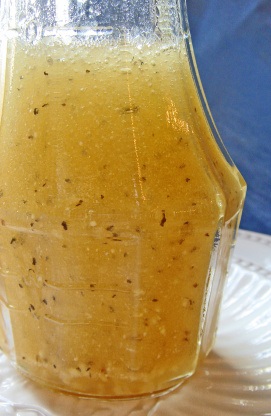
Italian Salad Dressing is a . . .
a)
heterogeneous mixture
b)
homogeneous mixture
c)
Pure Substance
d)
Compound
3.
Kool-Aid
a)
Element
b)
Compound
c)
Homogeneous Mixture
d)
Heterogeneous Mixture
4.
Aluminum
a)
Element
b)
Compound
c)
Homogeneous Mixture
d)
Heterogeneous Mixture
5.
NaCl
a)
Element
b)
Compound
c)
Homogeneous Mixture
d)
Heterogeneous Mixture
6.
a)
element
b)
compound
c)
mixture of elements
d)
mixture of compounds
7.
a)
element
b)
compound
c)
mixture of elements and compounds
d)
mixture of compounds
8.
a)
element
b)
compound
c)
mixture of elements
d)
mixture of compounds and elements
9.

What is the density of a solid with a mass of 25g and a volume of 5cm3?

a)

30 g/cm3

b)

20 g/cm3

c)

125 g/cm3

d)

5 g/cm3

10.

Appearance, texture, and density are classified as

a)

physical properties

b)

chemical properties

c)

magnetic properties.

d)

thermal properties

11.
Temperature is a measure of the average ______ energy of the particles in the object. 
a)
thermal
b)
kinetic
c)
potential
d)
chemical
12.
What determines the speed of the atoms and molecules of a particular substance?
a)
size of the atoms and molecules
b)
temperature of the substance
c)
A and B
d)
None of the above
13.
Which state of matter will hold its shape without a container?
a)
Solid
b)
Liquid
c)
Gas
d)
Plasma
14.
The law of conservation of mass states that mass cannot be
a)
burned
b)
changed in form
c)
created or destroyed
d)
heated or cooled
15.
All matter is made of atoms and molecules that are
a)
always fixed in position
b)
always in motion
c)
moving in the same direction
d)
moving slowly
16.
The temperature at which a substance changes from a liquid to a solid is the
a)
freezing point
b)
saturation point
c)
boiling point
d)
condensation point
17.
Nancy got a graduated cylinder.She added 50 mL of water to the cylinder and recorded that amount.She added a rock to the cylinder. The water level rose to 70 mL. Nancy recorded the amount. She subtracted 50 mL from 70 mL and recorded 20 mL. What was Nancy trying to determine?
a)
density of the rock
b)
mass of the rock
c)
weight of the rock
d)
volume of the rock
18.
The density of water is 1.0 g. An object that has a density less than the density of water will float. Which of the following materials will float in water?
a)
gold: density of 19.3 g
b)
corn oil: density of 0.9 g
c)
aluminum: density of 2.7 g
d)
steel: density of 7.8 g
19.
The group number tells us how many _________ there are in an element.
a)
groups
b)
valence electrons
c)
energy levels
d)
chemicals
20.
The ________________ tells you how many energy levels are used in an element.
a)
group number
b)
atom
c)
protons
d)
period number
21.
The element Tellurium has the atomic mass of 127.60 and its atomic number is 52. How many neutrons are in the element Tellurium?
a)
179.60
b)
127.60
c)
52
d)
76
22.
The inner energy level can only hold ______ electrons.
a)
1
b)
0
c)
2
d)
18
23.
How many valence electrons do elements in group 17 have in their outer energy level?
a)
7
b)
17
c)
1
d)
0
24.
Is the Bohr Model for the element Selenium (Se) correct?
a)
yes
b)
no
25.
Which particle does not contribute mass to the atom?
a)
Proton
b)
Neutron
c)
Electron
d)
Nucleus
26.
Most of the mass in an atom is made up of _____________________?
a)
protons and electrons
b)
protons and neutrons
c)
neutrons and electrons
d)
electrons and quarks
27.

Signs of a chemical change include;

a)

change of colour, change of temperature, precipitate (solid) formed, gas released.

b)

change of colour, reversing back to original form, precipitate (solid) formed, gas released.

28.

The type of reaction that releases energy as heat is called

a)

endothermic

b)

exothermic

c)

respiration

d)

photosynthesis

29.

same number of protons, different number of neutrons

a)

atomic number

b)

mass number

c)

isotope

d)

ion

30.

a charged atom

a)

neutral

b)

isotope

c)

ion

d)

nucleus

31.
What type of property can only be observed by changing the substance into a new substance. Ex: Flammability, oxidation
a)
chemical
b)
physical
32.
who developed the modern day periodic table of elements?
a)
Darwin
b)
Shultz
c)
Hooke
d)
Mendeleev
33.
On the Periodic Table each element increases by one _________
a)
electron
b)
proton
c)
neutron
d)
letter
34.
What is the octet rule?  How many valence electrons can the first three periods hold?
a)
8
b)
2
c)
2 8 8
d)
2 8 16
35.
In what type of bond are electrons gained or lost?  This happens between a metal and a non-metal?
a)
ionic
b)
covalent
c)
subatomic
36.
In this type of bond electrons are shared by two non-metals
a)
ionic
b)
covalent
c)
subatomic
37.

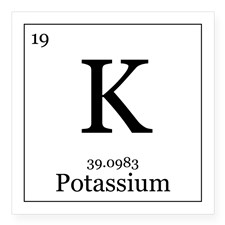
How many neutron are in the atom "K"?

a)

7

b)

2

c)

39

d)

20

38.

What is the number of protons that the element in this image contain?

a)

14

b)

7

c)

15

d)

18

39.

True or False? Neutrons have a negative charge

a)

True

b)

False

40.
If I gain electrons I become
a)
Positive because I've added to my atom
b)
negative because I've added electrons
c)
same because i'm balanced
d)
equal because now I have electrons
41.
An ion with a positive charge is a/an 
a)
anion
b)
cation