wayground logo

Free Printable Worksheets

Font size

S
M
L
XL
Worksheets

3.4 Chemistry of our World

Total questions: 50

Worksheet time: 39mins

Name
Class
Date
1.

series of chemical reactions that convert light energy, water, and carbon dioxide into the food energy molecule glucose and give off oxygen

a)

photosynthesis

b)

cellular respiration

2.

When a plant uses sunlight to make food

a)

photosynthesis

b)

cellular respiration

3.

light energy

a)

photosynthesis

b)

cellular respiration

4.

Photosynthesis input

a)

carbon dioxide

b)

water

c)

oxygen

d)

glucose/sugar

5.

photosynthesis output

a)

oxygen

b)

water

c)

carbon dioxide

d)

glucose/sugar

6.

what would happen if their was no chlorophyll in plants?

a)

the plants would not take in sunlight and die

b)

the plants would still take in sunlight

c)

the plants would produce more oxygen and sugar

7.

Which graph shows the correct relationship between the rate of photosynthesis and the production of oxygen?

a)
b)
c)
8.

Which graph show the correct relationship between the rate of photosynthesis and the amount of light?

a)
b)
c)
9.

Sugar is also known as?

a)

glucose

b)

fat

c)

fruit

d)

oxygen

10.

cellular respiration input

a)

oxygen

b)

glucose (food/sugar)

c)

carbon dioxide

d)

water

11.

cellular respiration output

a)

carbon dioxide

b)

oxygen

c)

glucose/sugar

d)

water

12.

what type of energy is associated with cellular respiration?

a)

light energy

b)

usable energy (ATP)

13.

What type of energy is associated with photosynthesis?

a)

usable energy (ATP)

b)

light energy

14.

aerobic process...

a)

does not require oxygen

b)

requires oxygen

15.

Aerobic process creates what type of energy?

a)

usable energy (ATP)

b)

light energy

16.

Input of aerobic process

a)

oxygen

b)

carbon dioxide

c)

water

d)

glucose

17.

Output of aerobic process

a)

oxygen

b)

water

c)

carbon dioxide

d)

glucose

18.

Why would I take deep breaths and eat after a workout? What is this providing?

a)

Oxygen

b)

Glucose

c)

Carbon Dioxide

d)

Water

19.

Why is cellular respiration important to organisms?

a)

provides us with energy

b)

allows us to not have as much energy

20.

Formula for photosynthesis

a)
b)
21.

Formula for cellular respiration

a)
b)
22.

Formula for cellular respiration

a)

carbon+water=glucose+oxygen

b)

glucose+oxygen=carbon+water

23.

Formula for photosynthesis

a)

glucose+oxygen=carbon dioxide+water

b)

carbon dioxide+water=glucose+oxygen

24.

The burning of fuels provides ____________ for plants

a)

carbon dioxide

b)

oxygen

c)

light

d)

glucose

25.

Organisms, such as animals, breathing provide __________ for plants

a)

carbon dioxide

b)

oxygen

c)

glucose

d)

light

26.

Plants take in carbon dioxide and in return provide organisms such as animals/humans with______________

a)

light

b)

carbon dioxide

c)

oxygen

d)

hellium

27.
What is the water cycle?
a)
the 3 forms of water
b)
the movement of water on, above, or below the surface of the Earth
c)
when water melts
d)
when clouds form
28.
Which best explains why runoff is important?
a)
It returns water to other locations on Earth
b)
It increases the chance of flooding
c)
It makes evaporation occur faster
d)
It increases condensation
29.
What is it called when plants give off water vapor as a waste product?
a)
condensation
b)
evaporation
c)
sublimation
d)
transpiration
30.
The water cycle has no start or end
a)
true
b)
false
31.
What is a layer of rock or sediment that holds water?
a)
glacier
b)
well
c)
aquifer
d)
natural spring
32.
oxygen is a gas produced by _ and used by  _ 
a)
plants and animals 
b)
photosynthesis and carbon dioxide 
c)
animals and plants 
d)
carbon dioxide and photosynthesis
33.
if there is a fire in a forest, there will be less _ in the environment?
a)
nitrogen
b)
oxygen
34.
All of the carbon in existence is continually recycled in the carbon cycle
a)
True
b)
False
35.
How is the burning of fossil fuels related to global warming?
a)
Magic
b)
Fuels are hot
c)
Greenhouse effect
d)
Photosynthesis
36.
Which of the following removes carbon from the atmosphere?
a)
Combustion
b)
Respiration
c)
Photosynthesis
d)
Death
37.
Which process converts carbon in the form of sugar into carbon dioxide gas?
a)
Bioremediation
b)
Photosynthesis
c)
Respiration
d)
Transpiration
38.

Which describes the relationship between plants and animals in the carbon cycle?

a)

Plants produce and release oxygen that animals need

b)

Plants produce and release carbon dioxide that animals need

c)

Animals produce and release oxygen that plants need

d)

Animals produce oxygen that plants turn into carbon dioxide

39.

Carbon molecules cannot be created or destroyed

a)

True

b)

False

c)

Not enough information to answer

40.
Combustion is another word for __________.
a)
Transportation
b)
Respiration
c)
Fossil Fuels
d)
Burning
41.
Carbon can be found in...
a)
The atmosphere
b)
Soil
c)
Fossil fuels
d)
All of the above
42.
Respiration is the process by which animals take in _____ and release _____. 
a)
photosynthesis, air
b)
carbon, oxygen
c)
oxygen
d)
oxygen, carbon dioxide
43.
Why is water the most important substance on the planet?
a)
It Dilutes
b)
Drives Climate
c)
Sustains Life
d)
It's Pretty
44.
What two elements make up water?
a)
Helium and oxygen
b)
Hydrogen and oxygen
c)
helium and carbon
d)
oxygen and carbon
45.
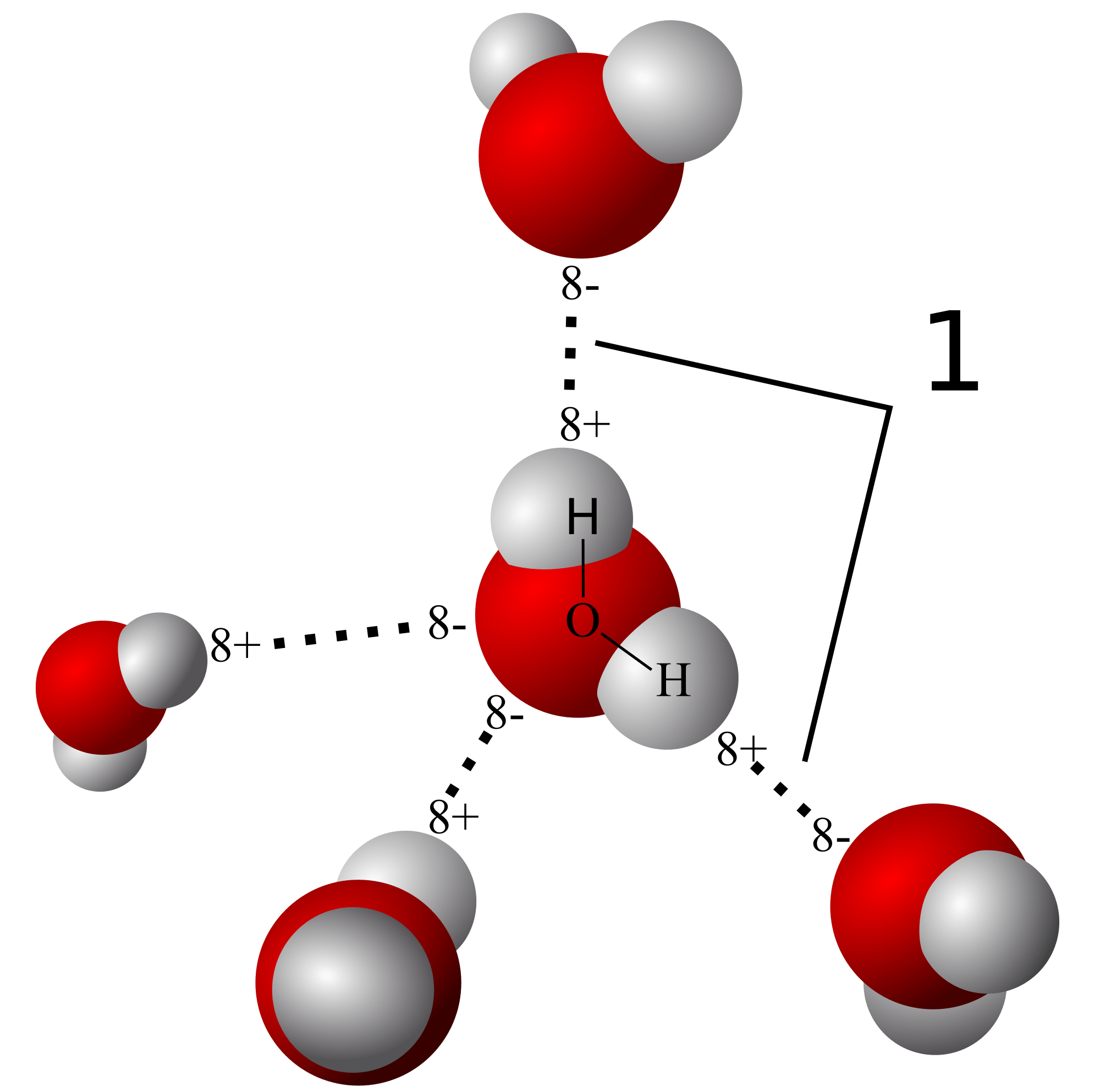
Attractions between water molecules are called
a)
Covalent bonds
b)
Ionic bonds
c)
Polar bonds
d)
Hydrogen bonds
46.
The attraction that causes water and other liquids to form drops on thin films is called ________________. This is also water’s ability to be attraction to other water molecules.
a)
adhesion
b)
capillary action
c)
cohesion
d)
surface tension
47.
Why does ice float?
a)
As water freezes, it expands and its density decreases.
b)
As water freezes, it takes up more hydrogen from the atmosphere, causing it to have a greater buoyancy.
c)
As water freezes, air becomes trapped between the hydrogen bonds of water molecules.
d)
As water freezes, it takes up more oxygen from the atmosphere, causing it to have a greater buoyancy.
48.
Water is a universal solvent because it...
a)
It can be found anywhere
b)
It freezes when it gets cold
c)
floats when frozen
d)
Dissolves most substances
49.
What are abiotic factors?
a)
All of the living things in an ecosystem
b)
All of the non living things in an ecosystem
c)
All of the living and nonliving things combined
d)
A piece of a living thing
50.
What are biotic factors?
a)
All of the living things in an ecosystem
b)
All of the non living things in an ecosystem
c)
All of the living and nonliving things combined
d)
A piece of a living thing