wayground logo

Free Printable Worksheets

Font size

S
M
L
XL
Worksheets

Thermal Energy

Total questions: 47

Worksheet time: 38mins

Name
Class
Date
1.
Conduction is heat transfer by -
a)
Touch
b)
Circles
c)
Waves
2.

Warm air rises and the cool air sinks demonstrates this type of heat transfer.

a)

conduction

b)

convection

c)

radiation

d)

Insolation

3.
The heat from a hot burner to a pot is transferred by ______.
a)
convection
b)
insulation
c)
radiation
d)
conduction
4.

When the 2nd story of a house is warmer than the 1st floor of a house is heat transfer through

a)

conduction

b)

convection

c)

radiation

d)

thermal equilibrium

5.
The sun warming your skin is an example of heat transfer through 
a)
conduction
b)
convection
c)
radiation
d)
thermal electricity
6.

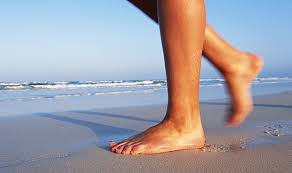
Walking on the warm sand sand with your bare feet demonstrates this type of heat transfer.

a)

conduction

b)

convection

c)

radiation

7.
Hot coffee is stirred with a spoon; the spoon gets hot due to
a)
conduction
b)
convection
c)
radiation
8.
What happens to particles as they cool down?
a)
They slow down
b)
Nothing
c)
They don't move
d)
They speed up
9.
What happens to particles as they heat up?
a)
They slow down
b)
Nothing
c)
They don't move
d)
They speed up
10.
Mittens help keep your hands warm in winter because:
a)
They are conductors of heat.
b)
They are fuzzy.
c)
They are conductors of electrical energy.
d)
They are insulators.
11.
Heat transfer always goes from-
a)
Cold to Hot
b)
Hot to Cold
c)
Heat doesn't transfer
d)
Freezing to Cold
12.
As you touch a hot stove the heat transfers -
a)
from your hand to the stove
b)
from the stove to your hand
c)
It doesn't transfer
13.
Radiation is a method of thermal energy transfer that moves -
a)
through empty space.
b)
when objects touch.
c)
only through solids.
d)
in the motion of fluids.
14.
Which of the following describes a way in which heat energy will be transferred by conduction?
a)
Sample 1 to Sample 2
b)
Sample 3 to Sample 2
c)
Sample 3 to Sample 1
d)
Sample 2 to Sample 3
15.

Which was the most effective at preventing heat transfer from the water to the environment?

a)

Container P

b)

Container Q

c)

Container R

d)

Container S

16.
Which of following is a conductor?
a)
Wooden Stick
b)
Styrofoam Cooler
c)
Metal Pot
d)
Plastic Container
17.
This is an example of-
a)
Conduction
b)
Convection
c)
Radiation
18.
This is an example of-
a)
Conduction
b)
Convection
c)
Radiation
19.
This is an example of-
a)
Conduction
b)
Convection
c)
Radiation
20.
What type of material makes the best conductor?
a)
Food
b)
Wood
c)
Styrofoam
d)
Metal
21.
What type of material makes the best insulators?
a)
Aluminum
b)
Copper
c)
Styrofoam
d)
Metal
22.

Thermal energy is the _____________.

a)

average kinetic energy

b)

total energy of a substance

c)

transfer of heat

d)

all of the above

23.

Temperature is the _____________.

a)

measurement of average kinetic energy

b)

total energy of a substance

c)

transfer of heat

d)

all of the above

24.

Heat is the _____________.

a)

measurement of average kinetic energy

b)

total energy of a substance

c)

transfer of thermal energy

d)

all of the above

25.

Ice cubes get put inside a glass of lemonade. Select the correct energy transfer.

a)

Ice transfers heat and cools the lemonade

b)

lemonade and ice transfer energy back and forth equally

c)

lemonade transfers heat and melts the ice

26.

What do horizontal lines on a phase change graph indicate?

a)

increasing temperature

b)

increasing temperature & phase change

c)

decrease in temperature & phase change

d)

no change in temperature & phase change

27.
What is the phase change of a solid to a liquid?
a)
freezing
b)
melting
c)
boiling
d)
condensation
28.
How are solids different from liquids?
a)
particles in solids are moving freely around each other.
b)
particles in solids have no motion.
c)
particles in solids are vibrating in place.
d)
particles in solids have more motion than in liquids
29.
2. A change of state from a liquid to a solid is called....
a)
Melting
b)
Freezing
c)
Evaporation
30.
5. What is it called when a solid turns directly into a gas?
a)
Sublimation
b)
Condensation
c)
Liquid
31.
Change from Gas to Solid is called........
a)
Sublimation
b)
Deposition
c)
Fusion
d)
condensation
32.
Change from gas to liquid...
a)
condensation
b)
evaporation
c)
expansion
d)
movement
33.
Change from Liquid to Solid is call......
a)
fusion
b)
Freezing
c)
sublimation
d)
evaporation
34.
change from liquid to gas is called....
a)
expansion
b)
evaporation
c)
condensation
d)
sublimation
35.
What happens to particles when they are heated?
a)
They speed up and spread out
b)
They slow down and compress
c)
They stop moving
d)
They move closer together and speed up
36.
Melting is ...
a)
liquid to solid
b)
solid to liquid
c)
solid to gas
d)
gas to liquid
37.
Boiling is ...
a)
liquid to gas
b)
gas to solid
c)
gas to liquid
d)
solid to liquid
38.
Which of the following happen when a solid becomes a liquid.
a)
The particles move slower and get closer
b)
The particles move faster and move farther apart
39.
The speed of a substance molecules changes when the _________ changes.
a)
volume
b)
mass
c)
temperature
d)
weight
40.
Which of the following happen when a solid becomes a liquid?
a)
The particles move closer together
b)
The particles move faster and slide past each other
c)
The particles slow down
d)
The particle break away from each other
41.
Which of these has the least amount of energy?
a)
particles in a solid
b)
particles in a gas
c)
particles in a liquid
42.

What two factors affect thermal energy?

a)

temperature

b)

heat

c)

amount of particles

d)

conduction rate

43.

Which has more thermal energy:

a spoon full of soup or a bowl of soup?

a)

spoon

b)

bowl

44.
There are four cups of hot cocoa. The cup sizes are shown. The temperature of the cocoa in each cup is 25 degrees celsius. Which cup has the MOST thermal energy?
a)
Large cup (Trenta)
b)
Small cup (Tall)
c)
Venti
d)
All three are the same temperature so they have same thermal energy
45.
What is Specific Heat?
a)
The  amount of thermal energy required to increase the temperature of 1kg of a material by 1°C.
b)
The  amount of radiant energy required to increase the temperature of 1kgof a material by 1°C
c)
The  amount of energy required to increase the temperature of 1kgof a material by 1°C.
d)
The  amount of friction  required to increase the temperature of 1kgof a material by 1°C.
46.
A high specific heat means...
a)
It heats up quickly with energy added
b)
It requires more energy to change temperature
47.
Copper, Stainless Steel, Carbon Steel, and Zinc were all heated using the same thermal energy.  What material would be the coolest after being heated?
a)
Copper
b)
Carbon Steel
c)
Zinc
d)
Stainless Steel