
 Worksheets
EWITS 9 Weeks Exam Review
Total questions: 65
Worksheet time: 2hrs 59mins
A battery or other device which provides energy for a circuit is called a _______.
Conductor
Power source
Parallel circuit
Complete circuit
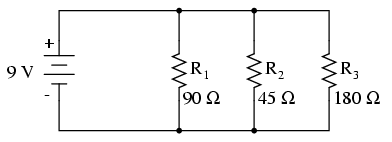
When different currents flow through each resistor it is called a ________.
Pathway
Conductor
Series circuit
Parallel circuit
The flow of electricity through a conductor is called _______.
Battery
Current
Static electricity
Switch

Open circuit
Closed circuit

A negatively charged subatomic particle is called __________
neutron
proton
electron
parteon
A positively charged subatomic particle is called __________
neutron
proton
electron
parteon


To complete the circuit, a wire should be placed from —

How is the amount of resistance related to the amount of current in a circuit?
directly proportional
inversely proportional
equal
What is the most commonly used metals for making wires?
Gold
Silver
Copper
Alloy
Adding resistors to a circuit makes a dependent variable _______________.
slow down
speed up
stay the same


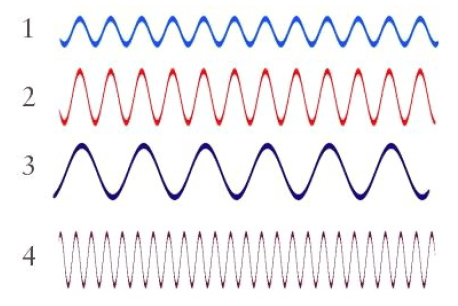
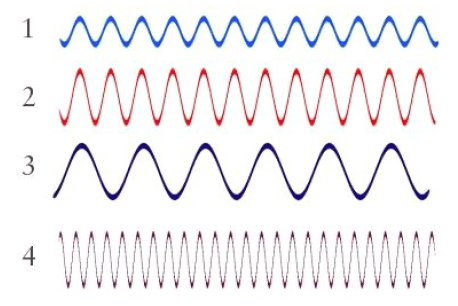


Bailey researched how waves travel through the ground during an earthquake. She drew a diagram of one, called an S wave, moving through Earth’s crust. Based on her diagram, what kind of wave is an S wave?
sound
light
longitudinal
transverse
Earth quake waves are not really waves
If the angle of incidence is 65 degree, what is the angle between the incident ray and reflecting surface?
65
25
130
0

What are the 7 colors of the visible light spectrum in order of decreasing wavelength?
Red, orange, yellow, green, blue, indigo, violet
Violet, indigo, blue, green, yellow, orange, red
Red, yellow, orange, blue, green, violet, indigo
Blue, indigo, violet, green, red, orange, yellow

This term describes objects that transmit some light.
Transparent
Translucent
Opaque
Diffusion

The meaning of this term is to cause to separate and move in different directions.
Reflect
Refract
Transmit
Disperse

The meaning of this term is to allow the passage of energy or matter.
Reflect
Refract
Transmit
Disperse

This term means to change direction or bend from the original path.
Reflect
Refract
Transmit
Disperse

In general, which types of materials transmit sounds most quickly?
Solids, then gases, then liquids
Gases, then liquids, then solids
Solids, then liquids, then gases
Gases, then solids, then liquids
Light always travels in a
straight line
wavy line
curved line
zig-zag line

Opaque substances are good at reflecting and _____ light.
absorbing
dirracting
refracting
reflecting
scattering
What can light waves travel through?
Sand
Wall
Water
Rock
Does sound transmit longer in air or in a solid?
air
solid
A student performs an experiment by adding heat to a beaker of ice and measuring the temperature at regular intervals. A graph of the resulting data is shown. Move the descriptions into the chart to correctly match the labels in the graph.
liquid water; boiling
solid ice; temperature increasing
solid ice; melting
liquid water; temperature increasing
water vapor; temperature increasing
Based on the energy diagrams, label each diagram as an exothermic or endothermic reaction.
Exothermic
Endothermic
Arrange the waves in order from the waves that carry the MOST amount of ENERGY to the waves that carry the LEAST amount of ENERGY.
Radio Waves
Visible Light Waves
UV Waves
X-Rays

Compared to wave X, which statement is incorrect?
Wave Y has greater energy
Wave Y has shorter frequency
Wave Y has shorter wavelength

Which statement best compares these two waves?
Wave 1 has a higher frequency because it has a longer wavelength than wave 2
Wave 1 has a higher frequency because it has a longer amplitude than wave 2
Wave 2 has more energy because it has a higher amplitude than wave 1
Wave 2 has more energy because it has a higher frequency than wave 1

Hope drew a diagram to model a light wave being reflected when it meets a brick, as shown.
The teacher asked Hope to redraw the diagram in order to model some of the energy
in the light wave being absorbed by the brick.
Which diagram best represents some of the energy in the light wave being absorbed
by the brick?


During an investigation, a teacher places a small permanent magnet with a hole in it onto a wooden rod. The magnet can slide freely up and down the rod. When the teacher places the
magnet and rod on a tabletop above an electromagnet, the magnet slides up the rod as shown
in the diagram.
A student measures how far the magnet slides up the rod each time the teacher adds an
additional battery to the electromagnet. Which question could most likely be answered by this
investigation?
How does the size of the magnet affect the distance the magnet travels up the rod?
How does the distance between the magnet and the electromagnet affect the strength of
the magnetic force of the electromagnet?
How does the amount of the electric current affect the distance the magnet travels up the
rod?
How does the direction of the electric current affect the strength of the magnetic force of
the electromagnet?
Ben wants to test whether the material used to make a disposable cup affects the amount of
thermal energy transferred to a person’s hand. He investigates by carefully pouring the same
volume of 90°C water into a foam cup and into a paper cup.
Which additional step in the investigation will help Ben determine which material reduces
thermal energy (heat) transfer to the hand of a person holding the cup?
Measure the outside surface temperature of each cup after 10 minutes.
Stir the water in each cup for 10 minutes before measuring its temperature.
Vary the amount of water held by each cup before measuring its temperature.
Measure the outside surface temperature of each cup after placing each on a different
surface.

Tyrone gathers amplitude and energy data for four ocean waves, as shown in the table.
Which equation best represents the relationship between the amplitude (A) of an ocean wave
and its energy (E), according to the data in the table?
E = A
E = A2
1/E = A
1/E = A2

The diagram shows an electromagnetic spectrum.
Based on the information shown, which statement is not true?
Ultraviolet waves occur at a higher frequency than Infrared waves.
Gamma Rays have the shortest wavelength of all wave types.
Ultraviolet waves have a longer wavelength than visible light.
Visible light waves carry more energy than microwaves.

This diagram models a sound wave from a car horn hitting a wall.
According to the model, which statement best describes what happens to the sound energy
when the sound wave hits the wall?
Ten percent of the sound energy is absorbed by the wall.
Thirty percent of the sound energy is absorbed by the wall.
Eighty percent of the sound energy is reflected by the wall.
Eighty percent of the sound energy passes through the wall.

A student created an electromagnet out of a piece of copper wire, a nail, and a battery,
as shown.
The student observed that the electromagnet could not lift paper clips off a desktop as expected.
Which hypothesis will most likely help the student build an electromagnet capable of lifting
paper clips?
Using a wooden stick instead of a nail will increase the number of paper clips that the
electromagnet can pick up.
Adding more coils of copper wire to the nail will increase the number of paper clips that
the electromagnet can pick up.
Pushing the coils of copper wire closer together will increase the number of paper clips
that the electromagnet can pick up.
Using a battery that produces less electric current will increase the number of paper clips
that the electromagnet can pick up.

This graph represents sound waves generated by a vibrating string at two energy levels.
Which statement best describes the difference in energy between Wave X and Wave Y?
The energy of Wave Y is 4 times less than the energy of Wave X.
The energy of Wave Y is 4 times greater than the energy of Wave X.
The energy of Wave Y is 16 times less than the energy of Wave X.
The energy of Wave Y is 16 times greater than the energy of Wave X.

A group of students is using resistors to investigate energy changes in electrical circuits.
The group builds an electrical circuit using batteries, a switch, and a 10-ohm resistor. A
schematic of their circuit is shown.
Next, the group builds a similar circuit using a 15-ohm resistor. The group places a thermometer
on each resistor. They record initial temperature measurements and then close both switches.
After 5 minutes, the group records final temperature measurements. Data collected during this
investigation is shown in Table 1.
Which claim is supported by both scientific reasoning and evidence obtained in this
investigation?
When the thermal energy of an object changes, energy has been created or destroyed.
When the kinetic energy of an object changes, energy is transferred to or from the
object.
When the electrical energy of an object changes, energy has been created or destroyed.
When the potential energy of an object changes, energy is transferred to or from the
object.

Students are researching what colors of visible light that different animals are able to see.
They are given the following portion of the electromagnetic spectrum to aid in their research.
Nina has chosen to research bumblebees. Her research shows that bumblebees can see
wavelengths ranging from 400-600 nanometers. Based on this information, what could Nina
conclude about the sight of bumblebees?
Bumblebees only see violet and blue.
Bumblebees only see green and yellow.
Bumblebees see every color but red.
Bumblebees see every color but violet.
Lila wants to call a friend using her cell phone. Which statement best describes what must
take place in order for Lila’s friend to hear her over the phone?
Sound waves travel directly from Lila’s phone to her friend’s phone.
Radio waves travel to a satellite in orbit around Earth and then to her friend’s phone.
Sound waves travel through a series of wires so that the phone receptor will pick up a
signal.
Radio waves travel through a series of towers before sending a signal to her friend’s
phone.


When wires are connected to a battery and a lightbulb in a circuit, the lightbulb is light. Which types of energy are produced by the battery and lightbulb?
Electrical and light
electrical and sound
sound and light
all of the above

A
B
C
D

A
B
C
D

A
B
C
D

A
B
C
D

When gasoline is burned in a car engine, ________ energy is converted into _________ energy.
thermal, chemical
chemical, potential
mechanical, chemical
chemical, mechanical

Name the Energy Conversion of a dryer.
Chemical→ Thermal and Radiant
Electrical → Elastic, Thermal, and Sound
Gravitational → Nuclear, and Thermal
Electrical → Thermal, and Mechanical (Kinetic)

