wayground logo

Free Printable Worksheets

NEW

Font size

S
M
L
XL
Worksheets

Earth, Sun & Moon 19-20

Total questions: 76

Worksheet time: 48mins

Name
Class
Date
1.
The moon seems to change shape from day to day in a cycle that lasts about a month as it goes through _.
a)
revolutions
b)
phases
c)
rotations
d)
eclipses
2.
As the moon's shape appears to get smaller, we say that the moon is _.
a)
swelling
b)
waxing
c)
waning
d)
disappearing
3.
About how long does it take the moon to make one complete cycle around the earth?
a)
65 days
b)
8 days
c)
365 days
d)
28 days
4.
Which moon phase is when you can't see the moon at all?
a)
Waning crescent
b)
Full moon
c)
Waxing gibbous
d)
New moon
5.
Phases of the moon in which the moon appears to be getting larger are referred to as _.
a)
waxing
b)
waning
c)
new
d)
eclipse
6.
Which of the following words describe the phases of the moon?
a)
none, quarter, half, three quarters, full
b)
new, crescent, quarter, gibbous, full
c)
dark, light, half, quarter, blue
d)
first quarter, second quarter, third quarter, fourth quarter
7.
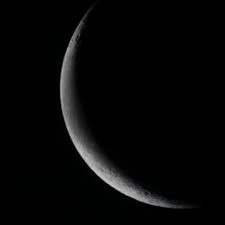
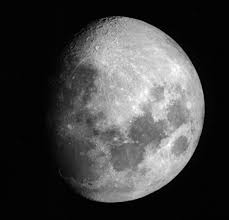
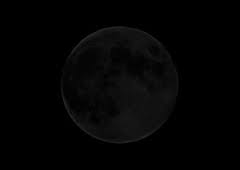
Name the moon phase
a)
waning crescent
b)
waxing crescent
c)
waning gibbous
d)
waxing gibbous
8.
Name the moon phase
a)
waning crescent
b)
waxing crescent
c)
waning gibbous
d)
waxing gibbous
9.
Name the moon phase
a)
waning crescent
b)
waxing crescent
c)
waning gibbous
d)
waxing gibbous
10.
Name the moon phase
a)
waning crescent
b)
waxing crescent
c)
waning gibbous
d)
waxing gibbous
11.
Name the moon phase
a)
waning crescent
b)
waxing crescent
c)
waning gibbous
d)
waxing gibbous
12.
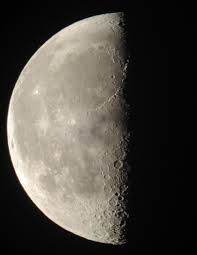
Name the moon phase
a)
First Quarter
b)
Last Quarter
c)
New Moon
d)
Full Moon
13.
Name the moon phase
a)
First Quarter
b)
Last Quarter
c)
New Moon
d)
Full Moon
14.
Name the moon phase
a)
First Quarter
b)
Last Quarter or (third quarter)
c)
New Moon
d)
Full Moon
15.
Name the moon phase that would come AFTER this moon.
a)
waning crescent
b)
waxing crescent
c)
waning gibbous
d)
waxing gibbous
16.
How many phases does the moon go through?
a)
4
b)
8
c)
10
d)
16
17.
Name the moon phase that would come AFTER this moon.
a)
waning crescent
b)
waxing crescent
c)
waning gibbous
d)
waxing gibbous
18.
The moon ____________ around the Earth.
a)
revoloves
b)
rotates
c)
up
d)
down
19.
What moon phase is this picture?
a)
This is the full moon phase.  
b)
This is the waxing crescent moon phase.
c)
This is the waning gibbous moon phase.
d)
This is the waning crescent moon phase.
20.
Earth's ________ on its axis causes day and night.
a)
rotation
b)
revolution
c)
phase
d)
comet
21.
One full orbit of an object around another object is called a ________.
a)
axis
b)
rotation
c)
revolution
d)
satellite
22.
Earth's rotation causes what?
a)
one year
b)
day and night
c)
moon phases
d)
seasons
23.
How long is Earth's rotation?
a)
one day
b)
one year
c)
one decade
d)
one hour
24.
The imaginary line that represents earth's tilt is called what?
a)
axis
b)
equator
c)
prime meridian
d)
degrees
25.

What is it called when something goes around something else?

a)

Revolving

b)

Rotating

c)

Orbiting

d)

Axis

26.

What is the path an object travels as it goes around the sun called?

a)

Revolving

b)

Rotating

c)

Solar system

d)

an orbit

27.
How long does it take for the Earth to make one full orbit around the Sun?
a)
one day
b)
one week
c)
one month
d)
one year
28.
The Earth is rotating on its axis, creating _____
a)
the 12 months
b)
the years
c)
the seasons
d)
day and night
29.
What is the name of the imaginary line running through the North Pole to the South Pole?
a)
orbit
b)
axis
c)
equator
d)
latitude
30.
Which statement explains the position of the side of the Earth where it is night?
a)
The side of the Earth is facing the Moon.
b)
The side of the Earth is facing away from the Sun.
c)
The side of the Earth is being blocked by the Moon.
d)
The side of the Earth is between the Sun and the Moon.
31.
an object that revolves around another object
a)
satellite
b)
axis
c)
rotation
d)
revolution
32.
Why does the Sun appear to be the largest star when there are stars that are much larger than the Sun?
a)
Stars have the same temperature as the Sun.
b)
Stars usually appear in groups called clusters.
c)
The Sun is closer to Earth than other stars.
d)
The Sun is younger than most other stars.
33.

A student used this tool to see distant, faint objects. What is the purpose of this tool?

a)

To collect more light so the objects can appear brighter and closer.

b)

To make far away objects become larger.

c)

To collect less light so the objects appear dimmer.

d)

To make close objects appear larger.

34.
In December, Earth is in position A. Which position will Earth be in after 18 months have passed?
a)
A
b)
B
c)
C
d)
D
35.
Kim observed that the moon on November 4 was in the waxing crescent phase.
Which phase of the moon will Kim observe on November 18?
a)
full moon
b)
last quarter
c)
waxing gibbous
d)
waning gibbous
36.
Which of these describes the location of the sun?
a)
at the center of the solar system
b)
between Earth and the Moon
c)
between the inner and outer planets
d)
on the outer edge of the solar system
37.
Which of these describes the location of the sun?
a)
at the center of the solar system
b)
between Earth and the Moon
c)
between the inner and outer planets
d)
on the outer edge of the solar system
38.
Which statement explains the position of the side of the Earth where it is night?
a)
The side of the Earth is facing the Moon.
b)
The side of the Earth is facing away from the Sun.
c)
The side of the Earth is being blocked by the Moon.
d)
The side of the Earth is between the Sun and the Moon.
39.
In six months, how far will Earth have gone in its orbit around the Sun compared to how far the Moon has gone in its orbit around Earth?
a)
* Earth - completed one orbit of the Sun. 
* Moon - completed one orbit of Earth.
b)
* Earth - completed six orbits of the Sun.
* Moon - completed twelve orbits of Earth.
c)
* Earth - completed half of one orbit of the Sun.
* Moon - completed six orbits of Earth.
d)
* Earth - completed a third of one orbit of the Sun.
* Moon - completed three orbits of Earth.
40.
September 20-22, when the number of hours of daylight and darkness
are the same
a)
autumnal equinox
b)
vernal equinox
c)
autumnal solstice
d)
vernal solstice
41.
June 20-22, the longest day of the year in the Northern Hemisphere
a)
summer solstice
b)
winter solstice
c)
autumnal equinox
d)
vernal equinox
42.
March 20-22, when the number of hours of daylight and darkness are the same
a)
vernal equinox
b)
vernal solstice
c)
winter solstice
d)
winter equinox
43.
December 20-22, the shortest day of the year in the Northern Hemisphere
a)
winter solstice
b)
winter equinox
c)
vernal solstice
d)
vernal equinox
44.
when Earth passes directly between the Sun and the Moon, casting a shadow on the Moon
a)
lunar eclipse
b)
solar eclipse
c)
lunar cycle
d)
solar cycle
45.
when the Moon passes directly between the Sun and Earth, casting a shadow on the Earth
a)
solar eclipse
b)
lunar eclipse
c)
new moon
d)
full moon
46.
a craft that helps scientists explore outer space
a)
space probe
b)
hand lens
c)
microscope
d)
barometer
47.

What is the Sun?

a)

a planet that other planets orbit

b)

a star that planets orbit

c)

a planet that orbits other planets

d)

a star that orbits planets

48.
The __________ has planets, moons, comets, and asteroids.
a)
solar system
b)
earth
c)
rotation
d)
United States
49.
Which moon phase is shown in this diagram?
a)
new moon
b)
first quarter
c)
full moon
d)
last quarter/3rd quarter
50.
Tides are caused by ___________
a)
wind
b)
gravitational pull of moon
c)
waves gravitation toward land
d)
rain
51.
Name the phase of the moon for letter f
a)
Waning Gibbous
b)
Waxing Gibbous
c)
Waning Crescent
d)
Waxing Crescent
52.

Which model of the solar system has the sun in the center with all of the planets orbiting it?

a)

heliocentric

b)

geocentric

53.

The four seasons occur in -

a)

one year

b)

one month

c)

one week

d)

one day

54.

What causes the four seasons?

a)

The revolution of the moon around the Earth

b)

The revolution of the Earth around the Sun and position of its axis

c)

The revolution of the Sun around the earth

d)

The rotation of your body when you sit on a spinning chair

55.

Every day...

a)

the moon completely revolves around the Earth

b)

the sun rotates on its axis

c)

tides rise and fall

d)

the seasons change

56.

If you saw a full moon today, how long would you have to wait to see another full moon?

a)

One day

b)

One week

c)

One month

d)

One year

57.
What season does A represent?
a)
Summer
b)
Fall
c)
Winter 
d)
Spring
58.
What season does B represent?
a)
Summer
b)
Fall
c)
Winter 
d)
Spring
59.
What season does A represent?
a)
Summer
b)
Fall
c)
Winter 
d)
Spring
60.
When the South pole is tilted towards the Sun, it is...
a)
Summer in both hemispheres
b)
Winter in both hemispheres
c)
Summer in the Northern Hemisphere and Winter in the Southern Hemisphere
d)
Winter in the Northern Hemisphere and Summer in the Southern Hemisphere
61.
About how often does the moon revolve around the earth?
a)
about a year
b)
about a month
c)
about a week
d)
about a day
62.
What does the term waxing mean when related to the moon?
a)
growing larger
b)
getting smaller
c)
rotating
d)
revolving
63.
If it is day on one side of Earth, then what is happening on the other side of Earth?
a)
It is day there, too!
b)
It is raining.
c)
It is very hot.
d)
It is night.
64.
Which word means to spin?
a)
axis
b)
rotate
c)
revolve
d)
revolution
65.
Which phase of the moon shows an entire circle reflected by the sun?
a)
New
b)
Full Moon
c)
Waxing Crescent
d)
Waning Crescent
66.

An equinox occurs when

a)

neither hemisphere is tilted toward or away from the sun.

b)

the Northern Hemisphere is tilted away from the sun.

c)

the Northern Hemisphere is tilted toward the sun.

d)

Earth’s axis is parallel to the sun’s rays.

67.

At which location in Earth's rotation is it summer in the Northern Hemisphere?

a)

SS

b)

VE

c)

WS

d)

AE

68.
Of the Earth, Sun, and Moon, which ones orbit another object?
a)
the Sun and the Earth
b)
the Sun and the Moon
c)
the Moon and the Sun
d)
the Moon and the Earth
69.
This model can be used to show some relationships between the Earth, Sun, and Moon.
The model shows all of the following EXCEPT –
a)
the relative sizes of the Moon and Earth
b)
the way the Moon revolves around the Earth
c)
the composition of the Moon, Earth, and Sun
d)
how the Moon and the Earth revolve around the Sun
70.
Why do we always see the same side of the moon from Earth?
a)
because the phases change
b)
because it rotates and revolves at the same rate
c)
because half of the moon always receives sunlight
d)
The moon changes positions
71.
Sara is recording water levels int he ocean near her home once an hour for one day.  she observes the water level slowly rising and falling twice that day.  What is Sara observing?
a)
Currents
b)
Waves
c)
Tides
d)
Gravity
72.
Suppose that a camera on Earth takes a picture of an astronomical event.  The picture shows an object that is large, dark, and has a bright area immediately around it.  Which event does this picture most likely show?
a)
Total lunar eclipse
b)
Waning gibbous moon
c)
Waxing crescent moon
d)
Total solar eclipse
73.

Seasons are caused by

a)

Earth's tilted axis (23.5 degrees)

b)

Earth's distance from the sun

c)

Rotation on Earth's axis

d)

The months of the year

74.
a)
Position 1
b)
Position 2
c)
Position 3
d)
Position 4
75.
a)
Position 1
b)
Position 2
c)
Position 3
d)
Position 4
76.
a)
Position 1
b)
Position 2
c)
Position 3
d)
Position 4