Wayground logo

Free Printable Worksheets

Font size

S
M
L
XL
Worksheets

Electromagnetism

Total questions: 165

Worksheet time: 2hrs 8mins

Name
Class
Date
1.

What happens to the strength of a magnetic field as you move away from the magnet?

a)

The strength of the magnetic field increases.

b)

The strength of the magnetic field doesn't change.

c)

The strength of the magnetic field is doubled.

d)

The strength of the magnetic field decreases.

2.

Particles with opposite charges ____________ and particles with same (or like) charges ____________.

a)

attract, repel

b)

repel, repel

c)

attract, attract

d)

repel, attract

3.
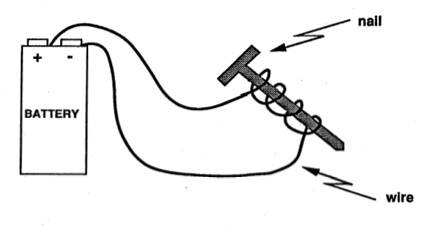
This is a picture of a simple electromagnet. How can the electromagnet be made stronger?
a)
Add more coils of wire to the nail.
b)
Use a smaller battery.
c)
Reverse the poles of the magnet.
d)
Remove all the coils and the nail.
4.

Which of the following is not a good conductor?

a)

Copper

b)

Silver

c)

Aluminum

d)

Plastic

5.

What happens when an electric current flows through a wire?

a)

The wire begins to spin.

b)

Nothing happens.

c)

A field of gravity is created around the wire.

d)

A magnetic field is created around the wire.

6.

What does this image show?

a)

Parallel circuit

b)

Series circuit

c)

Magnet

d)

Electromagnet

7.

The area of magnetic force around a magnet is known as its ____________.

a)

magnetism

b)

magnetic current

c)

magnetic field

d)

electric current

8.

Increasing the number of coils in an electromagnet will _________ the power of the magnet.

a)

decrease

b)

increase

c)

not affect

9.

What type of core is best for electromagnets?

a)

Steel

b)

Iron

c)

Plastic

d)

Copper

10.

As the strength of a magnetic field increases, the ability to attract metal objects ____________.

a)

increases

b)

decreases

c)

stays the same

11.

What is a magnetic material?

a)

A material that becomes positively charged when a magnet is brought near it.

b)

A material that produces a magnetic force.

c)

A material that becomes negatively charged when a magnet is brought near it.

d)

A material that is attracted or repelled by a magnet.

12.

What is the difference between a conductor and insulator?

a)

conductor: allows electricity to flow easily.

insulator:does not allow electricity to flow easily

b)

conductor: does not allow electricity to flow easily

insulator: allows electricity to flow easily

13.

The picture above is an example of what?

a)

Magnetic field

b)

Electric field

c)

Repulsion

d)

Attraction

14.

What would happen with the magnets in the picture above?

a)

They would repel

b)

Nothing

c)

They would attract

d)

They would repel and then attract

15.

What must the electrons do in an object to give it a magnetic field?

a)

Flow in the same direction

b)

Flow in the opposite direction

c)

Collide into one another

d)

Equal the number of protons and neutrons

16.
What is true about electricity and magnetic fields?
a)
Electricity is needed to create any magnet.
b)
Electricity always creates a magnetic field.
c)
Electricity is stronger than a magnetic field.
d)
Electricity prevents magnetic fields from occurring.
17.
The ability of some materials to attract certain metals is called
a)
Electricity
b)
Magnetism
c)
Electromagnetism
d)
Atoms
18.

If the north pole of a magnet is brought close to the south pole of another magnet, what will happen?

a)

They will atrract each other

b)

They will repel each other

c)

They will demagnitize

d)

The south pole will turn around so the north pole is facing the other magnet.

19.

Which sides of the magnet repel each other?

a)

A) North and North Pole

b)

B) South and South Pole

c)

C) The North and South Pole

d)

D) A and B

e)

E) A, B,C

20.

Which answer describes a magnet best.

a)

A material that has two north poles

b)

A material that has a two south poles

c)

A material that has a north and a south pole

d)

An electron

21.

Which sides of the magnet attract each other?

a)

A) North and North Pole

b)

B) South and South Pole

c)

C) The North and South Pole

d)

D) A and B

e)

E) A, B,C

22.

Protons have a ____________ charge.

a)

negative

b)

neutral

c)

positive

23.

Electrons have a ____________ charge.

a)

negative

b)

neutral

c)

positive

24.

A charged atom is called a(n) __________.

a)

proton

b)

neutron

c)

electron

d)

ion

25.

A current is produced when _______________ flow in a circuit.

a)

protons

b)

neutrons

c)

electrons

d)

nucleons

26.

Electric current is measured in ____________.

a)

Newtons (N)

b)

Amperes (A)

c)

Hertz (Hz)

27.

The south ends of two magnets will _________ each other.

a)

repel

b)

attract

28.

Opposite charges do what?

a)

Attract

b)

Repel

29.

A _______________ is a current-carrying coil of wire with many loops.

a)

magnet

b)

electromagnet

c)

solenoid

d)

compass

30.

A _____________ transforms mechanical energy into electrical energy.

a)

generator

b)

electromagnet

c)

circuit

d)

magnetic field

31.

What three minerals are attracted to a magnet?

a)

Gold, copper, cobalt

b)

Cobalt, aluminum, silver

c)

Iron, copper, aluminum

d)

Iron, nickel, cobalt

32.

An atom becomes _______ when it gains electrons.

a)

Positive

b)

Neutral

c)

Negative

d)

Invisible

33.
As electrons move, they make
a)
A. electromagnetism.
b)
B. auroras.
c)
C. ferromagnetism.
d)
D. magnetic fields.
34.
The attraction or repulsion created by spinning electric charges
a)
A. electric generator
b)
B. magnetic force
c)
C. solenoid
d)
D. electromagnet
35.
A device that increases or decreases the voltage of alternating current
a)
A. magnet
b)
B. magnetic pole
c)
C. transformer
d)
D. magnetic force
36.
A device that converts electrical energy into mechanical energy
a)
A. electromagnet
b)
B. electromagnetic induction
c)
C. electric motor
d)
D. electromagnetism
37.
A device that converts mechanical energy into electrical energy
a)
A. electric generator
b)
B. electric motor
c)
C. electromagnetic induction
d)
D. electric generator
38.
The process of creating a current in a circuit by changing a magnetic field
a)
A. electric generator
b)
B. electric motor
c)
C. electromagnetic induction
d)
D. magnet
39.
Which of the following are two kinds of magnets?
a)
A. atoms, domains
b)
B. magnetic fields, magnetic poles
c)
C. ferromagnets, electromagnets
d)
D. magnesia magnets, magnetite magnets
40.
If you wrap more coils around an electromagnet, it will become 
a)
brighter
b)
stronger
c)
weaker
d)
invisible
41.
What is the flow of electricity?
a)
electric motor
b)
Electric current
c)
Electric eel
d)
electric circuit
42.

The area around a magnet is called the .....

a)

attraction zone

b)

work area

c)

magnetic field

d)

hot zone

43.
A north pole and a south pole will attract.
a)
True
b)
False
44.

Every magnet has a:

a)

East and West pole

b)

North and South pole

c)

East and South pole

d)

North and West pole

e)

Chicago and Saint pole

45.

These magnetic domains are:

a)

strongly magnetized

b)

slightly magnetized

c)

unmagnetized

46.
Are the magnetic field lines in the picture correct?
a)
Yes, because they point from north to south.
b)
No, because they point from north to south (they're supposed to go the other way).
c)
Yes, because the North pole is on the left in all pictures.
d)
No, because the North pole is on the left in all pictures (it's supposed to be on the right).
47.
Electric current flowing through a wire produces
a)
static electricity
b)
an open circuit
c)
a permanent magnet
d)
a magnetic field
48.

When running a current through a wire, what do the blue lines represent?

a)

The wire spinning

b)

A magnetic field that was created

c)

Electrons leaving

d)

Electricity

49.

Which one represents the magnetic field lines of magnets repelling?

a)

A

b)

B

50.

Which one represents the magnetic field lines of magnets attracting?

a)

A

b)

B

51.
What does attract mean?
a)
to pull apart
b)
to jump
c)
to come together
d)
to shop
52.
Where is the force of attraction the strongest on a magnet?
a)
at the poles
b)
in the middle
c)
above the magnet
d)
below the magnet
53.
What happens when two bar magnets repel each other?
a)
The poles of the magnets pull toward each other.
b)
The poles of the magnets push away from each other.
c)
The centers of the magnets pull toward each other.
d)
The centers o the magnets push away from each other.
54.
What will happen when these magnets are brought close together?
a)
They will attract each other.
b)
They will repel each other.
c)
Both magnets will turn to the left
d)
Both magnets will turn to the right
55.
In order for an electromagnet to be formed, an __________ current must pass through a coil of __________ wrapped around an ________ core.
a)
wire, iron, electric
b)
electric, wire, iron
c)
iron, electric, wire
56.
While electric current is flowing through a wire, what surrounds the wire?
a)
a magnetic field
b)
a glowing light
c)
neutrons
d)
protons
57.
Generators are devices that convert _____ energy into _____ energy.
a)
chemical; mechanical
b)
mechanical; electrical
c)
electrical; mechanical
d)
potential; kinetic
58.
Which device uses mechanical energy to produce electrical energy?
a)
Electric Motor
b)
Magnet
c)
Generator
d)
Solar Cell
59.
What energy do you put IN to a generator?
a)
Mechanical
b)
Electrical
c)
Thermal
d)
Potential
60.
What type of energy comes OUT of a generator?
a)
Mechanical
b)
Electrical
c)
Thermal
d)
Potential
61.
What is created when a wire moves between the poles of a magnet?
a)
A. a ferromagnet
b)
B. a solenoid
c)
C. an electromagnet
d)
D. an electric current
62.
According to the Right Hand Rule, where is the magnetic field generated around a current-carrying wire?
a)
Perpendicular to the wire
b)
Parallel to the wire
63.
Faraday demonstrated that an electric current can be created by...
a)
Having a magnet near by
b)
Moving a magnet near a wire
c)
Hooking a wire up to a battery
d)
Running a generator
64.
A device that increases or decreases the voltage of alternating current
a)
A. magnet
b)
B. magnetic pole
c)
C. transformer
d)
D. magnetic force
65.
A coil of wire with an electric current in it is called a(n)
a)
A. transformer.
b)
B. electric generator.
c)
C. electric motor.
d)
D. solenoid.
66.
The flow of electricity through a conductor
a)
Battery
b)
Current
c)
Static electricity
d)
Switch
67.
The flow of electricity in a circuit-
a)
current
b)
flow
c)
circuit
68.
Electricity that flows in a closed path is called a
a)
path
b)
current
c)
circuit
69.
In a parallel circuit the current
a)
makes one circle
b)
stays in one path
c)
splits and goes through two components
70.
The flow of electricity requires a
a)
complete path
b)
incomplete path
c)
insulated current
71.
Two types of circuits are
a)
parallel and magnetic
b)
electromagnetic and series
c)
series and parallel
72.
When socks get stuck to towels in your dryer, this is an example of________________
a)
current electricity
b)
static electricity
73.

Static means ____________.

a)

moving

b)

not moving

74.
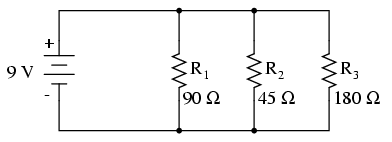
This is an example of a _______ circuit
a)
open
b)
series
c)
parallel
d)
square
75.
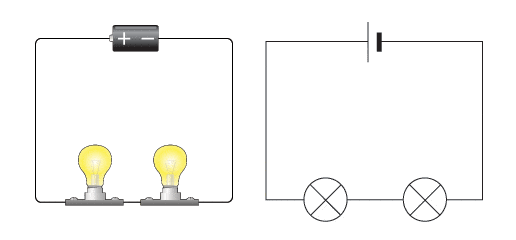
This is an example of a ______ circuit
a)
Series
b)
Parallel
c)
Open
d)
Dihexihedral
76.
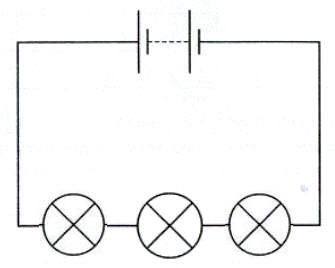
What kind of circuit is this?
a)
Series
b)
Consecutive
c)
Parallel
d)
Training
77.
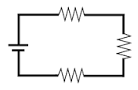
What kind of circuit is this?
a)
Series
b)
Consecutive
c)
Parallel
d)
Training
78.
What kind of circuit is this?
a)
series
b)
parallel
79.
what kind of circuit is this?
a)
parallel
b)
series
c)
chris barton
d)
open
80.
____________ stops the flow of electricity.
a)
A conductor
b)
An insulator
c)
A magnet
81.
Two types of circuits are
a)
parallel and magnetic
b)
electromagnetic and series
c)
series and parallel
82.
The unit for current is the 
a)
Volt
b)
Ohm
c)
Electron
d)
Amp
83.
In a ________ circuit there are multiple paths for the current to take.
a)
Series
b)
Parallel
84.
In a _________ circuit, if one bulb goes out then the entire circuit doesn't work.
a)
Series
b)
Parallel
85.
The continuous flow of electric charges through a material is called...
a)
Electric Field
b)
Electric Force
c)
Electric Current
d)
Electric Circuit
86.
What type of circuit is pictured?
a)
series
b)
parallel
87.
As the resistance in a circuit increases, the electric current __________.
a)
increases
b)
decreases
c)
stays the same
88.
Which formulas represents Ohm's law?
a)
V=IR
b)
R=IV
c)
I=RV
89.
Which subatomic particles have a positive charge?
a)
neutrons
b)
electrons
c)
protons
90.
What is the unit for resistance?
a)
Volts
b)
Amperes
c)
Ohms
91.
Electricity is the flow of _________.
a)
protons
b)
neutrons
c)
electrons
92.

What is electricity?

a)

an object that electrons do not flow through

b)

energy created by moving charged particles

c)

when two objects repel each other

d)

a circuit that has only one path for electricity to flow

93.

A parallel circuit has more than one path for electricity to flow

a)

true

b)

false

94.

Items that have opposite charges do what?

a)

attract

b)

repel

c)

nothing changes

95.

Items that have the same charge will do what?

a)

attract

b)

repel

96.

What is the build up of electrical charges in one place called?


a)

neutrons

b)

static electricity

c)

insulator

d)

conductor

97.

Electrical energy moves through materials that are ________.

a)

insulators

b)

hot

c)

plastic

d)

conductors

98.

________ do not conduct electricity well.

a)

magnets

b)

insulators

c)

lightning

d)

conductors

99.

Select all that are conductors.

a)

copper

b)

plastic

c)

rubber

d)

iron

e)

silver

100.

Select all that are insulators.

a)

rubber

b)

plastic

c)

iron

d)

copper

e)

wood

101.

What do you call a circuit where there are 2 or more pathways for the current?

a)

series circuit

b)

open circuit

c)

parallel circuit

d)

short circuit

102.

What kind of circuit only has one pathway for the current?

a)

series circuit

b)

open circuit

c)

parallel circuit

d)

short circuit

103.

Who experimented with electromagnetism?

a)

Thomas Edison

b)

Benjamin Franklin

c)

Michael Faraday

d)

Abraham Lincoln

104.
Magnetism created by an electric current
a)
electricity
b)
electromagnetism
c)
wind energy
105.
An accumulation of electrons on an object is known as ___________.
a)
current
b)
AC
c)
static electricity
106.
Which way do electrons flow?
a)
Positive to Negative
b)
Negative to Positive
107.
What does a resistor do? 
a)
Reduces the flow of electrons
b)
Reduce the flow of the current
c)
Increase flow of electrons
d)
Decreases the flow of electrons 
108.
What it the formula to find voltage. 
a)
I= V/R
b)
R=V/I
c)
V= I x R 
109.
The process of transferring charge by touching or rubbing 
a)
Induction 
b)
Conduction 
c)
Friction 
d)
Conductor 
110.
The rearrangement of electrons on a neutral object caused by a nearby charged object 
a)
Induction 
b)
Conduction 
c)
Friction 
d)
Conductor 
111.
Electric current that flows in only one direction. 
a)
Voltage 
b)
Direct Current 
c)
Alternating Current
d)
Series Circuit 
112.
Electric current that reverses its direction of flow in a regular pattern  
a)
Voltage 
b)
Direct Current 
c)
Alternating Current 
d)
Parallel Circuit 
113.
According to this law, the current in a circuit equals the voltage difference divided by the resistance. 
a)
Law of Conservation of Energy 
b)
Ohm's Law 
c)
Law of Conservation of Charges
d)
Newton's First Law 
114.
Magnetism is generated by moving
a)
protons.
b)
electrons.
c)
neutrons.
d)
elements.
115.
What do the lines around this magnet represent?
a)
North Pole
b)
South Pole
c)
Magnetic Declination
d)
Magnetic Field
116.
As the distance between two magnets increases (they get farther apart), the force between them:
a)
Increases
b)
Decreases
c)
Stays the Same
117.
Which direction is the North Pole of this electromagnet?
a)
Right
b)
Left
c)
Up
d)
Down
118.
In un-magnetized materials the domains are __________ aligned.
a)
super
b)
slightly
c)
randomly
d)
always
119.
Electric motors are devices that convert _____ energy into  _____ energy.
a)
electrical; mechanical
b)
mechanical; electrical
c)
chemical; potential
d)
mechanical; kinetic
120.

What device takes in mechanical energy and produces electricity?

a)

motor

b)

generator

c)

electromagnet

d)

battery

121.
If you cut a magnet in half, what happens to the poles?
a)
One half gets the North Pole, the other half gets the South Pole
b)
Both halves get only a North Pole
c)
Both halves get only a South Pole
d)
Both halves get a North pole and a South Pole
122.
A refrigerator magnet is an example of a:
a)
magnetic material
b)
permanent magnet
c)
horseshoe magnet
d)
temporary magnet
123.
An electromagnet's poles may be reversed by:
a)
decreasing the voltage of the coil
b)
increasing the number of coils
c)
changing the direction of current flow
d)
altering the material used to make the coils
124.
Which direction is the North Pole of this electromagnet?
a)
Right
b)
Left
c)
Up
d)
Down
125.
When two magnets attract, they ______________
a)
push apart
b)
change color
c)
get colder
d)
pull together
126.
When two magnets repel, they ________________
a)
change color
b)
pull together
c)
push apart
d)
get colder
127.
How many poles does a magnet have?
a)
1
b)
2
c)
3
d)
4
128.
What is an electromagnet?
a)
a magnet that creates an electric current
b)
a magnet created by an electric current
c)
a magnet that has an electric charge
d)
an electric charge that is magnetic
129.
Electric current passing through a wire produces ________.
a)
permanent magnet
b)
magnetic field around wire
c)
compass
d)
geographic poles
130.
The groups of atoms which can align to create a magnet are called ________.
a)
domains
b)
magnetic units
c)
molecules
d)
electrons
131.
Region around a magnet in which magnetic force can act.
a)
Magnetic field 
b)
Magnetic force
c)
Domain
d)
Perimeter
132.

One Ampere equals

a)

one volt

b)

one milliamp

c)

C/sec

d)

all of them equal an Ampere

133.

Which of the following is the unit for electric potential?

a)

ohms

b)

voltage

c)

Joule/Coulomb

d)

Both voltage and Joule/Coulomb

134.

Electrons flow from _______ to _________.

a)

negative to negative

b)

negative to positive

c)

positive to positive

d)

positive to negative

135.

The ratio of electric potential across a circuit element to the current flowing through it is called:

a)

voltage

b)

current

c)

resistance

d)

power

136.

Electric fields point ______ a positive charge, and _____ a negative charge.

a)

from, from

b)

toward, toward

c)

from, toward

d)

toward, from

137.

What is the fundamental unit of an electric charge?

a)

volt

b)

Joule

c)

Coulomb

d)

Ampere

138.

One volt equals one _________.

a)

volt per coulomb

b)

coulomb per kg

c)

joule per coulomb

d)

kg per coulomb

139.

Electric current flows from ______ to _______.

a)

negative, positive

b)

positive, negative

c)

north, south

d)

south, north

140.

What is the unit of electron binding energy?

a)

volt-coulomb

b)

joule-coulomb

c)

volt

d)

electron-volt

141.

In Coulombs Law for electromotive force of charges, the product of the charges has a(n) ________ relationship to the square of the distance between them.

a)

direct

b)

indirect

c)

equal

d)

inverse

142.

A magnetic field always surrounds a conductor in which electricity is flowing.

a)

True

b)

False

143.

Magnetic fields only exist when current is flowing.

a)

true

b)

false

144.

Using Oersted's Right Hand Rule, the fingers indicate the direction of what?

a)

voltage

b)

current

c)

magnetic field

d)

electric field

145.

Using Oersted's Right Hand Rule, the thumb is placed parallel to what?

a)

voltage

b)

current

c)

magnetic field

d)

electric field

146.

A coil of wire is known as a(n)

a)

electromagnetic

b)

series circulit

c)

parallel circuit

d)

solenoid

147.

A coil of wire with an iron core is known as a(n)

a)

electromagnetic

b)

series circuit

c)

parallel circuit

d)

solenoid

148.

Electric fields point ______ a positive charge, and ________ a negative charge.

a)

towards, away from

b)

towards, towards

c)

away from, away from

d)

away from, towards

149.

Magnetic fields are directed _____ north poles, and _______ south poles.

a)

towards, away from

b)

towards, towards

c)

away from, away from

d)

away from, towards

150.

Magnetic field lines inside a bar magnet travel from _____ pole to ____ pole.

a)

south, north

b)

north, south

c)

positive, negative

d)

negative, positive

151.

Current flows from _____ to ______.

a)

positive, negative

b)

positive, positive

c)

negative, negative

d)

negative, positive

152.

Electrons flow from ________ to _______.

a)

positive, negatove

b)

positive, positive

c)

negative, negative

d)

negative, positive

153.

When two coils are used, the first coil is referred to as a _____ coil, and the second is referred to as a ______ coil.

a)

main, secondary

b)

primary, secondary

c)

input, output

d)

both 2 and 3 are correct

154.

The ability of a material to attract the lines of a magnetic field (attract a magnetic) is called

a)

magnetic susceptibility

b)

magnetic polarity

c)

magnetic permeability

d)

magnetic domain

155.

The degree to which various materials can be magnetized is known as:

a)

magnetic susceptibility

b)

magnetic polarity

c)

magnetic permeability

d)

magnetic domain

156.

Magnetic field strengths are measured in:

a)

coulombs per kg

b)

tesla

c)

gauss

d)

both 2 and 3 are correct

157.

Step-Up Transformers:

a)

are also called filament transformers

b)

are also called high voltage transformers

c)

have a variable turns ratio

d)

used to supply high currents to the tube filament

158.

The density of magnetic field lines is proportional to the intensity of the magnetic field.

a)

True

b)

False

159.

1 Tesla equals:

a)

1,000 G

b)

10,000 G

c)

100,000 G

d)

100 G

160.

1C equals

a)

9 x 10⁸ m/s

b)

6.18 x 10¹⁸ J/C

c)

6.3 x 10¹⁸ electron charges

d)

9,54 x 10¹⁵ electron charges

161.

1 ampere equals

a)

one Joule/kg

b)

one Joule/coulomb

c)

one coulomb/kg

d)

one coulomb/sec

162.

one volt equals

a)

one coulomb/kg

b)

one coulomb/sec

c)

one joule/coulomb

d)

one joule/kg

163.

Electrons flow:

a)

from north to south

b)

from positive to negative

c)

from south to north

d)

from negative to positive

164.

Current flows:

a)

from north to south

b)

from positive to negative

c)

from south to north

d)

from negative to positive

165.

Electric fields point:

a)

into positive charges and outward from negative charges

b)

into negative charges and outward from positive charges

c)

into the south pole and out of the north pole

d)

into the north pole and out of the south pole