
 Worksheets
Sexual vs. Asexual Reproduction
Total questions: 55
Worksheet time: 2hrs 34mins

Which type of asexual reproduction is taking place?
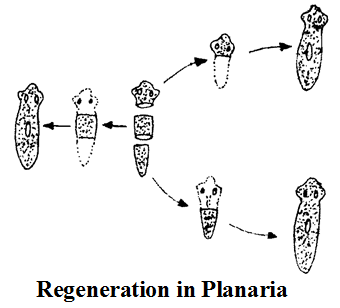
A planarian is a non-parasitic flatworm. If a planarian was injured by a predator, it could re-grow its body parts. If the body parts were not eaten by the predator, the part could re-grow into a whole new planarian as well.
Budding
Fission
Vegetative propagation
Fragmentation

All of the offspring of an organism have the same genetic material, which is identical to the parent organism. From this, we can conclude that this organism -
makes its own food
is unicellular
live in a marine habitat
reproduces asexually

California blackworms, also known as mudworms, are able to break apart. Each body section that broke apart is able to become an identical new worm. What type of reproduction does this example represent?
Sexual reproduction
Asexual reproduction

Penguins lay 1-2 fertilized eggs that the male and female take turns incubating on their feet. What type of reproduction does this example represent?
Sexual reproduction
Asexual reproduction
Reproducing asexually will produce offspring ...
genetically different from each other
genetically identical to the parent
There is a lack of genetic variation.
Passes genetic information onto future generations
sexual reproduction
asexual reproduction
both
What percentage of an organism's chromosomes are handed down by a sperm cell?
75%
25%
50%
100%
Where does an offspring get its traits in asexual reproduction?
Sexual reproduction requires _____ parent(s) and asexual reproduction requires ___ parent(s.)

What type of asexual reproduction does the figure represent?
Binary Fission
Budding
Vegetative Propagation
Fragmentation

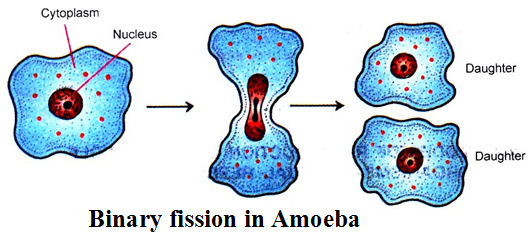
What type of asexual reproduction does the figure represent?
Binary Fission
Budding
Vegetative Propagation
Fragmentation

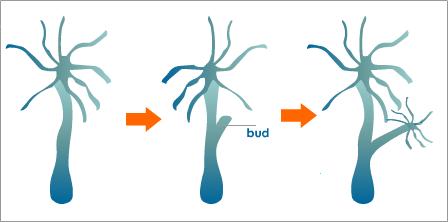
What type of asexual reproduction does the figure represent?
Binary Fission
Budding
Vegetative Propagation
Fragmentation
What is the type of asexual reproduction when one cell divides to form two identical cells?
Binary Fission
Budding
Vegetative Propagation
Fragmentation
What is the type of asexual reproduction when a bud forms on the parent organism and then pinches off to form a new organism?
Binary Fission
Budding
Vegetative Propagation
Fragmentation
What is the type of asexual reproduction when the parent breaks into two distinct pieces which can live independently of each other?
Binary Fission
Budding
Vegetative Propagation
Fragmentation
What is reproduction involving only one parent?
Asexual Reproduction
Sexual Reproduction
What would be a possible disadvantage of asexual reproduction.
Ability to reproduce in the absence of a mate
Results in low genetic variation of the species
Takes less time to produce offspring
Ability to reproduce rapidly

Which of the following is not a benefit of asexual reproduction?
Offspring will be successful in an unchanged environment.
Good at adapting to changing environments.
Only requires one parent to produce offspring.
Can reproduce rapidly.

Asexual reproduction is associated with what type of nuclear division?
Mitosis
Meiosis
Offspring are genetically identical to the parent
Asexual reproduction
Sexual reproduction
Offspring have a combination of DNA from the parents
Asexual reproduction
Sexual reproduction
Offspring are genetic clones of the parent
Asexual reproduction
Sexual reproduction
Offspring have genetic diversity
Asexual reproduction
Sexual reproduction
Binary fission in bacteria
Asexual reproduction
Sexual reproduction
One parent makes a copy of itself
Asexual reproduction
Sexual reproduction
Fertilization
Asexual reproduction
Sexual reproduction
Reproduction of offspring with cells from two different parents is called _________________ reproduction.
asexual
sexual
convergent
divergent

Hydra produce offspring by growing the new individual on the body of the parent. This is an example of...
budding.
fission.
regeneration.
tubers.
Where does an offspring get its DNA in asexual reproduction?
from both parents
from only one parent
from neither parent

A mode of reproduction in which an organism arises from two organisms and inherits half of its DNA from each parent
Sexual Reproduction
Asexual Reproduction
Cloning
Fragmentation

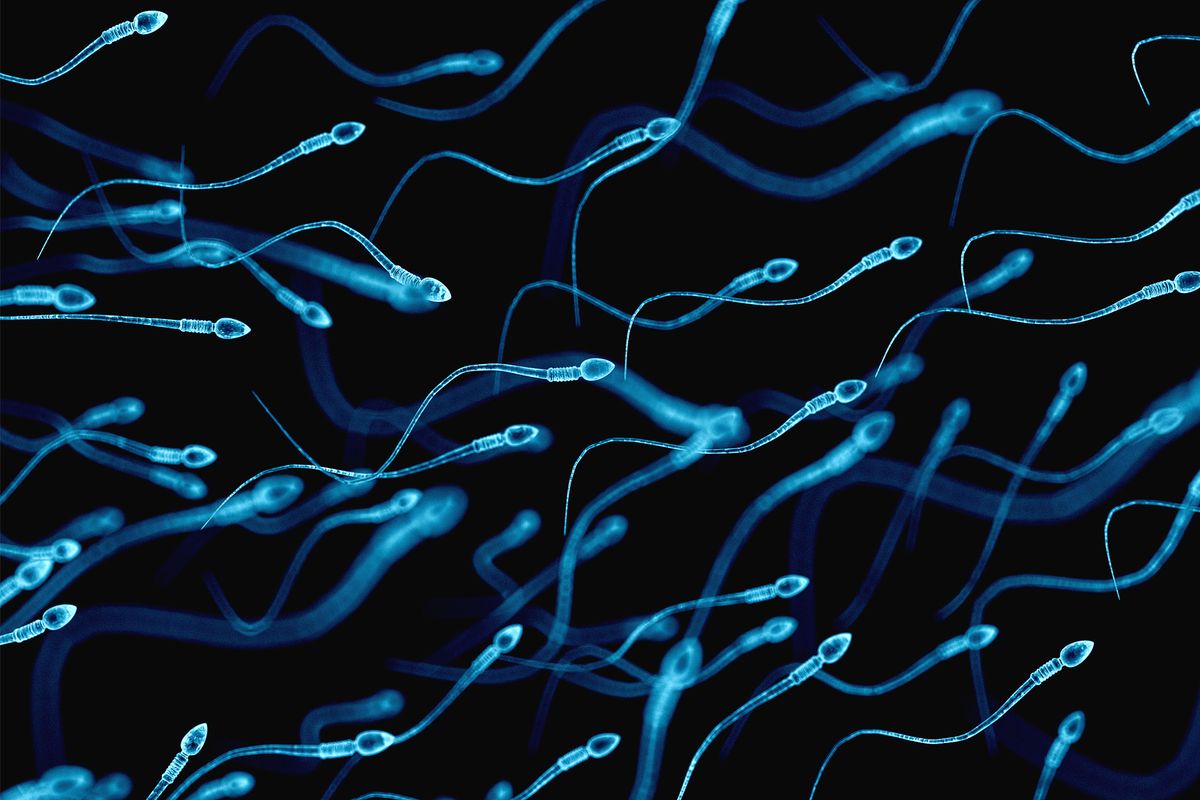
In sexual reproduction the male produces ___ cells.
Malex
Quack
Egg
Sperm

Prokaryotes (bacteria) reproduce asexually via -
sperm and egg
Fertilization
binary fission
If a human is composed of 46 chromosomes, how many chromosomes would be in a human SPERM (sex) cell ?
23
25
46
Which process results in the production of a zygote?
fertilization
binary fission
budding

