Worksheets
Thermal Energy CFA Review
Total questions: 53
Worksheet time: 37mins


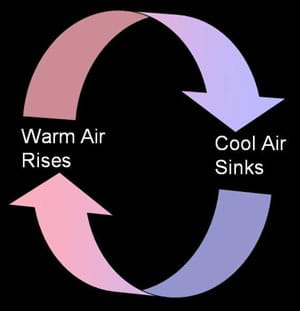
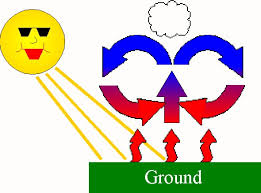
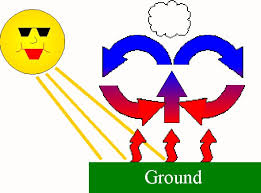
Near the ceiling of a room the air is warmer. The warm air rises because of
conduction
convection
radiation

A huge rock at the state park gets so hot during the day because of
conduction
convection
radiation

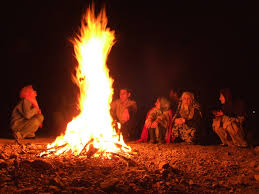
A chair is placed several feet from a fireplace. The fireplace has a glass screen. The side of the chair facing the fireplace gets warm because of
conduction
convection
radiation

In heat transfer, heat always flows from the _______________ substance to the _______________ substance.
Hotter to colder
Colder to hotter
Hotter to hotter
Colder to colder

The handle of a metal spoon warms up when it is placed in a hot bowl of soup because of
Convection
Conduction
Radiation
insulation.

When you use a microwave, what is the main way that heat is transferred?
Convection
Conduction
Radiation
insulation.

Which of the following is the best example of conduction?
A light bulb warming a lampshade
An egg cooking in a frying pan
Water boiling in a pot
Gases circulating in the atmosphere

An iron is placed on your clothes to smooth out the wrinkles. The iron transfers heat to your clothes through
conduction
convection
radiation

A pot is placed directly on a stove. The pot gets hot due to
conduction
convection
radiation

You get sunburned due to __________ from the sun.
conduction
convection
radiation

Another word for equilibrium could be ___________ or ____________.
equal
balanced
uneven
move
transfer
What occurs when thermal equilibrium is reached within a system?
The system cools down rapidly.
Heat transfer stops completely.
All substances within the system have the same temperature.
Thermal energy flows in the opposite direction.
Which of the following best describes how thermal energy moves in a predictable pattern within a closed system until thermal equilibrium is reached?
It always moves from cooler to warmer areas.
It moves randomly within the system.
It moves from warmer to cooler areas until equilibrium.
It remains stagnant and doesn't move.
If you heat one end of a metal rod, how does the thermal energy move through the rod to reach thermal equilibrium?
Through radiation only.
Through convection only.
Through conduction only.
Through a combination of conduction and convection.
What term describes the transfer of thermal energy from warmer objects to cooler objects when they come into contact?
Conduction
Radiation
Convection
Insulation
If you place a hot cup of coffee on a cold kitchen counter, which process allows the coffee to cool down as it transfers heat to the counter?
Conduction
Radiation
Convection
Insulation

Radiators are heading devices that are commonly found in older homes. When water in the radiator is heated, the surrounding air is also heated. In a closed room with a hot radiator, how does the thermal energy move to reach equilibrium within the room?
Through conduction
Through radiation
Through convection
Through insulation
In a well-insulated house on a hot summer day, what happens to the thermal energy inside the house?
It escapes to the outside.
It stays in the same place without moving.
It moves from cooler rooms to warmer rooms.
It moves from warmer rooms to cooler rooms until equilibrium is reached.
When you place an ice cube in a glass of warm water, how does the thermal energy transfer occur to reach thermal equilibrium?
Through conduction only.
Through convection only.
Through radiation only.
Through a combination of conduction and convection.
In a house, what is the purpose of insulation in terms of thermal energy transfer?
To promote rapid heat loss.
To enhance radiation.
To minimize heat transfer.
To encourage conduction.
If you added a can of Coke (20oC) to a fridge (5oC), at what temperature would heat stop moving?
when the coke is at 10 degrees and the fridge is at 5 degrees.
When the coke is at at 6 degrees and the fridge is at 6 degrees
When the coke is at at 5 degrees and the fridge is at 15 degrees
When the coke is at at 20 degrees and the fridge is at 5 degrees
If you added ice (0oC) to a glass of water (15oC) how would the heat move between the ice & water?
from the ice to the water
from the water to the ice
Two objects have different temperatures. Object A has a temperature of 42 degrees and Object B is 37 degrees. Which direction should the energy transfer between Objects A and B?
From Object A to Object B
From Object B to Object A
Energy will not transfer
Energy will transfer both directions
If two objects have different temperatures, heat will flow from the warmer object to the cooler one UNTIL ____________
one reaches a temperature of zero
they both have an equal temperature
one runs out of energy
When a popsicle melts, the particles in the popsicle _____.
gain thermal energy and speed up
there are no particles in popsicles
lose thermal energy and slow down
stay the same

Observe the diagram. Which statement is true about the kinetic energy of the molecules in the containers?
The molecules are moving faster in Diagram A
The molecules are moving slower in Diagram A
The molecules are moving at the same rate in both diagrams
__________________ is a type of heat transfer that occurs only in fluids, such as water and air.
Convection
Radiation
Conduction
Heat
__________________ is the transfer of energy by electromagnetic waves.
Convection
Radiation
Conduction
Heat
________________ transfers heat from one particle of matter to another within an object or between two objects.
Convection
Radiation
Conduction
Heat
_______________ current creates a circular motion, and also causes wind and weather changes.
Radiation
Convection
Conduction
Heat
______________ are materials that do not conduct heat well.
Convections
Conductors
Insulators
Properties
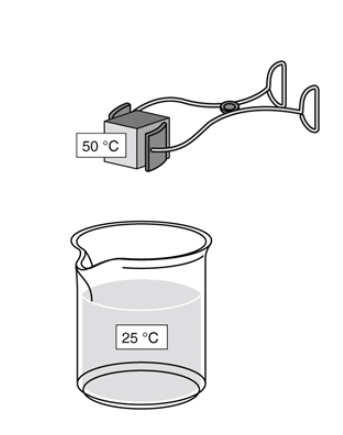
As part of a lab experiment, Tasha drops a metal cube into a beaker of water, as shown in the figure below.
After energy in the form of heat transfers between the substances, what is the final temperature of the water?
The final temperature is 25 °C because there is more water than metal.
The final temperature is 50 °C because the metal warms the water to the temperature of the metal.
The final temperature is between 25 °C and 50 °C because energy is transferred from the metal to the water.
The final temperature is between 25 °C and 50 °C because most of the thermal energy is lost to the air around the substances.
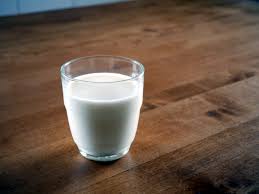
During the summer, Chang takes a glass of milk from the refrigerator and places it on the kitchen counter. Over time, energy as heat is transferred to the milk from the air. Which change would most likely occur?
The temperature of the milk will increase.
The temperature of the milk will decrease.
The milk will change from a liquid to a gas.
The milk will change from a liquid to a solid.
On a cold day, Jamarria puts a hot bowl of soup down on a concrete table. Describe the energy transformation that will occur.
Heat from the air is transferred to Jamarria's hand.
Heat from the hot bowl of soup is transferred to the car door.
Heat from the concrete table is transferred to the hot bowl of soup.
Heat from the hot bowl of soup is transferred to the concrete table.

What type of heat transfer is happening at "A"
conduction
convection
radiation
What type of heat transfer is happening at "B"?
conduction
convection
radiation
What type of heat transfer is happening at "C"?
conduction
convection
radiation

Kiera is observing an experiment on heat flow. She has two noodles at differing temperatures, as shown in the table. She places the noodles in a pan of water that has been heated to 100 degrees Fahrenheit (°F ). How will heat flow in this system?
from the water to noodle #1
from the water to noodle #2
from noodle #1 to the water
from noodle #2 to the water

There is a bowl of ice cream and Vivian puts whip cream from the refrigerator on it, how will the heat transfer?
It will travel from the warmer whip cream to the frozen ice cream.
Both items will remain the same temperature until they are both eaten.
It will travel from the warmer ice cream to the frozen whip cream.