
 Worksheets
U4 Energy
Total questions: 51
Worksheet time: 4hrs 15mins

What energy transformations take place when a battery operated radio is in use?
electrical to chemical to sound
thermal to nuclear to electrical
chemical to electrical to sound
chemical to sound to thermal

Which of the following energy transformations occur when a lamp that is plugged in the wall outlet is working properly?
electrical to light
chemical to light
chemical to electrical
electrical to thermal

What type of energy transformation in an electric hot plate is plugged in?
electrical to light
mechanical to electrical to light
thermal to mechanical to light
electrical to thermal


Mechanical to Electrical
Mechanical to Chemical
Electromagnetic to Chemical to Electrical
Sound to Chemical
Which type of energy has to do with objects in motion?
Potential
Kinetic

Food is an example of __________ energy.
Kinetic
Thermal
Chemical
Potential
If a football player wants to become better at tackling by increasing their kinetic energy, how can the player do this?
Increasing their height
Decreasing their speed
Increasing their mass
Increasing their speed
Which has mechanical energy?
A car speeding down the highway.
A cup sitting on a desk.
Which is a type of radiant energy?
Microwaves
Ocean waves
Sound waves can travel in space.
True
False
What has gravitational potential energy?
A book sitting on a desk
A book sitting on the floor

energy produced by electromagnetic waves
electrical
nuclear
radiant
thermal

As velocity (speed) increases, kinetic energy ___________ .
increases
decreases
stays the same

Kinetic energy depends on
mass and velocity
height and velocity
height and mass

elastic potential
gravitational potential
chemical potential
nuclear potential
What does the frequency of a wave tell us about the wave?
It tells us how many waves go by in a small amount of time.
It tells us the amplitude of the wave.
It tells us how long it takes for a single wave to go by.
It tells us the length of the wave.
The highest point of a wave is called the wave's _________.
Amplitude
Crest
Trough
Wavelength
Which of the following is an example of a transverse wave?
Sound waves.
Pressure waves.
Light waves.
None of these are examples of transverse waves.
What does it mean to see the color white?
It means your eye is not receiving enough information.
It means your eye is receiving too much information.
It means the object is actually white.
What part of the ear is responsible for turning incoming waves into simple vibrations.
Concha
Cochlea
Eardrum
Auditory Nerve
What part of the eye receives light waves and translates them into digital information?
Iris
Retina
Lens
Optic Nerve
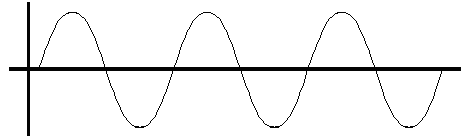
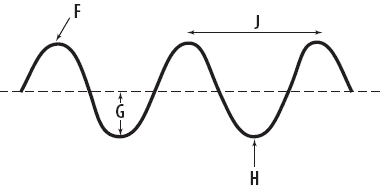

What is a wave ?
a disturbance that transfers matter
a disturbance that transfers energy
a disturbance that transfers both matter and energy

What is the direction of the disturbance in a transverse wave?
Circular or rings that flow from the center.
Parallel to the direction the wave travels.
Perpendicular to the direction the wave travels.
A complete circuit through which electricity flow
Closed circuit
Open circuit
Pathway
None of the above
An incomplete electrical circuit in which no electricity flows
Closed Circuit
Open Circuit
Pathway
Both A and B
A device that transforms mechanical energy into electrical energy
generator
transformer
magnet
electron
A device that transforms electrical energy to mechanical energy
electric motor
transformer
electromagnet
generator

When sound passes through a material that is known as ______________.
reflection
transmission
absorption
invisibility
When sound is ________________ by a barrier it cannot be heard.
absorbed
transmitted
reflected
energized
Why is there no sound in space?
There is no material (medium) for the energy to travel through.
The molecules in space are too small.
Sound needs the correct temperature to travel through.
Sound only travels through solid material.
Sound that has a high frequency has ______ pitch.
a high
a low
the same
twice the
What is the best description of an opaque material?
no light passes through the material
some light passes through the material
all light passes through the material
What is the best description of a transparent material?
no light passes through the material
some light passes through the material
all light passes through the material
What is the best description of a translucent material?
no light passes through the material
some light passes through the material
all light passes through the material

What type of object is shown in the picture?
opaque
transparent
translucent

Which sentence from the article BEST explains how the color of the sky is affected by the way light moves?
The light that people see with their eyes is just one tiny bit of all the kinds of light energy in the universe.
Like energy passing through the ocean, light energy travels in waves, too.
Blue is scattered more than other colors because it travels as shorter, smaller waves.
Closer to the horizon, the sky fades to a lighter blue or white.

