wayground logo

Free Printable Worksheets

NEW

Font size

S
M
L
XL
Worksheets

Earth and Space Yr 7

Total questions: 49

Worksheet time: 37mins

Name
Class
Date
1.

Which of the following has the biggest impact on the seasons?

a)

Earth's rotation

b)

Earths tilted axis

c)

Moon's gravitational pull

d)

Pressure systems

2.
What causes the day and night cycle on Earth?
a)
Rotation of the Sun
b)
Revolution of the Earth
c)
Gravitational pull from the moon
d)
Rotation of the Earth
3.
How long does one lunar cycle take?
a)
1 week
b)
2 weeks
c)
4 weeks
d)
1 year
4.
How many tides does a location experience each day?
a)
1
b)
2
c)
4
d)
8
5.

By how many degrees is the Earth tilted on its axis?

a)

45

b)

12.5

c)

23.5

d)

28.5

6.

If it is Spring in the northern hemisphere, what season is it in the southern hemisphere?

a)

winter

b)

spring

c)

summer

d)

autumn

7.

During which season do we experience the most hours of daylight because of the tilt of the Earth?

a)

Summer

b)

Fall

c)

Winter

d)

Spring

8.
Earth and the other planets closest to the Sun are MOSTLY made up of...
a)
Gas
b)
Metal
c)
Water
d)
Rock
9.
The path an object takes as it revolves around another object is called an...
a)
Rotation
b)
Orbit
c)
Turn
d)
Spin
10.
The Sun is first seen in which direction in the morning?
a)
North
b)
East
c)
South 
d)
West
11.
The outer four planets are made up of mostly...
a)
Metal
b)
Rock
c)
Gas
d)
Water
12.
How long does it take the Earth to rotate one time on its axis?
a)
24 hours
b)
27 days
c)
1 year
d)
88 days
13.

Which choice below lists the correct order of the planets from the sun?

a)

Mercury, Venus, Earth, Mars

b)

Earth, Mars, Venus, Jupiter

c)

Mars, Venus, Earth, Saturn

d)

Uranus, Jupiter, Neptune, Saturn

14.

Which planet is the largest?

a)

Earth

b)

Neptune

c)

Jupiter

d)

Uranus

15.
Because the earth spins on its axis, we experience:
a)
seasons
b)
weather
c)
day and night
d)
revolution
16.

How long does it take earth to make one complete revolution of the sun?

a)

24 hours

b)

1 day

c)

365 days

d)

365.25 days

17.
A word used to describe a moon that is "getting larger"
a)
gibbous
b)
crescent
c)
waxing 
d)
waning
18.
The imaginary line that passes through earth and the north and south poles.
a)
axis
b)
graviy
c)
equator
d)
prime meridian
19.
Which of these planets is closest to the Sun?
a)
Mercury
b)
Venus
c)
Earth
d)
Mars
20.
Which of these planets is closest to the Earth?
a)
Mercury
b)
Mars
c)
Jupiter
d)
Saturn
21.

What causes moonlight?

a)

The Sun's light is reflected on the moon.

b)

The moon's light is reflected on the Sun.

c)

The Earth's light is reflected on the moon.

d)

The moon's light is reflected on the Earth.

22.
  What does "geo-" mean?
a)
Earth
b)
sun
c)
Center
23.

The day of the year with the most daylight hours is the

a)

spring equinox

b)

fall equinox

c)

summer solstice

d)

winter solstice

24.

When daylight hours are almost equal to night time hours, it is called the

a)

equinox

b)

solstice

25.
Australia is in the ____ hemisphere. 
a)
northern
b)
southern
26.
The EARTH REVOLVES around the:
a)
Sun
b)
Moon
c)
The Earth doesn't revolve
d)
The sun rotates
27.

In relation to the moon, waning means...

a)

growing

b)

shrinking

c)

crying

d)

don't horses wane?

28.
Tides are caused by
a)
strong winds that blow over ocean waters.
b)
the interaction of Earth, the moon and the sun.
c)
the shifting of the plates on the ocean floor.
d)
variations in the salinity of ocean water
29.
Which body has the greater effect on Earth's tides?
a)
Sun
b)
Saturn
c)
Moon 
d)
Venus
30.
What type of tides would this arrangement of earth-moon-sun create?
a)
neap tide
b)
spring tide
c)
new moon tide
d)
full moon tide
31.

Wha type of tide would this arrangement of earth-moon-sun create?

a)

full moon tide

b)

new moon tide

c)

neap tide

d)

spring tide

32.
The Moon has a greater influence on Earth tides than the Sun because...
a)
it is smaller than the Sun
b)
it revolves around the Earth
c)
it is closer to the Earth
33.
Why is the Equator warmest?
a)
Because it is closest to the sun.
b)
Because it receives the most direct sunlight
c)
Because no clouds form here.
d)
Because it is far from the sun
34.
What is the center of our solar system?
a)
moon
b)
earth
c)
sun
d)
Jupiter
35.
What describes the earth going around the sun?
a)
rotation
b)
revolution
36.

These are the four planets the Sun; Jupiter, Saturn, Uranus, and Neptune are classified as

a)

terrestrial planets

b)

Jovian planets

c)

solar planets

d)

the best planets

37.

If the moon is roughly 3/4 illuminated we say it is in the _________________________ stage.

a)

Crescent

b)

New

c)

Gibbous

d)

Quarter

38.

When the moon is between the sun and the earth, we basically do not see it. What is this phase called?

a)

Full Moon

b)

Waning Crescent

c)

Waning Gibbous

d)

New Moon

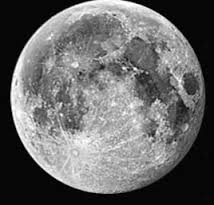
39.
Name the moon phase
a)
First Quarter
b)
Last Quarter
c)
New Moon
d)
Full Moon
40.
Which of the following statements is most accurate about the Movement of Earth and the Sun?
a)
The Sun revolves around the Earth
b)
The Earth rotates around the Sun
c)
The Earth revolves around the Sun
d)
The Earth rotates and revolves around the Sun 
41.

This model is showing us a...

a)

lunar eclipse

b)

solar eclipse

c)

phases of the moon

d)

earth eclipse

42.

When Melbourne is facing away from the Sun its _____.

a)

day

b)

night

43.
Object spinning on its axis. 
a)
revolution
b)
rotation
44.
Object orbiting another object. 
a)
revolution 
b)
rotation
45.
Shortest day of the year
a)
Autumnal Equinox
b)
Summer Solstice 
c)
Winter Solstice
d)
Vernal Equinox
46.
What happens when the area in which you live tilts away from the sun?
a)
It is summer.
b)
It is spring.
c)
It is winter.
d)
It is fall.
47.
How many low tides and high tides happen in a day?
a)
1 low tide, 1 high tide
b)
4 low tides, 4 high tides
c)
3 low tides, 3 high tides
d)
2 low tides, 2 high tides
48.
What do we call the small tides that happen when the sun and moon are at right angles to each other?
a)
Neap Tide
b)
Spring Tide
c)
Larger Change
d)
Smaller Change
49.
The Moon has a greater influence on Earth tides than the Sun because...
a)
it is smaller than the Sun
b)
it revolves around the Earth
c)
it is closer to the Earth