
 Worksheets
Human Impacts Review
Total questions: 49
Worksheet time: 42mins
Why is the atmosphere important?
Provides gases essential for survival
Absorbs harmful radiation
Keeps earth warm
Makes the sky blue
Allows birds to fly
What is air pollution?
Anything that causes smoke
Contamination of atmosphere by pollutants
Contamination of atmosphere by car exhaust
Emission of particulates into the atmosphere

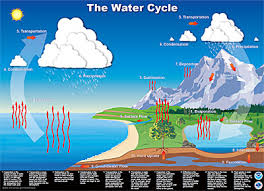
Pollution traced to a single point
water shed
permeable
point source pollution
non-point source pollution

Urbanization is
the process by which human activity and natural process damage land to the point that it can no longer support the local ecosystem.
replacing forests, fields, and grasslands with houses, roads, schools and shopping area.
the growth of urban areas caused by people moving into cities
The process by which wind, water, ice, or gravity transports soil and sediment from one location to another
When wind, water, ice, or gravity transports soil and sediment from one area to another it is called
Erosion
Desertification
Deforestation
Urbanization

This image is an example of what type of land use
Residential
Commercial
Agricultural
Recreational
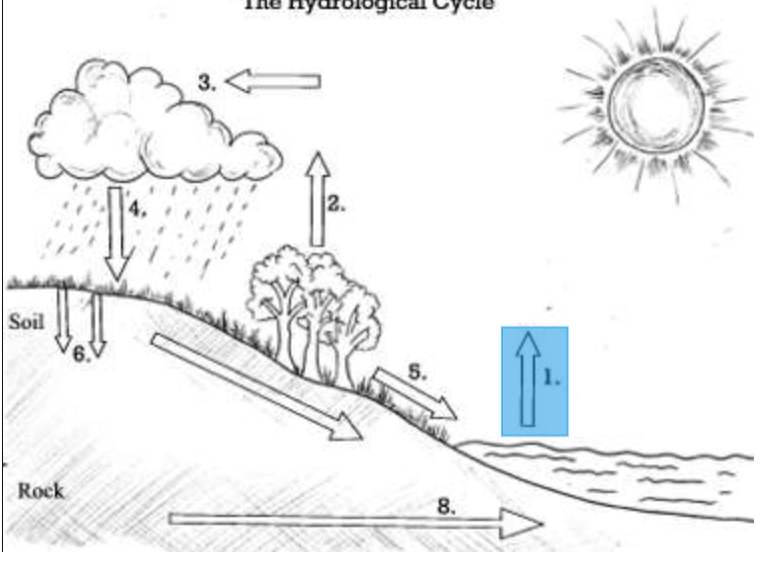
What phase of the water cycle is #4?
Evaporation
condensation
precipitation
runoff
_____________ is an increase in the nutrients, such as nitrates, in a marine or aquatic ecosystem.
eutrophication
urbanization
permafrost
aquifer
_______________ is a permanently frozen layer of soil beneath the surface of the ground.
eutrophication
permafrost
aquifer
urbanization
A resource that forms at a rate that is much slower than the rate at which the resource is consumed is a(n)
nonrenewable resource
renewable resource
point-source
non-point source
If water is _______________, it is suited for drinking.
potable
reservoir
surface water
groundwater
The measure of how clean or polluted water is refers to
water quality
water supply
thermal pollution
water pollution
_____________ is a temperature increase in a body of water that is caused by human activity and that has a harmful effect on water quality and on the ability of that body of water to support life.
thermal pollution
water pollution
water quality
water supply


Check all resources that cannot be used up by humans.
Solar
Oil
Wind
Geothermal
Which activity would reduce human sources of greenhouse gases?
A. increasing the size of livestock herds
B. monitoring worldwide volcanic activity
C. using wind energy to generate electricity
D. researching ways to add methane to the atmosphere
1. What would Earth be like without the greenhouse effect?
The same temperature
a little cooler than it is now
. Too cold to live
a little warmer than it is now
1. Which of the following is not a renewable resource?
coal
wind energy
solar energy
water

A BPA Student notices that new houses are being built across the street in the Breakfast Point Neighborhood. As The first thing the builders do is remove all of the trees. Which of the following effects would result from this action?
a reduction in levels of pollution
an increase in soil erosion
a growth in the variety of animals
a reduction in levels of pollution
Which of the following best explains why urban areas have more air pollution than rural areas do?
There are fewer green areas and more paved areas in urban areas.
There are more cars and buses in urban areas.
Drivers travel shorter distances between destinations in urban areas.
Houses are closer together and larger.
How can the use of fertilizers to improve lawns and gardens negatively impact the environment?
it can be carried into local water supplies
it can cause mutations in plants
it can cause atmospheric pollution
it cannot be absorbed by roots
The terms deforestation, urbanization, desertification, and erosion are ways humans negatively impact the Earth. Which statement below best identifies the relationship between these terms?
Both deforestation and urbanization can lead to desertification and erosion.
Both erosion and desertification can lead to deforestation and urbanization.
Both urbanization and erosion can lead to deforestation and desertification.
Both deforestation and erosion can lead to urbanization and desertification.
Carbon Dioxide is important in our atmosphere because it is required for plants to survive and traps some heat, keeping the Earth warm. How can human produced carbon dioxide be a problem?
causes uncontrolled photosynthesis
removes carbon dioxide from the oceans
disrupts the natural cycling of other greenhouse gases
leads to higher global temperatures
A human activity that has the MOST negatively impacted air quality is?
building nuclear power plants.
growing crops
using solar panels
burning coal
Which statement about the effects of natural events and human activities is true?
The environment is not usually affected by natural events.
All human activities change the environment in a negative way.
Natural events always have a positive impact on the environment.
Human activities and natural events can damage the environment.
There are many sources of air pollution in the United States and around the world. Some are natural sources, and others come from human activities. Which example is a natural source of air pollution?
car exhaust fumes
dust from construction sites
methane gas from cow manure
smoke from the burning of fossil fuels
Which of the following does NOT contribute to air pollution?
Burning fossil fuels
CFCs
Vehicle exhaust
Oxygen

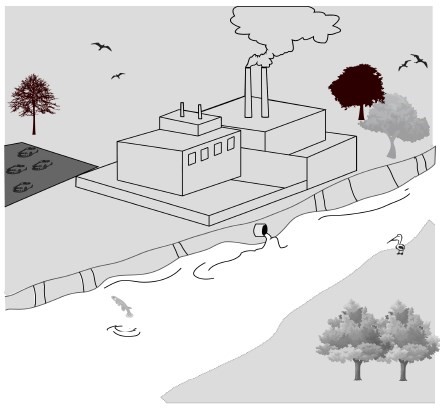
The image is an example of what type of pollution. Look at the picture carefully
Point-Source Pollution
Non-Point Source Pollution
Thermal Pollution
One measure of water quality is the cloudiness of the water. Which of these terms describes this measure?
pH
Potable
Turbidity
Temperature
Over the years, a farm area becomes more populated. Which of the following will most likely happen in the town as a result of this urbanization?
amount of rainfall will increase
rivers may be contaminated by sewage
Light pollution in the town may decrease
people will develop more farms in the town

What is the term for important nonrenewable resources that formed from the remains of living organisms?
solar particles
mineral sediments
fossil fuels
elemental energy
How is the atmosphere involved in the greenhouse effect?
It transforms light energy from the Sun into thermal energy that warms the surface of Earth.
Gases in the atmosphere trap and redirect heat reflected from the surface of Earth.
Gases magnify the heat of the Sun as it passes down through Earth's atmosphere.
Heat from the surface of Earth is absorbed by gases and radiated into space.

