
 Worksheets
Lab Skills
Total questions: 50
Worksheet time: 32mins
Why is it important to know the names and appearance of lab equipment before doing laboratory work?
So you will score higher on the lab test.
So you can quickly obtain your laboratory supplies before lab.
So you can follow the lab instructions clearly.
So you can make sure everything has been cleaned before beginning the lab procedure.
If you see something in the classroom or laboratory that is dangerous, tell the teacher
When you have time
At once
After class
After school
The most important thing in laboratory experiments is:
Getting done first.
Getting the answer right.
Safety.
Penmanship.


If you do not understand a direction or part of a lab procedure, you should
skip it and move on
ask your teacher or classmates
try different things until something works
figure it out as you do the lab

What does this symbol indicate?
Corrosive substances
Wash your hands.
Wear appropriate gloves.
Bacteria are present.


Identify the Image
Radioactive
Flammable
Biological hazard
Toxic

What does this safety symbol mean?
flammable
oxidising
hot
explosive


You are heating a substance in a test tube. The open end of the tube should be pointed
away from all people
toward another classmate
toward your lab partner
toward yourself
toward the wall

What does this safety symbol mean?
Harmless to trees and fish
Harmful to non living things
Harmful to living things
Harmless to non living things
In the lab you should
eat lunch
drink coffee
not wear loose clothing or jewelry
run around


Which is NOT a safe way to handle chemicals in the lab?
Handle chemicals in small containers.
Mix chemicals when your instructor tells you to do so.
Read and reread chemical labels.
Place your face close to the chemicals that you are working with.

What does this symbol warn us about?
Health hazard
Lung disease
Irritant
Corrosive
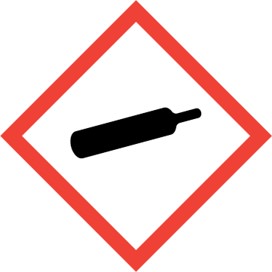
What does this symbol stand for?
Flammable
Oxidising
Gas under pressure
Explosive

What does this symbol warn us of?
Danger
Alert
Toxic
Irritant/harmful

What equipment allows you to measure liquid's volume and measures in milliliters?
test tube
beaker
flask
graduated cylinder

Which equipment heats objects with an open flame?
hot plate
thermometer
bunsen burner
beaker

a shallow, circular, transparent dish with a flat lid, used for the culture of microorganisms
Petri Dish
funnel
Erlenmeyer Flask

instrument used to transfer liquids or fine-grained materials into containers with small openings. Also used for filtration
pipette
funnel
beaker

evaporating dish
watch glass
mortar and pestle
funnel


The variable we CHANGE.
Dependent
Independent
Constant
The variables that stay the SAME for both groups.
Dependent
Independent
Constant
The variable we MEASURE.
Dependent
Independent
Constant
If I CHANGE the temperature of my butter in cookies, what variable would that be?
Dependent
Independent
Constant
An educated guess is called a...
Constant
Hypothesis
Experiment
If I MEASURE the height of my cookies after I bake them with different butter, which variable would this be?
Dependent
Independent
Constant
The group I will keep the SAME
Control
Experimental
IF I wear sunscreen, THEN I will not burn my skin, BECAUSE I was protected from the Sun's rays. What is this?
Control Group
Experimental Group
Hypothesis
The group being tested with the independent variable is the __ group
Control
Constant
Experimental group
None of these
In a controlled experiment, how many independent variables can be tested at a time?
one
none
two or more
how ever many makes sense.
Summary of an experiment
Hypothesis
Procedure
Conclusion
Purpose
The variables that stay the SAME for both groups.
Dependent
Independent
Constant
The facts and observations gathered during an experiment:
data
analysis
evaluation
problems

