
 Worksheets
Rocks & weathering
Total questions: 45
Worksheet time: 22mins
Name
Class
Date
1.
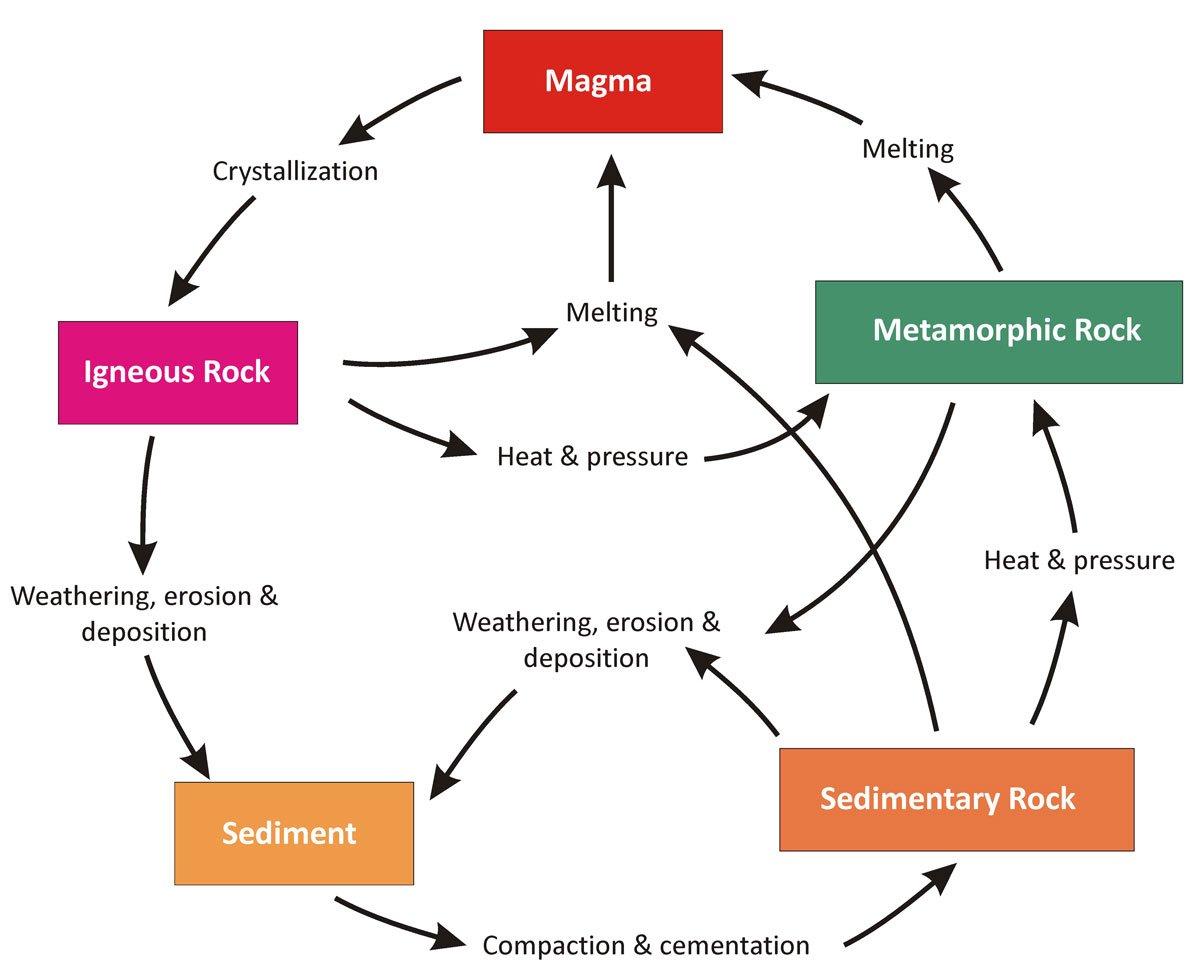
Formed by heat and pressure
a)
Sedimentary
b)
Metamorphic
c)
Extrusive Igneous
d)
Intrusive Igneous
2.

Formed by cooling & solidification of lava
a)
Sedimentary
b)
Metamorphic
c)
Extrusive Igneous
d)
Intrusive Igneous
3.

Formed by cooling & solidification of magma
a)
Sedimentary
b)
Metamorphic
c)
Extrusive Igneous
d)
Intrusive Igneous
4.
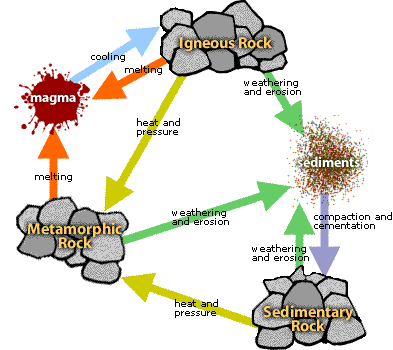
Formed by compacting & cementing of sediments
a)
Sedimentary
b)
Metamorphic
c)
Extrusive Igneous
d)
Intrusive Igneous
5.

Formed by weathering & erosion
a)
magma
b)
sediments
c)
sedimentary rock
d)
intrusive igneous
6.
Formed by melting
a)
magma
b)
sediments
c)
sedimentary rock
d)
intrusive igneous
7.

Has large crystals because of slow cooling
a)
sedimentary rock
b)
metamorphic rock
c)
intrusive igneous rock
d)
extrusive igneous rock
8.

Has small or no crystals because of rapid cooling
a)
sedimentary
b)
metamorphic
c)
extrusive igneous
d)
intrusive igneous
9.

Has wavy bands.
a)
sedimentary rock
b)
metamorphic rock
c)
extrusive igneous rock
d)
intrusive igneous rock
10.
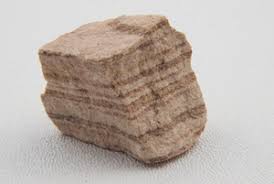
Contains fossils.
a)
sedimentary rocks
b)
metamorphic rocks
c)
extrusive igneous rocks
d)
intrusive igneous rocks
11.
Bobby observed that a metal trash can was covered with rust. What type of weathering caused the rust on the trash can?
a)
Mechanical weathering
b)
Wind weathering
c)
Chemical weathering
d)
Erosion weathering
12.
What is likely to cause cracks on the sidewalk?
a)
Repeated freezing and thawing of water
b)
Tree roots or plant roots growing bigger
c)
Both and A and B
d)
Neither A or B
13.
What human activities can increase the rate of weathering?
a)
Increasing the amount of acid rain
b)
Paving over large portions of land
c)
All of the other answers.
d)
Strip mining and agriculture
14.
Which type of climate would cause the greatest rate of weathering?
a)
Cold and dry
b)
Cold and humid (wet)
c)
Warm and humid (wet)
d)
Warm and dry
15.

When Joe saw the Rocky Mountains for the first time, he exclaimed, "These mountains are much younger than ours back East!" Which feature supports his conclusion that the Rockies were relatively young mountains?
a)
Their sedimentary layers are still exposed
b)
They have rounded tops
c)
They have sharp peaks
d)
Weathering has not yet hardened the rock
16.
What is the weathering process in which rocks are broken down into smaller pieces (sediments) and do not change the rock composition?
a)
Acid weathering
b)
Gravity weathering
c)
Chemical weathering
d)
Mechanical weathering
17.
The natural chemical or physical processes that breaks down rock on Earth's surface.
a)
weathering
b)
erosion
c)
deposition
d)
jackhammering
18.
The process by which water, ice, wind or gravity moves weathered rock and soil from one place to another.
a)
weathering
b)
erosion
c)
deposition
d)
dumptruck
19.
This type of weathering occurs when rock is physically broken down into smaller pieces of rock.
a)
mechanical weathering
b)
chemical weathering
c)
erosion weathering
d)
deposition
20.
This type of weathering occurs when rocks weaken then break down due to chemical changes in the composition of the rock.
a)
mechanical weathering
b)
chemical weathering
c)
erosion weathering
d)
deposition
21.

These rocks were made smooth by wind blowing smaller rock particles across their surface. This is an example of:
a)
ice wedging
b)
chemical weathering
c)
acid rain
d)
abrasion
22.

These rocks were broken apart from the continuous freeze/thaw of water in the cracks of the rocks. This is an example of:
a)
ice wedging
b)
acid rain
c)
permeability
d)
abrasion
23.
How is mechanical weathering different from chemical weathering?
a)
Chemical weathering happens over much shorter time frame than mechanical weathering.
b)
Chemical weathering changes the chemical composition of rocks; mechanical weathering does not.
c)
Chemical weathering occurs only in tropical climates; mechanical weathering occurs only in cool climates.
d)
Chemical weathering occurs only in the mountains; mechanical weathering occurs only on flat land.
24.

Erosion is defined as ________
a)
The transport of sediment
b)
The break down of rcoks into sediment
c)
the depositing of sediment
d)
None of these
25.

Obsidian is shiny, smooth and usually black. It is an igneous rock, and forms when:
a)
Magma cools slowly underground
b)
Lava cools slowly underground
c)
Magma cools quickly on the surface
d)
Lava cools quickly on the surface
26.
A rock formed from fragments of other rocks is a(n)
a)
Metamorphic Rock
b)
Sedimentary Rock
c)
Extrusive Rock
d)
Igneous Rock
27.
A metamorphic rock in which the grains line up in parallel bands is a
a)
Clastic Rock
b)
Nonclastic Rock
c)
Nonfoliated Rock
d)
Foliated Rock
28.
Rock that forms when sediment from older rocks get pressed and cemented together.
a)
Sedimentary Rock
b)
Metamorphic Rock
c)
Igneous Rock
29.
The process by which igneous rocks are formed...
a)
heat and pressure
b)
melting and cooling
c)
weathering and erosion
30.
The process by which metamorphic rocks are formed...
a)
heat and pressure
b)
erosion and deposition
c)
melting and cooling
31.

This rock was formed by smaller pieces of rock that settled at the bottom of a lake millions of years ago. What type of rock is this?
a)
Sedimentary
b)
Igneous
c)
Metamorphic
32.
Which term describes when the Earth spins on its axis.
a)
Rotation
b)
Revolution
c)
Kepler's Laws
d)
Precession
33.
Which type of motion causes night / day?
a)
Rotation
b)
Revolution
c)
Kepler's 1st Law
d)
Nutation
34.
Which term describes the time it takes for Earth to complete one circle around the sun.
a)
Rotation
b)
Revolution
c)
Kepler's 1st Law
d)
Barycenter
35.
Earth's orbit follows an elliptical path.
a)
Kepler's 1st law
b)
Kepler's 2nd law
c)
Kepler's 3rd law
d)
Nutation
36.
When Earth orbits around the sun, it slows down when it is close to the sun. It speeds up its orbit when it is further from the sun. This is because the sun's gravity is stronger when you are closer to it.
a)
Kepler's 1st law
b)
Kepler's 2nd law
c)
Kepler's 3rd law
d)
Nutation
37.
Planets further from the sun have an orbit that lasts MUCH longer than planets that are close to the sun.
Pluto's orbit lasts over over 90,000 days.
Mercury's orbit lasts 88 days.
Pluto's orbit lasts over over 90,000 days.
Mercury's orbit lasts 88 days.
a)
Kepler's 1st law
b)
Kepler's 2nd law
c)
Kepler's 3rd law
d)
Nutation
38.
When the moon revolves around the Earth, the Earth wobbles a little because the moon's gravity is tugging on it.
a)
Nutation
b)
Precession
c)
Barycenter
d)
Revolution
39.
Causes the stars to change direction in the sky (every 26,000 years)
a)
Nutation
b)
Precession
c)
Barycenter
d)
Revolution
40.
During precession, the Earth wobbles a little. This DOES change the angle of the axis.
a)
Nutation
b)
Precession
c)
Barycenter
d)
Revolution
41.
The energy from the sun is created by a process called:
a)
nuclear fission
b)
nuclear fusion
c)
nuclear reaction
d)
nuclear core
42.

A tide just after a new or full moon when there is the greatest difference between high and low water.
a)
Neap Tides
b)
Spring Tides
43.

A tide just after the 1st or 3rd quarters of the moon when there is the least difference between high and low water.
a)
Neap Tides
b)
Spring Tides
44.

When the part of the world that you're living in is leaning towards the Sun, its _____
a)
winter
b)
spring
c)
summer
d)
fall
45.

When the part of the world that you're living in is leaning away from the Sun, its _____
a)
winter
b)
spring
c)
summer
d)
autumn
100 %

