
 Worksheets
Periodic table
Total questions: 45
Worksheet time: 34mins
Name
Class
Date
1.

GOLD
a)
Al
b)
Ag
c)
Ar
d)
Au
2.

CALCIUM
a)
C
b)
Ca
c)
Cu
d)
Cl
3.
Which of the following is a pure substance?
a)
O2
b)
Al2CO5
c)
C6H12O6
d)
SiO2
4.
How many different elements are in this chemical formula: C2H2ClK3
a)
6
b)
8
c)
2
d)
4
5.
Which of the following atomic symbols for bromine is written correctly?
a)
bR
b)
BR
c)
Br
d)
br
6.
Which of the following chemical formulas represents a compound?
a)
C3
b)
O2
c)
CH3CHO
d)
H2
7.

What is water?
a)
element
b)
compound
c)
mixture
8.

When two or more elements chemically combine
a)
element
b)
compound
c)
mixture
d)
solution
9.
What is the chemical symbol for mercury?
a)
Hg
b)
Mc
c)
My
d)
C
10.

a)
Element
b)
Compound
11.

a)
Element
b)
Compound
12.
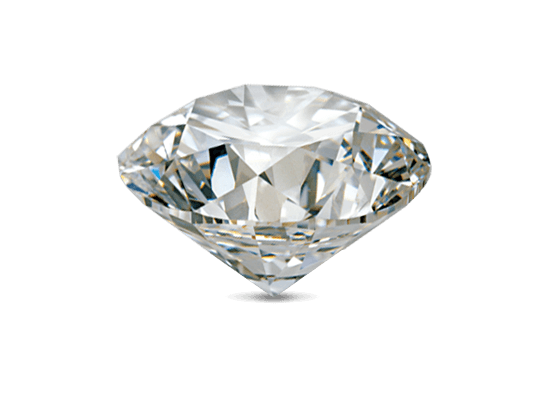
What element primarily makes a diamond?
a)
Hydrogen
b)
Silver
c)
Carbon
d)
Calcium
13.
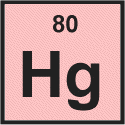
What is the name of this element?
a)
Helium
b)
Rubidium
c)
Hydrogen
d)
Mercury
14.
Which one of these is not a noble gas?
a)
Helium
b)
Radon
c)
Iodine
d)
Krypton
15.

What two elements come together to make this substance in the picture?
a)
Oxygen and Carbon
b)
Sodium and Calcium
c)
Sodium and Chlorine
d)
Helium and Nitrogen
16.
What family is silver a part of?
a)
Transition Metals
b)
Noble Gases
c)
Alkali Metals
d)
Alkaline Earth Metals
17.
Silicon is a
a)
Metal
b)
Nonmetal
c)
Metalloid
d)
Halogen
18.

What element is this?
a)
Silver
b)
Silicon
c)
Sulfur
d)
Selenium
19.
All matter is made of .....
a)
energy
b)
atoms
c)
air
d)
chemistry
20.
An element's identity is determined by the number of
a)
electrons.
b)
protons.
c)
neutrons.
d)
valence.
21.
In the modern periodic table elements are arranged by:
a)
atomic mass
b)
atomic number
c)
valence electrons
d)
number of isotopes
22.
Rutherford's experiment showed that most of an atom is made up of _____.
a)
a nucleus
b)
an electron cloud
c)
empty space
d)
alpha particles
23.
Which subatomic particle has a negative charge in the atom?
a)
proton
b)
neutron
c)
electron
d)
quark
24.

Which is an electron?
a)
A
b)
B
c)
C
25.

Which is a proton?
a)
A
b)
B
c)
C
26.

Which item on this element square is the chemical symbol?
a)
Copper
b)
29
c)
Cu
d)
63.546
27.
An atom of the element with atomic number 6 always has _____.
a)
six protons in its nucleus
b)
an atomic mass of six
c)
more than six neutrons
d)
six electron clouds
28.
Which group of the periodic table is composed of inert (not reactive) gases?
a)
alkali metals
b)
alkaline earth metals
c)
halogens
d)
noble gases
29.
Elements which are shiny, conduct electricity and heat are called
a)
metal
b)
nonmetal
c)
metalloid
d)
nonexistent
30.

The atoms along the staircase are called
a)
metals
b)
nonmetals
c)
metalloids
d)
noble gases
31.
The simplest substance is..?
a)
Carbon
b)
An element
c)
Water
d)
A simple compound
32.
A proton is....
a)
A negatively charged subatomic particle
b)
A positively charged subatomic particle
c)
A neutrally charged subatomic particle
d)
The only subatomic particle located in the nucleus
33.
A neutron has a charge of
a)
+2
b)
No charge
c)
-1
d)
+1
34.
Which is an alkali metal?
a)
Magnesium
b)
Iron
c)
Sodium
d)
Europium
35.
If an atom had the same properties as fluorine (F), it would probably be located in
a)
period 1.
b)
period 2.
c)
group 2.
d)
group 17.
36.
A proton is....
a)
A negatively charged subatomic particle
b)
A positively charged subatomic particle
c)
A neutrally charged subatomic particle
d)
The only subatomic particle located in the nucleus
37.
As you move from left to right on the periodic table, the number of valence electrons.......
a)
Increases
b)
Decreases
c)
Remains the same
38.
Which of the following is the term for a substance in which all the atoms have the same number of protons
a)
a compound
b)
An element
c)
a molecule
d)
a solid
e)
a gas
39.
Which of the following reasons explains why there is a decimal for most atomic masses?
a)
The mass of one atom can have a fraction.
b)
Since electrons are very small mass they only add a little bit, usually only a decimals worth.
c)
It is the average mass of all the potential isotopes of an atom.
d)
Neutrons have a mass of 1.1 meaning that fractions are common.
40.
The common charge on an atom in group 17 would be....
a)
+1
b)
+7
c)
-7
d)
-1
e)
17
41.
As you move down the periodic table atoms get bigger. This is because ____________.
a)
The atoms have more mass.
b)
The atoms have more protons.
c)
The atoms have more energy levels
d)
The atoms have more neutrons
42.
Electronegativity is...
a)
the ability of an atom to attract/ accept electrons
b)
the ability of an atom to lose electrons
c)
the energy required to remove an electron from a specific atom
d)
how easy it is to make friends.
43.
The chart scientists use to organize and classify all the known elements
a)
elements chart
b)
the chart
c)
Periodic Table of the Elements
d)
Period table
44.
Vertical columns of elements (families) on the periodic table with similar properties
a)
groups
b)
periods
c)
quadrants
d)
rows
45.
A negatively charged subatomic particle that exists in various energy levels outside the nucleus of an atom
a)
neutron
b)
electron
c)
proton
d)
subatomic particle
100 %

