wayground logo

Free Printable Worksheets

Font size

S
M
L
XL
Worksheets

7th Grade Social Studies Review

Total questions: 90

Worksheet time: 1hrs 4mins

Name
Class
Date
1.
Which of these means "the forced voyage of enslaved Africans to the Americas"?
a)
Colony
b)
Plantation
c)
Middle Passage
d)
Columbian Exchange
2.
One effect of the slave trade on African societies was... 
a)
flourishing of art & culture.
b)
transfer of European political ideas.
c)
decreased warfare.
d)
decreased population in some areas.
3.

The middle passage was apart of what trading system

a)

Triangular Trade

b)

African Trade

c)

Square Trade

d)

Gold Mine Trade

4.
Spanish soldiers who led military expeditions in the Americas.
a)
conquistador
b)
indentured servant
c)
Quaker
d)
Plantation
5.
transfer of plants, animals, and diseases between Europe and the Americas.
a)
Columbian Exchange
b)
staple crop
c)
conquistador
d)
Northwest Passage
6.

The triangle trade was across the ______ ocean.

a)

Pacific

b)

Atlantic

c)

Indian

d)

Arctic

7.
What helped the Spanish defeat the Aztec the most?
a)
Horses
b)
Guns
c)
Germs
d)
Their intelligence
8.
The Aztecs believed __________________.
a)
the Spanish were gods
b)
the Spanish were not gods
c)
the Spanish would appreciate their sacrfices
d)
would make them wealthy
9.
Who was the last leader of the Aztecs?
a)
Atahualpa
b)
Cortes
c)
Pizarro
d)
Montezuma II
10.
The disease that killed 1/3 and weakened the Aztecs was called  ______.
a)
the flu
b)
stomach bug
c)
tonsilitis
d)
small pox
11.

Conquistadors were interested in the "3 G's"- God, Glory and...

a)

Gospel

b)

Gold

c)

Gloom

d)

Greatness

12.

One of the most important ideas from the Renaissance that allowed ideas to spread more quickly.

a)

Perspective

b)

Greece and Rome

c)

Building designer

d)

Printing Press

13.

Which was a key intellectual movement or philosophy of the Renaissance?

a)

Humanism

b)

City State

c)

Cultural relativism

d)

Behavioralism

14.
What provided the major economic support for the Renaissance?
a)
wealthy patrons
b)
church officials
c)
government grants
d)
kings competing for prestige
15.
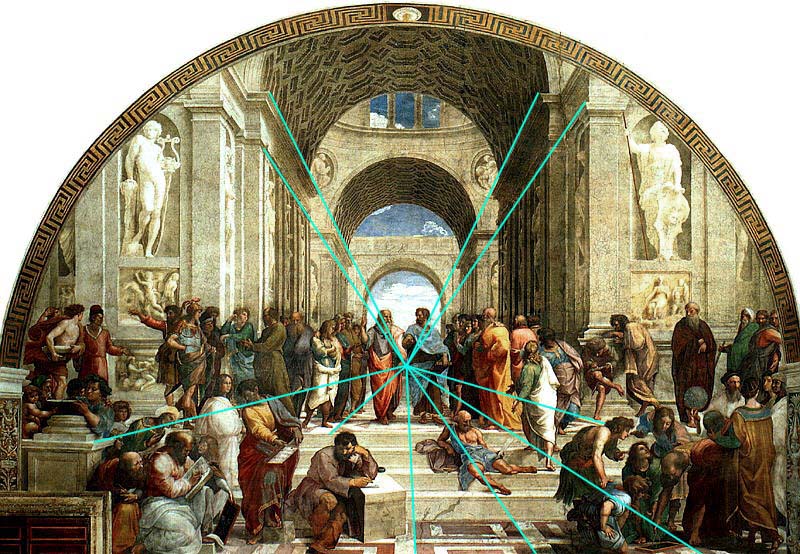
What is the artistic technique that is used to show depth and distance on a flat surface?
a)
realism
b)
perspective
c)
idealism
d)
distancism
16.
The Medici Family...
a)
Were the first mafia family to live in Italy
b)
Were the most famous painters in Florence
c)
Were the family of Mona Lisa
d)
Were patrons of the arts in Florence
17.

What was the theory that said that the Earth and all the planets revolve around the sun?

a)

Geocentric

b)

Heliocentric

c)

Geographic

d)

The Earth is flat

18.

What does "Renaissance" mean?

a)

to die

b)

rebirth

19.

Who invented the printing press?

a)

Francesco Petrarch

b)

Dante Alighieri

c)

Johannes Gutenberg

d)

Leonardo da Vinci

20.

What was the time in history when the Roman Catholic Church was questioned?

a)

Middle Ages

b)

Renaissance

c)

Reformation

d)

All of the Above

21.

How did the invention of the printing press help the Reformation?

a)

Bibles printed allowed more people to read them.

b)

People could read translations of the Bible in their language.

c)

It allowed reformers to spread their ideas.

d)

All of the Above

22.

What was the Counter Reformation?

a)

Pope's decision to go to war

b)

Protestants moving to new lands

c)

Printing Bible in other languages

d)

Catholic Church making changes

23.

Why did Luther disagree with the selling of indulgences?

a)

He believed they should cost more.

b)

He believed people had to work to earn salvation.

c)

He believed salvation was a gift of grace.

d)

He believed his 95 Theses could get people to Heaven.

24.
Martin Luther wrote these "complaints" of the Catholic Church and nailed them to a church door in Wittenberg, Germany
a)
The Bill of Rights
b)
Articles of Confederation
c)
95 Theses
d)
99 theories
25.
The Catholic Church sold these "tickets" to reduce a person's time in purgatory.
a)
Indulgences
b)
treats
c)
extravagances
d)
lotteries
26.
Ruler of England that formed the Anglican Religion because he wanted a divorce
a)
Martin Luther
b)
Charles V
c)
King Henry VIII
d)
Johann Tetzel
27.
Enlightened thinkers based their philosophical beliefs on what two things?
a)
power and privilege
b)
money and fame
c)
good looks and charm
d)
reason and logic
28.
The Scientific Revolution can best be described as:
a)
A period when scientists embraced the teachings of the Church
b)
The time when the Catholic Church empathized most with scientists 
c)
period when scientists began to question the old teachings of the Church
d)
 Scientific property invented by astrophysicists to explain the rotation of the Earth
29.
The procedure for testing theories that starts with a question
a)
Methods of Operation
b)
Scientific Method
c)
Procedural Operations
d)
Steps in a process 
30.
This diagram is representative of which theory that was supported by the Catholic Church? 
a)
Geocentric 
b)
Concentric
c)
Heliocentric 
d)
Geothermantic
31.
Which astronomer was tried for heresy and placed under house arrest because he argued that the universe was heliocentric?
a)
Ptolemy
b)
Copernicus
c)
Newton 
d)
Galileo 
32.
John Locke believed people were born with certain rights than no-one could take away. 
a)
Life, liberty, property
b)
Life , liberty, and the pursuit of happiness
c)
Freedom of speech, religion, and property
d)
Social Contract
33.
Life, liberty, property
a)
natural rights
b)
social contract
c)
state of nature
d)
enlightenment
34.
This enlightenment thinker, from England, was a strong advocate for women's rights.
a)
Locke
b)
Voltaire
c)
Hobbes
d)
Wollstonecraft
35.

Which of the following would be another good name for the Enlightenment?

a)

The Age of Reason

b)

The Age of Great Philosophers

c)

The Age of Religion

d)

The Age of Revolution

36.
What began to be questioned during the Scientific Revolution?
a)
The Church
b)
The Monarch
c)
The Government
d)
Science
37.
What crime was Galileo charged with after his publishing his book?
a)
Theft
b)
Heresy
c)
Murder
d)
Arson
38.
What was the result of the Scientific Revolution? 
a)
advancements in the theories and teachings of the Roman Catholic Church
b)
Advancedments made in science and math
c)
Supports previous thought processes and studies
d)
Expanded on beliefs in faith
39.
During the scientific  revolution people started using experiments to test theories rather than just believing the ___________
a)
King
b)
Family
c)
Church
d)
Sir Salami 
40.
This invention influenced the shift of growth of scientific ideas from Muslim culture to European culture.
a)
gun powder
b)
the wheel
c)
printing press
d)
hover board
41.

leader of the Roman Catholic Church

a)

Pope

b)

Heliocentric

c)

Geocentric

d)

Theory

42.
The First Estate was made up of this group.
a)

clergy

b)
common people
c)
nobles
d)
kings and queens
43.

The Second Estate was made up of the these people.

a)

clergy

b)

common people

c)

priests

d)

nobles

44.
The Third Estate was made up of these people.
a)
clergy
b)
nobles
c)
common people
d)
kings and queens
45.
The idea that reason should guide society rather than tradition helped cause the revolution and came from
a)
the Declaration of Independence
b)
the Scientific Revolution
c)
the Enlightenment
d)
all of the above
46.
The National Assembly set down the ideas of the Revolution in 
a)
the Declaration of Independence
b)
the Declaration of the Rights of Man
c)
the US Constitution
d)
The Edict of Nantes
47.
What do these pie charts reveal about the causes of the French Revolution?
a)
all the estates were taxed equally
b)
the upper classes paid the most taxes
c)
the poorest classes paid all the taxes
d)
the third estate was the wealthiest
48.
What is the significance of the Tennis Court Oath?
a)
it led to a new constitution for France
b)
it started the French Revolution
c)
it was the beginning of the Reign of Terror
d)
it marked the beginning of the rule of Napoleon
49.
How did the Enlightenment and the American Revolution influence the French Revolution?
a)
the people of France overthrew their absolute monarchy
b)
absolute monarchy was strengthened
c)
support for absolute monarchy increased
d)
France was divided into three estates
50.
What happened at the Storming of the Bastille? 
a)
When French women stormed the palace. 
b)
A period of mass executions. 
c)
Storming of the French prison.End of the French Revolution. 
d)
Peasants storm a French prison. Beginning of French Rev. 
51.
What was the purpose of the Tennis Court Oath?
a)
To raise taxes of the the Third Estate
b)
Write a constitution for France and limit the king's power
c)
To make plans to storm the Bastille
52.
How did Napoleon address the economic issues of the French Revolution?
a)
He gave all French citizens enough money to live
b)
He created a more fair tax system
c)
He allowed Nobles to officially enslave their peasants
53.
How did the Robespierre and the Jacobins “protect” the revolution during the Reign of Terror?
a)
Supported constitutional monarchy and separation of power
b)
Adopted Locke’s natural rights to form a new government
c)
Used the guillotine to establish an unlimited government
d)
Restored an absolute monarchy with King Robespierre
54.
What does this images tell you about the Reign of Terror?
a)
Only the nobles were targeted and executed
b)
No citizen was safe, even 3rd Estate members
c)
The middle class was not impacted
d)
All citizens were treated as equals
55.
The strong and vibrant leader of the Bolshevik Revolution
a)
V. I. Lenin
b)
Josef Stalin
c)
Leon Trotsky
d)
Alexander Kerensky
56.

What was the historical event that saw the fall of the Russian monacrhy and the creation of the world's first communist country?

a)

World War II

b)

Russian Revolution

c)

Cold War

d)

Crimean War

57.
Life, Liberty and the pursuit of happiness were...
a)
Unalienable rights
b)
Bill of Rights
c)
Freedom to live
d)
Will Smith movie
58.

descendants of Portuguese or Spanish settlers born in the colonies

a)

mestizos

b)

peninsulares

c)

creoles

d)

caudillos

e)

mulattos

59.
The Latin American Revolutions were most inspired by which time period?
a)
The Age of Exploration
b)
The Enlightenment
c)
The Reign of Terror
d)
The Spanish-American War
60.
The struggles for political independence in Latin America during the early 1800s were most directly influenced by the
a)
writings of Count Camillo di Cavour
b)
American and French Revolutions 
c)
doctrine of liberation theology
d)
Berlin Conference
61.

Simon Bolivar fights for independence in which part of the world?

a)

South America

b)

North America

c)

Africa

d)

Asia

62.

Where did the Industrial Revolution begin?

a)

Massachusetts

b)

France

c)

England

d)

Ireland

63.

The combination of resources, improved transportation, and technological breakthroughs all led to the

a)

industrial revolution

b)

adoption of gold standard

c)

era of good feelings

d)

formation of agricultural cooperatives

64.

Mass Production led to:

a)

products being more superior in quality

b)

laborers received higher wages

c)

goods became less expensive

d)

industries moved to rural areas

65.

What is the movement from rural to urban areas called?

a)

moving

b)

inflation

c)

colonization

d)

urbanization

66.

Which one of following would be a PULL factor for "people moved to the cities during the Industrial Revolution?"

a)

Family

b)

Jobs on the farm

c)

Jobs in factories

d)

Higher cost of living

67.

This machine allowed factories to be built anywhere, powered by coal?

a)

flying shuttle

b)

spinning jenny

c)

steam engine

d)

cotton gin

68.

Which statement is true?

a)

Children were not allowed to work in the mines during the Industrial Revolution.

b)

Work conditions were closely regulated

c)

There were no labor laws that prevented children from working

d)

Children were allowed to work but they were treated fairly

69.

The powered loom made textile production easier. What is the best synonym for "textile?"

a)

Steel

b)

Coal

c)

Cloth

d)

Cotton

70.

Which of the following was a major effect of the Industrial Revolution?

a)

Poverty was completely eliminated.

b)

Societies moved from agriculture to industry.

c)

The number of wars between countries decreased dramatically.

d)

Unemployment increased dramatically.

71.

Indian Nationalist who led India to freedom from British Rule (they got there independence in 1947)

a)

Martin Luther King Jr.

b)

Malala

c)

Mandela

d)

Gandhi

72.

Who changed the Roman Concept of Natural Laws into Natural Rights?

a)

French

b)

English

c)

India

d)

Greece

73.
What are human rights?
a)
Rights only the richest are entitled to.
b)
Rights that all people have simply because they are human.
c)
A responsibility that people have as humans.
d)
Rights that only children have.
74.
The number one cause of child labor is:
a)
No Education
b)
Factory Work
c)
Poverty
d)
Sweatshops
75.
Which of the following BEST explains  the mental impact of child labor?
a)
children were losing limbs and lives
b)
children did not get an education
c)
children did not have any social skills
d)
children were working long hours
76.
Which of the following BEST explains the physical impact of child labor
a)
children were losing limbs and lives
b)
children did not get an education
c)
children did not have any social skills
d)
children were working long hours
77.

Why would factory owners what to hire kids to work?

a)

Can easily get to places that adults cant when fixing a machine?

b)

Kids work harder

c)

Kids will have more energy

d)

Can pay the kids less thus saving money.

78.

An organization of workers established to serve and advance its members' interests in terms of wages, benefits, and working hours and conditions

a)

closed shop

b)

labor union

c)

blacklist

d)

lockout

79.
_______ is when workers refuse to work in order to force an employer to meet their demands.
a)
labor unions
b)
party
c)
strike
d)
sweatshop
80.

Most strikes by unions in the late 1800s were unsuccessful mainly because

a)

unions were unconstitutional

b)

strikes had never been used before to settle labor issues

c)

government supported business instead of workers

d)

strikers failed to use militant tactics

81.

Political, economic, and cultural control of one country by another country or region is called....

a)

Imperialism

b)

Partition

c)

Sphere of Influence

d)

Muslim League

82.

The Scramble for Africa was the 30-year period where

a)

Africa was conquered by Europeans

b)

Africa gained its independence

c)

Africans successfully improved their economies

d)

Africa ran out of eggs

83.

Who controlled India before the Sepoy Rebellion?

a)

Great Britain

b)

Britain East India Company

c)

China

d)

France

84.
The theory that it was natural for stronger nations to dominate weaker ones is known as   
a)
Berlin Conference
b)
Social Darwinism
c)
Sphere of Influence
d)
Scramble for Africa
85.

China and Britain fought a war over:

a)

the Korean peninsula

b)

conquests along the Nile River

c)

opium production and distribution

d)

the elimination of the samurai

86.

What was the name of the war where Britain sent navy to force China to allow Britain to sell opium in China

a)

Opium War

b)

War of 1812

c)

War of the worlds

d)

English war

87.
What happened as a result of the Berlin Conference of 1884-1885? 
a)
France and Britain agreed to govern their African colonies jointly. 
b)
There was less fighting between African leaders and European powers. 
c)
African leaders voiced their suggestions for better relations with European powers. 
d)
Europeans divided Africa into colonies without consulting African leaders. 
88.
The poem, The White Man's Burden, by Rudyard Kipling, represents the belief that European culture was _______.
a)
superior to other cultures
b)
misunderstood by Americans
c)
the oldest culture in the world
d)
a replica of Ancient Greek culture
89.
Which European nation took control of the Congo?
a)
Britain
b)
Belgium
c)
Portugal
d)
France
90.
This king of Belgium conquered the Congo region utilizing harsh tactics. 
a)
Leopold II
b)
Henry Stanley
c)
Dr. Livingstone
d)
Cecil Rhodes