wayground logo

Free Printable Worksheets

Font size

S
M
L
XL
Worksheets

2020 Marking Period Three LIFT - Accelerated

Total questions: 70

Worksheet time: 1hrs 24mins

Name
Class
Date
1.
First 10 amendments
a)
Constitution
b)
Bill of Rights 
c)
Rights of Man
d)
Magna Carta
2.
The major problem with the Articles of Confederation as a plan of government was...
a)
States didn't have enough power
b)
Central government didn't have enough power
c)
Large states dominated smaller states
d)
Central government had too much power
3.
According to the Declaration, what is the source of a government's power?
a)
The army
b)
The people
c)
Money
d)
Smart thinking
4.
Which document established the separation of church and state ?
a)
Virginia Declaration of Rights 
b)
Virginia Statute of Religious Freedom 
c)
Charters of the Virginia Company of London 
d)
Mayflower Compact 
5.

Which principle was adopted by the US Constitution to ensure that not one branch of the government has more power than any other branch?

a)

popular sovereignty

b)

checks and balances

c)

judicial review

d)

republicanism

6.

Which Fundamental Principle means that the government is not all powerful and may only do what the people give it the power to do?

a)

Consent of the governed

b)

Limited government

c)

Rule of Law

d)

Representative Government

7.

Which Preamble goal is being met when the states became united under the Constitution?

a)

form a more perfect union

b)

establish justice

c)

ensure domestic tranquility

d)

promote the general welfare

8.
one sided point of view
a)
fact
b)
bias
9.

A primary election is an example of which function of a political party?

a)

Monitoring the actions of officeholders

b)

Recruiting and nominating candidates

c)

Educating the electorates

d)

Creating the party's platform

10.

How often do most political parties come together for a national convention?

a)

2 years

b)

4 years

c)

6 years

d)

8 years

11.

Political parties will inform the public of their beliefs about issues. This is called the political party's _________.

a)

Election

b)

Campaign

c)

Platform

d)

Candidate

12.

Select which roles the mass media has in elections

a)

Writing editorials and creating political cartoons

b)

Identifying candidates

c)

Broadcasting different points of view

d)

Emphasizing selected issues

e)

Only giving facts

13.
Which function of political parties is best illustrated in this picture?
a)
Nominating Candidates
b)
Helping candidates win elections
c)
Educating the electorate
d)
Monitoring actions of officeholders
14.
Where along the political spectrum do both political parties want to win majority support? 
a)
Left
b)
Right
c)
Center
15.
Total amount of electoral votes in the electoral college.
a)
270
b)
538
c)
3
d)
269
16.

All of the following are functions of political parties EXCEPT

a)

monitor officeholders

b)

educate people about campaign issues

c)

recruit candidates

d)

monitor the polls on election day

e)

help candidates win

17.
Awarding medals to the winners of college scholarships.
a)
Chief of State
b)
Chief Citizen
c)
Commander in Chief
18.
Appointing someone to serve as the head of the Central Intelligence Agency (CIA)
a)
Chief of State
b)
Chief Citizen
c)
Commander in Chief
d)
Chief Executive
19.
Travelling to London to meet with British leaders.
a)
Chief of State
b)
Chief Diplomat
c)
Commander in Chief
d)
Chief Legislator
20.
Inspecting a Navy Yard
a)
Chief of State
b)
Chief Diplomat
c)
Commander in Chief
d)
Chief Legislator
21.
Signing a bill of Congress into law. 
a)
Chief of Party
b)
Chief of State
c)
Chief Legislator
d)
Chief Diplomat
22.
Travelling to California to speak at a rally for a party nominee to the US Senate. 
a)
Chief of Party
b)
Chief of State
c)
Chief Legislator
d)
Chief Diplomat
23.

What is the first step of how a bill becomes a law?

a)

introduced in either the House of Representatives or the Senate

b)

discussed by the conference committee

c)

the floor debate

d)

the bill is voted on

24.

Who approves the bill and signes or vetos it?

a)

US Senate

b)

President

c)

H.O.P

d)

Vice President

25.

Who can override a veto by the president?

a)

judicial branch

b)

legislative branch

c)

executive branch

26.

Who influences Congress in making laws?

a)

executive branch

b)

president

c)

interest groups

d)

no one

27.

True or false:

Lobbyists are paid to try and convince congressman to vote for or against certain legislation

a)

true

b)

false

28.

Where does the power of the office come from?

a)

The Constitution

b)

The People

c)

The Constitution and the People

d)

Executive branch

29.

Which steps are correct for a bill to become a law?

a)

The bill is introduced to HOP or Senate, sent to conference committee, goes to the floor debate, votes on bill, then go through the same process in both houses, committee, signed by president

b)

floor debate, sent to conference committee, signed by president, introduced to HOP or Senate, votes on bill

c)

Votes on bill, floor debate, signed by president, sent to conference committee

d)

sent to conference committee, votes on bill, signed by president, approved by HOP or Senate

30.

Why are bills made into laws? (best answer)

a)

they are in response to problems or issues that they want to change

b)

help the community

c)

help the world

d)

people demand a change, so they have no other choice

31.
Name for a Supreme Court judge
a)
bench
b)
jury
c)
judicial review
d)
justice
32.
Number of justices on the Supreme Court
a)
5
b)
9
c)
100
d)
435
33.

What solution did Alexander Hamilton propose to the problem he describes in this quote?


“If there is in each State a court of final jurisdiction, there may be as many different final determinations on the same point as there are courts. There are endless diversities in the opinions of men. We often see not only different courts but the judges of the same court differing from each other.”


—Alexander Hamilton, The Federalist No. 22

a)

There should be a national court system that is superior to the State courts and can provide a final ruling.

b)

The State courts should meet regularly to discuss how to coordinate their rulings so they agree.

c)

The State and federal courts should share concurrent jurisdiction over all cases to settle disputes.

d)

The State courts should have no federal oversight so they can remain independent and represent their citizens.

34.

Why did the Constitution provide for two separate court systems?

a)

to keep the federal court system from being overwhelmed

b)

to establish the federal court system as having more power than State courts

c)

to maintain a balance of power between the Federal Government and the States

d)

to strengthen the balance of power between the three branches of Federal Government
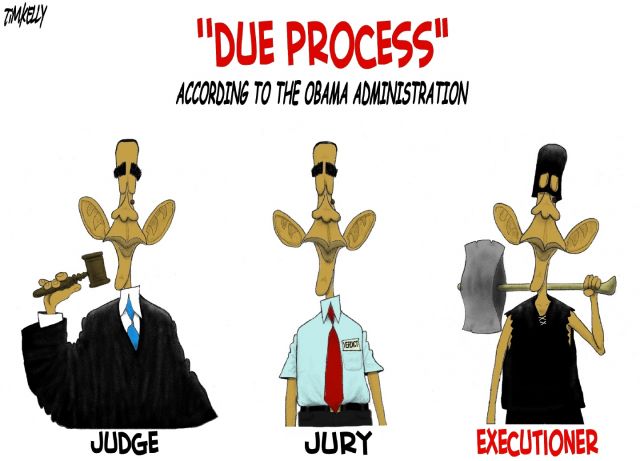
35.
The decision of the jury in a trial is called the 
a)
evidence
b)
verdict
c)
appeal
d)
panel
36.
Law making body for a town?
a)
town council
b)
city council
c)
board of supervisors
d)
manager
37.
Law making body for a county?
a)
town council
b)
city council
c)
board of supervisors
d)
manager
38.
The US Constitution is the _______ law of the land.
a)
inferior
b)
Supreme
39.
An ordinance is a ____________ made by a county, city, or town.  
a)
law
b)
guideline
40.
What document and law-making body gives powers to the local governments in Virginia?
a)
Articles of Confederation, General Assembly
b)
Federalist #10, US Congress
c)
Virginia Constitution, The General Assembly
d)
US Constitution, US Congress
41.
a county official charged with keeping the peace and with judicial duties
a)
sheriff
b)
commander
42.
the governing body of a school system.  Each city and county has one to establish ordinances for the school system.
a)
school board
b)
central office
43.
an elected official that collects revenue and keeps tax records
a)
revenuer
b)
treasurer
44.
The division of power between the states and national government is known as the principle of —
a)
separation of powers
b)
checks & balances
c)
federalism
d)
democracy
45.
Which court has both original and appellate jurisdiction?
a)
Supreme Court
b)
US District Court
c)
US Court of Appeals
d)
circuit courts
46.
Which court has only original jurisdiction?
a)
Supreme Court
b)
US District Court
c)
US Court of Appeals
d)
circuit courts
47.
The authority  of a court to hear and decide cases
a)
Jurisdiction
b)
Hearing
c)
Judges
d)
Clause
48.

What is "due process of law?"

a)

Government must not enact too many laws or regulations.

b)

Office holders and officials must be bound by the laws.

c)

The process of citizens following the law.

d)

Government must act fairly and in accordance with established rules.
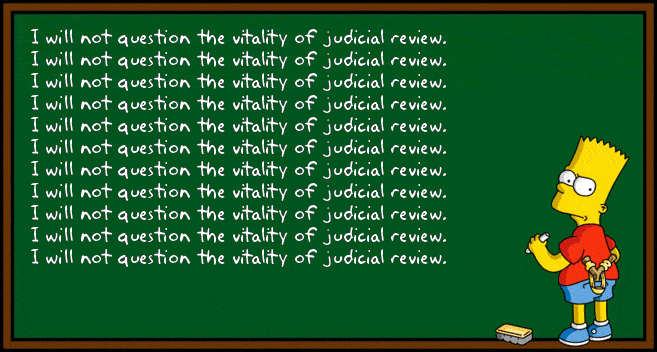
49.

Choose the answer(s) that are true of Judicial Review.

a)

Allows the US Supreme Court the authority to choose which cases they will hear.

b)

Is the result of Marbury v Madison

c)

The actions of the executive and legislative branches of government are subject to review.

d)

Gives the US Supreme Court authority to rule actions unconstitutional.

50.

In the case of Goldilocks and the three bears, would "unlawful" entry be an example of a criminal case or civil case?

a)

Criminal

b)

Civil

51.

an individual, company, or institution sued or accused in a court of law.

a)

Plantiff

b)

Defendant

52.

a person who brings a case against another in a court of law.

a)

Plantiff

b)

Defendant

c)

Prosecutor

53.
The person in charge on the Supreme Court is called a __________ ___________
a)
First Justice
b)
Chief Justice
c)
Speaker of the Supreme Court
d)
Premier Justice
54.
Document that describes the judicial branch
a)
Article I
b)
Article II
c)
Article III
d)
Articles of Confederation
55.
Travelling to London to meet with British leaders.
a)
Chief of State
b)
Chief Diplomat
c)
Commander in Chief
d)
Chief Legislator
56.
Here's the president campaigning with Governor Wolf. Which hat is he wearing?
a)
chief executive
b)
head of state
c)
party leader
d)
commander in chief
57.
Which branch can veto or approve laws? 
a)
Legislative
b)
Executive
c)
Judicial
58.
The number of representatives a state has is based on the state's _________________________.
a)
location
b)
geographic size
c)
population
d)
name
59.
The police have a warrant to search a house, so they do what the warrant says.
a)
Due Process
b)
Not Due Process
60.
_____________________ = House of Delegates + Virginia Senate
a)
General Assembly
b)
Congress
c)
Virginia executive
d)
 Supreme Court
61.
Which powers are saved for the states?
a)
Concurrent
b)
Implied
c)
Reserved
d)
Expressed
62.

Definition: Government is not all-powerful and may do only those things the people have given it the power to do.

a)

Rule of Law

b)

Limited Government

c)

Democracy

d)

Consent of the Governed

63.

Definition: Government is not all-powerful and may do only those things the people have given it the power to do.

a)

Rule of Law

b)

Limited Government

c)

Democracy

d)

Consent of the Governed

64.
The Articles of Conderation created a ______central government. 
a)
Weak
b)
Strong
c)
Stable
d)
Big
65.
The Articles of Conderation created a ______central government. 
a)
Weak
b)
Strong
c)
Stable
d)
Big
66.

Allows changes to be made to the Constitution.

a)

Amendment process

b)

Due process

c)

Voting rights

d)

Checks and balances

67.

Allows changes to be made to the Constitution.

a)

Amendment process

b)

Due process

c)

Voting rights

d)

Checks and balances

68.
group of people who work to shape public policy to their benefit
a)
interest group
b)
lobbyist
c)
delegates
d)
protestors
69.
when interest groups apply pressure directly on public officials
a)
public affairs
b)
lobbying
c)
amicus curiae
70.
when interest groups apply pressure directly on public officials
a)
public affairs
b)
lobbying
c)
amicus curiae