wayground logo

Free Printable Worksheets

Font size

S
M
L
XL
Worksheets

FOSSILS

Total questions: 40

Worksheet time: 2hrs 46mins

Name
Class
Date
1.

The preserved remains or evidence of ancient living things...

a)

clay

b)

fossils

c)

igneous rocks

d)

silt

2.

How do fossils form?

a)

An organisms is rapidly buried. The sediments and minerals replace the tissues.

b)

An organism is buried slowly. Only bones can become fossils

3.

What can we learn about by looking at fossils? (Choose 2)

a)

They're really cool.

b)

They are evidence of ancient environments.

c)

They can show how sea level rise could happen.

d)

We can't learn anything by studying fossils.

4.

Who studies ancient environments?

a)

biologists

b)

specialologists

c)

paleontologists

d)

scientologists

5.

Fossils could provide evidence for....

a)

relationships between past organisms and current organisms

b)

past organisms only

c)

current organisms only

6.
Scientists who study fossils are called
a)
Geologists
b)
Paleontologists
c)
Fossil Scientists
d)
Meteorologists
7.
How old do Paleontologists believe the Earth is?
a)
2015 years old
b)
3.6 billion years old
c)
4.6 billion years old
d)
4.6 million years old
8.
What is a fossil?
a)
the remains or physical evidence of an organism preserved by geologic processes
b)
fossils can be preserved in rock, amber, asphalt, or ice
c)
any naturally preserved evidence of animal activity
d)
fossil of an organism that lived during a relatively short period of time
9.
Which of the following would NOT help an organism become fossilized?
a)
shell 
b)
skeleton 
c)
buried quickly with sediment 
d)
soft body parts 
10.

What can NOT become a fossil?

a)

plants

b)

animals

c)

soft body parts

d)

rocks

11.

What do fossils teach us about?

a)

Everything we need to know about a plant or animal.

b)

They teach us about the past and the environment.

c)

Everything single living thing will become a fossil when it dies.

d)

That wooly mammoths are not extinct.

12.

What could you NOT conclude by looking at this dinosaur fossil?

a)

It has sharp teeth so it probably ate meat.

b)

It had long legs so it probably ran fast.

c)

It had a long tail which it probably used for defense.

d)

It had claws so it was probably a great swimmer.

13.

Fossils found in different layers of the earth likely came from the same era or time period.

a)

True

b)

False

14.

The deeper the layer the fossil is found, the older the fossil will likely be.

a)

True

b)

False

15.

Extinct means

a)

A dead animal has become fossilized.

b)

There is no more of a species left.

c)

Permineralization has occured within the fossil.

d)

The fossil has become petrified.

16.
True or False....Only dinosaurs have been fossilized.
a)
True
b)
False
17.
True or False...All living things that die become fossils.
a)
True
b)
False
18.
Which item below would INCREASE the chances of making a fossil?
a)
Soft body parts
b)
Buried Right Away
c)
Left Exposed
d)
Lots of Scavenger Activity
19.
True or False...Fossils have been found all over Earth.
a)
True
b)
False
20.
_______ are the preserved remains or traces of living things.
a)
bones
b)
fossils
c)
artifacts
d)
organic matter
21.
Fossils can provide evidence of how life has changed over time, how Earth's surface has changed, and clues about what past environments were like.
a)
True
b)
False
22.
Which parts of an organism are more likely to fossilize?
a)
the soft parts - skin, muscle
b)
the hard parts - bones, shells, stems
c)
all parts can become fossilized easily because the organism becomes buried by sediments
23.
People who study fossils are called ____.
a)
meterologists
b)
fossilologists
c)
paleontologists
d)
fossil hunters
24.
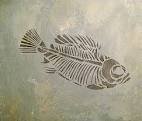
Look at the fossil above. Where would be the BEST place to find it?
a)
desert
b)
jungle
c)
near the ocean
d)
piedmont
25.
Which animal part would most likely form a fossil?
a)
Muscle 
b)
Fur
c)
Lung
d)
Bone 
26.
the trace or remains of an organism that lived a loooong time ago, often preserved in sediment
a)
half-life
b)
fossil
c)
geologic time-scale
d)
evolution
27.
a scientist who studies fossils
a)
geologist
b)
biologist
c)
paleontologist
d)
chemist
28.
Which of the following is NOT an example of a fossil?
a)
a petrified dinosaur bone
b)
a footprint captured in mud
c)
a seashell found on the beach
29.
Why do bones and teeth remain as part of some fossils?
a)
they are white
b)
bones are large
c)
the parts are hard 
d)
bones decay easily
30.
Which animal part would MOST LIKELY form a fossil?
a)
fur
b)
lung
c)
bone
d)
muscle
31.
Fossils of fish are found under land where cows now live. What does this tell you?
a)
the fish were dropped their by flying birds
b)
this land was once under the ocean
c)
farmers fed the fish to the cows
d)
fish used to live on land
32.
In order for a fossil to form, which of the following events must happen FIRST?
a)
Slowly, minerals in the water replace the bone.
b)
Sediment covers the bone.
c)
An animal dies.
d)
The bone is no longer a bone, but a rock copy.
33.
_____ is any living thing, plant or animal, even you!
a)
A paleontologist
b)
An organism
c)
A fossil
d)
A rock
34.
What happens when a group of animals become extinct?
a)
All of its members have died.
b)
Only a few of its members are still living.
c)
The animals can no longer lay eggs.
d)
All of its members move to another place.
35.
If scientists found this fossil, what could they infer?
a)
what fish are like today
b)
that this fish lacked oxygen
c)
what kind of animal ate this fish
d)
that water once covered the area
36.

Which of the following is NOT an example of a fossil?

a)

an insect stuck in amber

b)

a petrified dinosaur bone

c)

a seashell found on the beach

d)

a footprint captured in mud

37.

A paleontologist finds a fossil of a fish on top of a mountain. She can infer that the area was once ___________________________.

a)

much cooler

b)

underwater

c)

much warmer

d)

a desert

38.

The preserved remains of a plant or animal that lived long ago are called ____________.

a)

soil

b)

fossils

c)

rocks

d)

humus

39.
How are fossils created?
a)
A. Traces of organisms harden like rock. 
b)
B. Dead organisms are quickly buried for millions of years.
c)
C. Animals get trapped.
d)
D. All of the above
40.

Fossils form on the surface of the Earth and remain there for thousands of years.

a)

True

b)

False