wayground logo

Free Printable Worksheets

NEW

Font size

S
M
L
XL
Worksheets

Pretest: Waves

Total questions: 45

Worksheet time: 32mins

Name
Class
Date
1.
What do we call the part of a compressional wave that is when the waves are squeezed together?
a)
compression
b)
rarefaction
c)
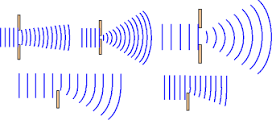
crest
d)
trough
2.
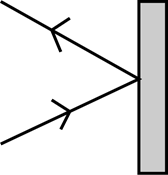
What do we call the part of a compressional wave that is spread a part?
a)
compression
b)
rarefaction
c)
crest
d)
trough
3.
Name the type of wave that matter moves at right angles to the direction of the wave?
a)
compressional waves
b)
mechanical waves
c)
transverse waves
d)
ultraviolet rays
4.
What is the name of a material in which waves, like sound waves, seismic waves, and waves in a slinky 
a)
Vacuum
b)
Medium
c)
Mechanical
d)
Space
5.
What is a repeating disturbance or vibration that transfers or moves energy from place to place?  
a)
Medium
b)
Wave
c)
Compression
d)
Rarefaction
6.
What kind of wave is pictured below?
a)
compressional wave
b)
transverse wave
c)
sound wave
d)
mechanical wave
7.
Which letter represents wavelength?
a)
A
b)
B
c)
C
d)
D
8.
Which letter represents the wave crest?
a)
A
b)
B
c)
C
d)
D
9.
Which letter represents the wave trough?
a)
A
b)
B
c)
C
d)
D
10.
Which letter represents amplitude?
a)
A
b)
B
c)
C
d)
D
11.
The number of waves that pass in a certain amount of time is called
a)
frequency
b)
wavelength
c)
crest
d)
amplitude
12.
Sound waves are...
a)
cool
b)
not cool
c)
transverse waves
d)
longitudinal waves
13.
The direction of a transverse waves is ____ to the disturbance/vibration. 
a)
equal
b)
less than
c)
at an acute angle
d)
at a right angle
14.
What does it mean to refract?
a)
bounce off
b)
to bend
c)
curve outward
d)
reflect
15.
What happens when light hits a mirror?
a)
it makes a color
b)
it reflects
c)
it makes a rainbow
d)
it passes through
16.

Constructive interference will cause the wave to

a)

Increase its amplitude

b)

Decrease its amplitude

c)

increase its frequency

d)

decrease its frequency

17.

Destructive interference

a)

decreases amplitude

b)

increases amplitude

c)

increases wavelength

d)

decreases wavelength

18.
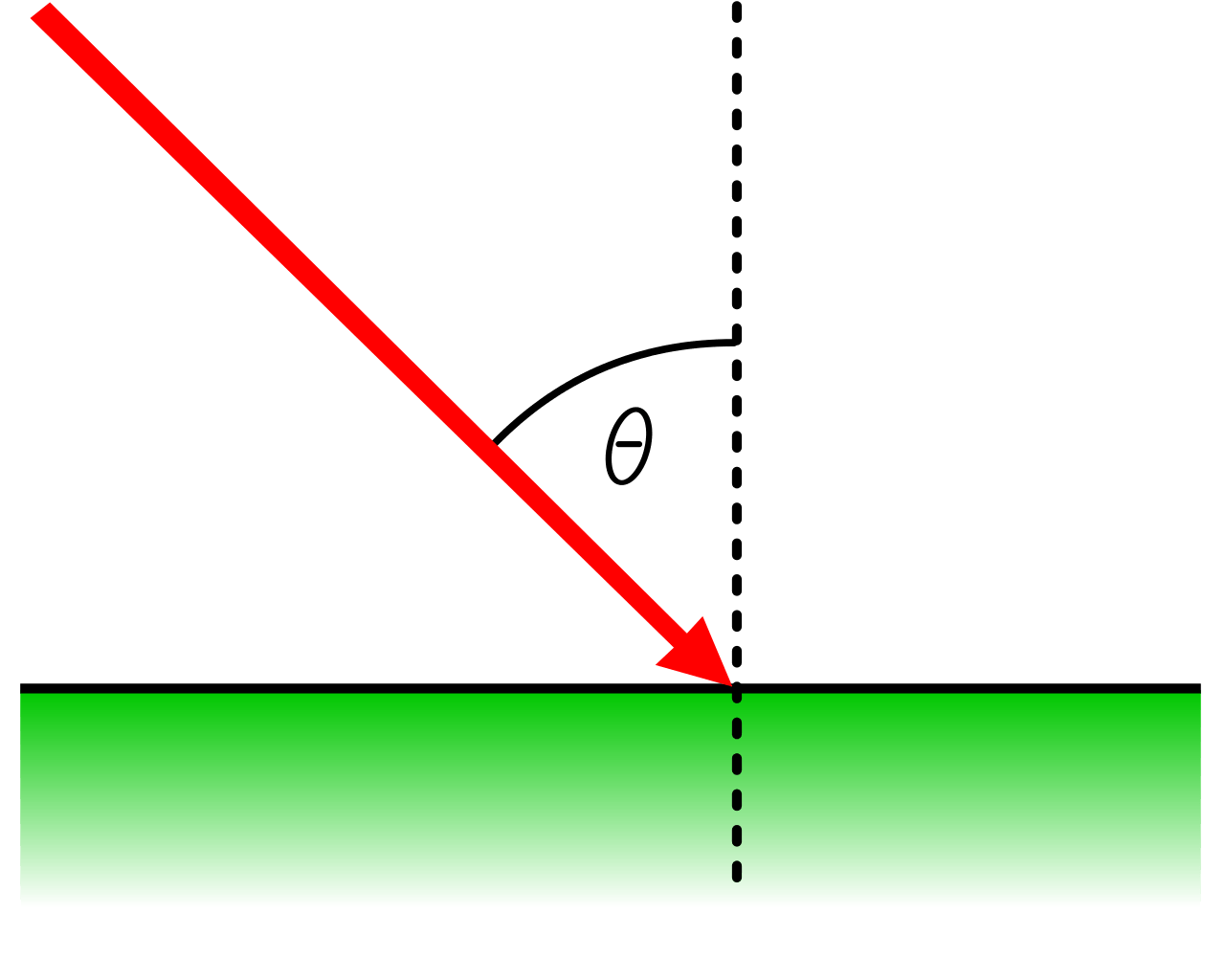
The illustration shows a light ray striking an object.
In the illustration, the light ray striking the object is-
a)
absorbed
b)
stopped
c)
reflected
d)
refracted
19.
The bouncing off of light rays from the surface of an object such as a mirror or other shiny surface is called:
a)
mirror
b)
laser
c)
reflection
d)
refraction
20.
According to the Law of reflection, a light ray striking a mirror
a)
continues moving through the mirror in the same direction
b)
moves into the mirror at a slightly different angle
c)
bounces off the mirror toward the direction it came from
d)
bounces off the mirror at the same angle it hits.
21.
Refraction occurs when _____________
a)
the wave's speed changes by entering a new medium
b)
a wave bounces off of a boundary
c)
waves parts meet each other
d)
waves bend around a barrier
22.
a)

Diffraction

b)

Interference

c)

Refraction

d)

Reflection

e)

Absorption

23.
a)

Constructive Interference

b)

Destructive Interference

c)

Reflection

d)

Refraction

24.
A wave that does not require a medium
a)
A. electromagnetic  wave
b)
B. surface wave
c)
C. medium
d)
D. transverse wave
25.
A wave that requires a medium through wave which to travel
a)
A. electromagnetic  wave
b)
B. longitudinal wave
c)
C. mechanical wave
d)
D. transverse wave
26.
a)

absorption

b)

diffraction

c)

reflection

d)

refraction

e)

transmission

27.
a)

absorption

b)

diffraction

c)

reflection

d)

refraction

e)

transmission

28.
When a wave passes from one medium to another, the ________ may change.
a)
speed
b)
frequency
c)
wavelength
d)
speed, frequency, and wavelength
29.
What are the units of frequency?
a)
m/s
b)
s
c)
Hz
d)
m
30.
Which wave has the SHORTEST wavelength and, therefore, the highest frequency and most energy
a)
radio waves
b)
ultraviolet rays
c)
gamma rays
d)
x-rays
31.

What portion of the electromagnetic spectrum can human eyes detect?

a)

Infrared light

b)

Ultraviolet light

c)

Visible light and infrared light

d)

Visible light

32.

What is true about the relationship among wavelength, frequency, and energy in electromagnetic radiation?

a)

Ultraviolet waves have lower frequency, longer wavelength, and lower radiant energy than radio waves.

b)

Television waves have lower frequency, longer wavelength, and lower radiant energy than visible light.

33.

Which type of waves have the shortest wavelength?

a)

microwaves

b)

gamma rays

c)

radio waves

d)

ultraviolet light

34.

Which type of wave has the highest frequency?

a)

microwaves

b)

gamma rays

c)

radio waves

d)

ultraviolet light

35.

Which color of visible light has the longest wavelength?

a)

blue

b)

violet

c)

orange

d)

red

36.

Which color of visible light has the shortest wavelength?

a)

blue

b)

violet

c)

orange

d)

red

37.

Microwaves, gamma rays, and radio waves are all types of

a)

electromagnetic waves

b)

longitudinal waves

c)

sound waves

d)

none of the above

38.

What makes the different types of EM waves?

a)

a change in frequency and wavelength

b)

a change in time and length

c)

a change in space and time

d)

all of the above

39.
Select the correct order of waves on the EMS 
a)
Radio, Micro, Infra, Visible, Ultra, X-ray, Gamma
b)
Gamma, X-ray, Ultra, Vis, Infra, Micro, Radio
c)
Vis, Micro, Infra, Ultra, X-ray, Gamma, Radio
d)
Micro, Radio, Vis, Infra, Ultra, X-ray, Gamma
40.
A wave with a large wavelength will have a ______ frequency and _____ energy
a)
high, low
b)
high, high
c)
low, high
d)
low, low
41.

What best describes the Doppler Effect?

a)

When light changes color

b)

When sound changes pitch

c)

An apparent change in frequency of a wave due to the relative motion between a wave source and an observer

d)

An apparent change in the amplitude of a wave due to the relative motion between a wave source and an observer.

42.

What is the definition of Period?

a)

How long it takes to complete one wave.

b)

How often a wave goes by.

c)

How many waves can be completed in one second.

d)

None of these.

43.

Adjusting the amplitude of a wave changes....

a)

...the height of the peaks and the depths of the troughs.

b)

...the length of the waves.

c)

...the frequency of the waves.

d)

...the speed of the waves.

44.
When the car moves AWAY from you, its horn seems...
a)
Low pitched
b)
High pitched
c)
Normal
45.
When an ambulance move TOWARD you it sounds ________ pitched. 
a)
high
b)
low
c)
medium