
 Worksheets
S2 Interim Review Game
Total questions: 84
Worksheet time: 59mins


The modern day political boundaries, civil wars, and conflicts found in Africa can often be traced back to which of the following event?
European partitioning and colonization
Ancient African trading empires
European cooperation in the late 1800s
Asian invasions in the 1800s
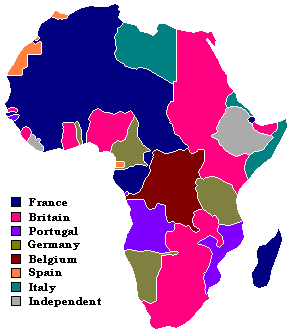

Which phrase below best describes the following statement: "European nations took control of almost all African territory"?
Discovering the New World
The Age of Exploration
Scramble for Africa
Assimilating Africans to European Culture

The purpose of the Berlin Conference was to discuss:
World issues and conflicts
The best trade routes from Germany
America’s independence from Britain
The partitioning of Africa

How many African countries were invited to the Berlin Conference?
0
1
5
30

Investment in Capital Goods means investing in:
Healthcare, Education and Training
Agricultural Chemicals
Machines, Tools, Equipment, and Technology
Space travel and exploration

Kenya & Nigeria: Presidential Democracy :: South Africa: _______________.
Absolute Monarchy
Parliamentary Democracy
Federal Republic
Constitutional Monarchy
Which is part of a country’s human capital?
Skills and knowledge workers have
Taxes collected from a country’s workers
Money paid to workers for producing goods
The amount of goods sold in foreign trade in a year.
How do entrepreneurs help a country's economy?
They create new jobs.
They help people spell big words like "entrepreneur".
They make and distribute counterfeit money.
They do NOT help a country's economy.
In this type of economy the government owns most of the property, sets the prices of goods, determines the wages of workers, plans what will be made…everything. Individuals have little or no input.
Mixed
Traditional
Market
Command
How is the head of government in Kenya chosen?
He/she inherits the position.
He/she is chosen by members of the legislature.
He/she is directly elected by the citizens of Kenya.
He/she is chosen by the previous leader.
Which statement correctly compares autocratic and democratic governments?
Citizens can participate more in democratic governments.
The government has less power in autocratic governments.
Citizens can participate more in autocratic governments.
Autocratic and democratic governments are the same
Parliamentary and presidential forms of government have many similarities. What is one major difference?
In a parliamentary form of government, the prime minister is elected directly by citizens of the country.
In a presidential form of government, the president is elected directly by the citizens of the country.
In a parliamentary form of government, the prime minister appoints the monarch.
In a presidential form of government, the prime minister is appointed by the monarch.
The government of South Africa is spending money to build more roads, railroad tracks, and other infrastructure throughout the country. Why?
They are investing in their capital goods.
They are investing in their human capital.
They are investing in their natural resources.
They are investing in stocks and bonds.
If a country does not invest in its human capital, how can it affect the country’s gross domestic product (GDP)?
Investment in human capital has little effect on a country’s GDP.
GDP is only affected if worker’s pay for the investment out of their own pockets.
Most workers want to keep their jobs just as they are and do not care about GDP.
GDP may go down because poorly trained workers will not be able to do their jobs as well.
South African citizens
a. only vote in local elections
b. do not participate in the government
c. vote directly for the president
d. elect the parliament and the parliament chooses the president
A complete stop on imports
a. embargo
b. quota
c. subsidy
d. tariff
A limit on imports
a. embargo
b. quota
c. subsidy
d. tariff

Which country gives the most economic freedom to its citizens?
a. South America
b. Nigeria
c. South Africa
d. Kenya

South Africa placed a _________________ (tax) on imported chicken from the US to protect the chicken industry in South Africa.
Tariff
Quota
Embargo
Standard
This person has an idea for a product or service and takes the risk to produce it.
banker
entrepreneur
investor
money manager
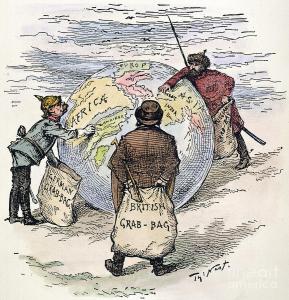
What is Imperialism?
when one nation is able to control other, usually smaller or weaker, nations
loyalty and devotion to a nation especially as expressed in a glorifying of one nation above all others
shared or governmental ownership and administration of the means of production and distribution of goods
How are economic decisions made in a traditional economy?
Government planners
Consumers
Customs and beliefs
A mix of consumers and government leaders
Nigeria specializes in _____________.
Oil
Gold
Diamonds
Technology
South Africa specializes in ____.
Minerals like gold and diamonds
Oil
Tea
Cars
Until 1994, when South Africa’s apartheid laws were abolished, many African countries and members of the United Nations refused to trade with South Africa. This is known as a(n)
Embargo
Tariff
Quota
Subsidy

What decision did South African president F.W. deKlerk eventually make about the country's apartheid laws?
He added many new and even harsher laws
He began to repeal apartheid laws
He lifted segregation restrictions on those living in South African cities
He worked to spread apartheid laws to nations neighboring South Africa

The main goal of the Pan-African movement was to
end any support for the African Congress
Immediately overthros all of the ruling governments in Africa
Get all African nations to become members of the United Nations
Get Africans to think of themselves as one people and work together
Which country's independence movement involved the Mau Mau uprising?
Kenya
Nigeria
South Africa
South Africa & Nigeria
What is the correct chronological order of events?
Colonization --> Pan Africanism --> Independnce
Independence --> Colonization --> Pan Africanism
Pan Africanism --> Independence --> Colinization
they all happened simultaneously
Who was a staunch supporter of Pan Africanism who eventually became Kenya's president?
Nnamdi Azikiwe
Joseph Kenyatta
Marcus Garvey
Martin Luther King

What two British colonies in Africa eventually achieved their independence?
Kenya and Nigeria
Liberia and Ethiopia
Egypt and Sudan
Democratic Republic of Congo and Algeria

What individual became a leading person in the fight to end apartheid and was imprisoned for his acts against apartheid?
Marcus Garvey
Otto von Bismarck
Nelson Mandela
F.W. de Klerk

What President of South Africa, elected in 1989, fought to end apartheid and freed Nelson Mandela?
Marcus Garvey
Martin Luther King Jr.
Nelson Mandela
F.W. de Klerk


What was a negative impact of partitioning in Africa?
nationalism
pan-African movement
conflict and civil wars
Scramble for Africa

Country H
China
India
Mongolia
Japan

Country C
China
Philippines
Indonesia
India

The three great rivers of the Indian subcontinent are the Indus, the Brahmaputra, and the _______________.
Yangtze
Huang He
Ganges
Mekong
Why is the Yangtze River so important to the population and economy of China?
Water from the Yangtze River is used to irrigate the Gobi Desert.
The Yangtze River is the international border between China and India.
People can use the Yangtze River to get over the Himalayan Mountains.
It supplies millions of people with water for drinking, irrigation, and industrial uses.
Which is true about the Ganges River?
The river is ignored by Indian religious rituals.
People do not drink the water because it is so polluted.
Many people use the river for transportation as well as a water supply.
Plant and animal life have not been affected by the poor quality of the river’s water.

The largest and longest river in China.
Yellow River
Yangtze River
Ganges River
What are TWO of the main causes of air pollution in South Asia?
Motor Vehicle Exhaust
Burning wood/charcoal for cooking
Burning homes to clear land for cities
Burning farms to create new land for development
Choose the TWO physical features that have large portions of South Asia's population living in/near them.
river valleys
coasts
mountain ranges
arid deserts
Why is central and western China less populated than eastern China?
it is covered in mountains and deserts
it has better farmland
there are too many wars
rivers do not reach that far inland
What has damaged China's crops and caused millions of deaths throughout China's history?
flooding of rivers
air pollution
deforestation
tsunamis
What is the BEST reason for overpopulation on the Ganges River?
Its away from the deserts in China
The area has cool climate
People live near rivers for water and nutrients rivers bring
Trade routes
What geographical feature in Southeast Asia is where most people choose to live?
Rivers
Seas
Plains
How is Buddhism and Hinduism similar? How are they different?
Both believe in Reincarnation, Karma, and are from India Hinduism has a Caste System (Social Order)
Both believe in Reincarnation and are from India Hinduism has a Caste System (Social Order), and believes in Karma
Both believe in Reincarnation and are from India Buddhism has a Caste System (Social Order), and believes in Karma
Both believe in Reincarnation, Karma, and are from India Buddhism has a Caste System (Social Order)
Describe Hinduism’s Caste System.
People are born into a certain class or level in society that cannot be changed
People are born into a certain class or level in society that but it can be changed if they work hard
Kami: everything in nature has a spirit connected to it
People are reincarnated into a new life based on their old life
Which of the following describes an ethnic group
people who like to grow food
people who share the same religious beliefs
people with a shared language, traditions, culture
people who are interested in the same topics
Sharing a common language would be an example of ________.
religious group
ethnic group
Having the same sacred text would be an example of _______.
religious group
ethnic group
The two religions that originated in India were _____ and _____.
Hinduism and Confucianism
Buddhism and Shintoism
Buddhism and Islam
Hinduism and Buddhism
What is the name of one of the Hindu sacred texts?
Four Noble Truths
Vedas
Quran
Torah
Which religion believes in the caste system?
Confucianism
Buddhism
Islam
Hinduism
What is the Hindu belief in reincarnation?
The worship of sacred animals who are
believed to have souls.
The belief that men should treat others
with kindness.
the belief that there is only one god
The belief that a soul returns to life in
another body after death.
Who was the founder of Buddhism?
Siddhartha Gautama
Abraham
Muhammed
Confucius
Nirvana is the ultimate goal in this religion.
Confucianism
Islam
Buddhism
Hinduism
What did Confucius believe were the keys to social order (a world without conflict) and peace?
To worship only one god
Good character and virtue in the people
A strict caste system
One ruler to keep order
Why is Confucianism considered a philosophy instead of a religion?
No religion is allowed by the Chinese
government today.
Confucius never wrote his ideas down for
his followers.
Confucius only believed in one god.
His teachings are more about ethics
(morals and right/wrong) and behavior than religious ideas.
What are the kami that are so important in Shinto belief?
They are the religious writings
They are the elected leaders of the Shinto community
They are spirits that followers believe exist in all things around them
They are the people who converted to Shinto
Life and nature are sacred and must be protected is the basic belief of _____.
Buddhism
Shintoism
Confucianism
Islam
Confucius’s Golden Rule was __________.
Treat others with respect and kindness
What you do not like when done unto yourself, do not do unto others
Respect people older than you.
Actions speak louder than words

