Wayground logo

Free Printable Worksheets

Font size

S
M
L
XL
Worksheets

Algebra EoC Vocabulary

Total questions: 72

Worksheet time: 1hrs 5mins

Name
Class
Date
1.
The x-values of a relation.
a)
Range
b)
Domain
c)
Output
d)
Slope
2.
The y-values of a relation.
a)
Domain
b)
Range
c)
Input
d)
Vertical Line Test
3.
When each input of a relation has exactly one output, the relation is known as this.
(x does NOT repeat)
a)
Function
b)
Output
c)
Domain
d)
Vertical Line Test
4.
Where the line crosses the y-axis.
a)
Slope
b)
X-Intercept
c)
Y-Intercept
d)
Range
5.
Where the line crosses the x-axis.
a)
Slope
b)
X-Intercept
c)
Y-Intercept
d)
Range
6.
The ratio of the change in y-values (rise) with the change in x-values (run).
a)
Slope
b)
Range
c)
Scientific Notation
d)
Rational
7.
y = mx + b
is in what form?
a)
Slope-Intercept
b)
Point-Slope
c)
Standard
8.
a)
Slope-intercept form
b)
Standard Form
c)
Point-slope form
d)
Slope Formula
9.

f(x) means

a)

x first

b)

f times x

c)

function notation

d)

no clue

10.
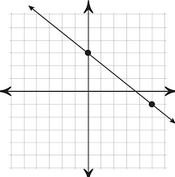
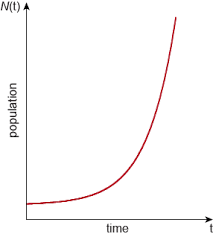
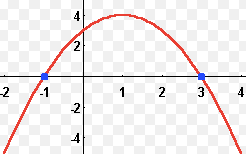
Is the graph linear, exponential, quadratic or absolute value?
a)
Linear
b)
Exponential
c)
Quadratic
d)
Absolute Value
11.
Is the graph linear, exponential, quadratic or absolute value?
a)
Linear
b)
Exponential
c)
Quadratic
d)
Absolute Value
12.
Is the graph linear, exponential, quadratic or absolute value?
a)
Linear
b)
Exponential
c)
Quadratic
d)
Absolute Value
13.
Is the pictured graph growth, decay, or linear or none?  
a)
Exponential Growth
b)
Exponential Decay
c)
Linear
d)
None
14.
The x-intercepts of a quadratic equation are known as the _____.
a)
Vertices
b)
Roots
c)
Squares
d)
Formulas
15.
The x-intercepts of a quadratic equation are known as the _____.
a)
vertices
b)
squares
c)
zeros
d)
formulas
16.

If the graph of a quadratic opens down, which of the following must be true?

a)

y= -ax2

b)

y=ax2

c)

c < 0

d)

c > 0

17.
If the graph of y = ax2 + bx + c opens up, which of the following must be true?
a)
a < 0
b)
a > 0
c)
c < 0
d)
c > 0
18.
What is another word for zeros?
a)
y-intercepts
b)
roots
c)
vertex
d)
axis of symmetry
19.
Does this graph have a maximum or minimum value?
a)
maximum
b)
minimum
c)
neither
d)
both
20.

The point in which a graph hits the x-axis is know as the _____

a)

Solution

b)

x-intercept

c)

Root

d)

All answers are correct

e)

Zeros

21.

An equation that can be written in the form y = ax2 + bx + c

a)

Quadratic equation

b)

MInimum

c)

Linear equation

d)

Maximum

22.

The highest or lowest point on the parabola

a)

Parabola

b)

Domain

c)

Vertex

d)

Range

23.

All possible x-values

a)

Domain

b)

Range

c)

Parabola

d)

Vertex

24.

All possible y-values

a)

Domain

b)

Range

c)

Parabola

d)

Vertex

25.

the turning point of the parabola

a)

Parabola

b)

Axis of Symmetry

c)

Vertex

d)

Solutions

26.

What is this?

a)

Quadratic Formula

b)

Quadratic Vertex Form

c)

Quadratic Standard Form

d)

Quadratic Parent Function

27.

the highest point of the quadratic function

a)

Maximum

b)

Minimum

c)

Parabola

d)

Vertex

28.

the lowest point of the quadratic function

a)

Maximum

b)

Minimum

c)

Parabola

d)

Vertex

29.

Exponential growth is when...

a)

The rate is bigger than one

b)

The rate is smaller than one

c)

The initial value is positive

d)

The initial value is negative

30.

Exponential decay is when...

a)

The rate is bigger than one

b)

The rate is smaller than one

c)

The initial value is positive

d)

The initial value is negative

31.

 F(x) = a(1 + r)XF\left(x\right)\ =\ a\left(1\ +\ r\right)^X  

a)

Say what

b)

Exponential Growth

c)

Exponential Decay

d)

Quad

32.

 F(x) = a(1 − r)XF\left(x\right)\ =\ a\left(1\ -\ r\right)^X  

a)

Say what

b)

Exponential Growth

c)

Exponential Decay

d)

Quad

33.

F(x) = a(1 − r)XF\left(x\right)\ =\ a\left(1\ -\ r\right)^X

a)

Rate will be a number greater than 1

b)

Exponential Growth

c)

Rate will be a number (decimal) less than 1

d)

Quad

34.

The problem asks to solve for the zeros/solutions/roots. What else is this asking for...

a)

X values

b)

Y values

c)

Me to cry

d)

Distribute and square everything

35.

Formula for area of a square/rectangle

a)

A=LW

b)

A= 2l+2w

c)

A= 1/2bh

36.

To find the perimeter of a square/rectangle

a)

Cry a lot

b)

length * width

c)

2length + 2width

d)

y= ax2

37.
The distance between the greatest number and the least number in a set of data.
a)
Mean 
b)
Median
c)
Range
d)
Mode
38.
A measure of variation in a set of numerical data, it is the distance between the first and third quartiles of the data set.
a)
Interquartile Range
b)
Outliers
c)
First Quartile
d)
Third Quartile
39.
A value that is much higher or much lower than the other values in a set of data.
a)
Outlier
b)
Box Plot
c)
Range
d)
Histogram
40.
To find the _________ you add up all the numbers and then divide by how many numbers you have.
a)
Mean
b)
Median
c)
Mode
d)
Range
41.
To find the ______ you put all the numbers in order from least to greatest and then see which number you have the most of.
a)
Mean
b)
Median
c)
Mode
d)
Range
42.
To find the ________ you put all numbers in order from least to greatest and find the number that is in the middle.
a)
Mean
b)
Median
c)
Mode
d)
Range
43.

What is the constant of this polynomial?

2x3 - 8x2 + 3x - 7

a)

2

b)

-8

c)

3

d)

-7

44.
The number in front of the variable is called the.... 
a)
exponent
b)
base
c)
coefficient
d)
fronter
45.

What axis is this?

a)

x-axis

b)

y-axis

46.

What axis is this?

a)

x-axis

b)

y-axis

47.

This is an example of:

a)

Slope-Intercept Form

b)

Point-Slope Form

c)

Standard Form

48.
What type of slope does the following graph have?
a)
Positive
b)
Negative
c)
Zero Slope
d)
Undefined
49.

Identify the slope as positive or negative.

a)

positive

b)

negative

50.
If a table, that represents a function, has a constant rate of change, then it is a...
a)
Linear function
b)
Nonlinear function
c)
Relation
d)
None
51.
A function notation such as f(x) is the same thing as stating __________.
a)
m = 
b)
b = 
c)
k = 
d)
y = 
52.

 y=x2y=x^2  would create a ——- shaped graph 

a)

Linear 

b)

Exponential 

c)

QuadratIc 

53.

 Q3 −Q1   would represent theQ_{3\ }-Q_{1\ _{ }}\ \ would\ represent\ the  

a)

Inner Quartile Range

b)

Quadratic 

c)

Stranger Things 

d)

Function 

54.

An answer that looked like 6<x<20 would be representing

a)

The range values

b)

The domain Values

55.

In the following problem, 4x2 − 27x + 84x^2\ -\ 27x\ +\ 8 The value of “b” is what?

a)

4

b)

-27

c)

8

d)

Batman

56.

x= −b2ax=\ -\frac{b}{2a} would be used to find what?

a)

Baby Yoda

b)

The time an object took to reach maximum height (x)

c)

An maximum height of an object (y)

d)

Exponential growth

57.

which answer would describe the range of this parabola

a)

-3<x<1

b)

y<4

c)

y>4

d)

whats Range

58.

If the output values (y) change rapidly by doubling or tripling

a)

Linear

b)

Quadratic

c)

Exponential

d)

My blood pressure

59.

What information could this formula be used to find

a)

roots

b)

zeros

c)

Solutions

d)

x Intercepts

e)

All of these super cool things

60.

which equation best fits this graph

a)

y=axy=a^x

b)

y=a2y=a^2

c)

y=mx+by=mx+b

d)

y=∣x∣y=\left|x\right|

61.

The super long word problem asks how long it would take for some random object to reach its maximum height. Which formula would you use ...

a)

x=−b2ax=-\frac{b}{2a}

b)

y=mx+by=mx+b

c)

y=ax2 +bx+cy=ax^2\ +bx+c

d)

The Baby Yoda Prayer

62.

Along comes another long ridiculous word problem asking what the maximum height of another random object. What do you do?!?

a)

Cry and call mommy

b)

Find the x value of the vertex

c)

Find the y value of the vertex

d)

Find the roots/solutions

63.

An example of Geometric Sequence would be 3,6,12,24... the pattern (ratio) is

a)

multiplying by 2

b)

multiplying by 3

c)

adding by 2

d)

There’s a pattern?

64.

An example of Arithmetic Sequence is 4,8,12,16,20... the difference is

a)

Addition by 4

b)

Multiplying by 4

c)

Calling Ghostbusters

d)

Taking the square root of a round tree

65.

Which number would represent the strong positive correlation

a)

-0.065

b)

-0.945

c)

0.67

d)

0.92

66.

What is the solution to this system?

a)

(1,3)

b)

(0,2)

c)

(0,6)

d)

what is a solution?

67.

What correlation does this represent

a)

Strong positive

b)

Strong negative

c)

Weak positive

d)

None

68.

What does this correlation show

a)

Strong positive

b)

Weak positive

c)

None

d)

Weak Negative

69.

What value would make this not a function

a)

(7,19)

b)

(0,0)

c)

(-4, 20)

d)

Add 4

70.

g(x) is the same as your y value.

a)

TRUE

b)

FALSE

71.
a)
Function
b)
Not a Function
72.
a)
Function
b)
Not a Function