wayground logo

Free Printable Worksheets

NEW

Font size

S
M
L
XL
Worksheets

EA5: Homework week ending 3.15

Total questions: 67

Worksheet time: 36mins

Name
Class
Date
1.
Which statement is true about the fossil record?
a)
It is a record of all living things
b)
It shows how our climate has remained the same over time
c)
It provides evidence for history of life on Earth
d)
It does not support the theory of evolution
2.
What type of fossil is this?
a)
Mold
b)
Cast
c)
Preserved remains
d)
Trace fossil
3.
What type of fossil is this?
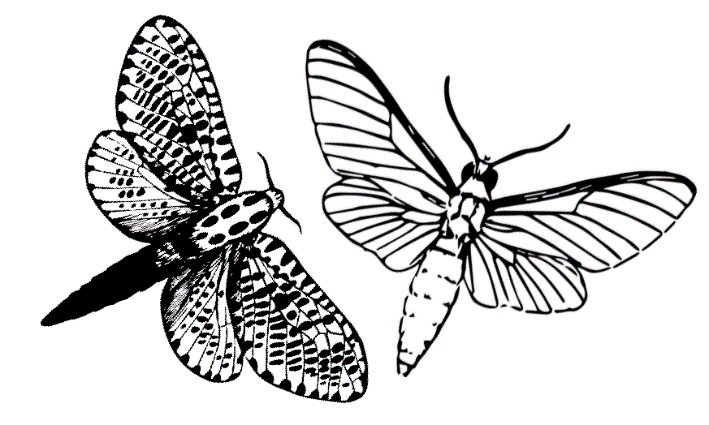
a)
Trace fossil
b)
Mold
c)
Cast
d)
Carbon film
4.
What type of fossil is this?
a)
Mold 
b)
Cast
c)
Preserved remains
d)
Petrified
5.
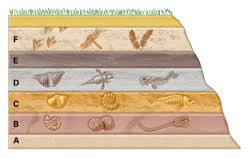
What is the correct order of the rock layers from oldest to youngest?
a)
B, C, D, E, A
b)
A, B, C, D, E
c)
E, D, C, B, A
d)
B, C, D, A, E
6.
What is the correct order of the rock layers from oldest to youngest?
a)
F, E, C, B, A, D
b)
A, B, C, D, E, F
c)
F, E, D, C, B, A
d)
D, F, E, C, B, A
7.
Fossils are usually found in 
a)
igneous rock
b)
extrusions
c)
intrusions
d)
sedimentary rock
8.
Which of the following is NOT an example of a fossil?
a)
a petrified dinosaur bone
b)
a footprint captured in mud
c)
a seashell found on the beach
d)
an insect stuck in amber
9.
Which of the following is NOT something you could learn from a fossil?
a)
The size of the animal
b)
What the animal ate
c)
The color of the animal
d)
Where the animal lived
10.
In order for a fossil to form, which of the following events must happen FIRST?
a)
Slowly, minerals in the water replace the bone.
b)
Sediment covers the bone.
c)
An animal dies.
d)
The bone is no longer a bone, but a rock copy.
11.
Why don't we know what many ancient plants looked like
a)
They had too many soft parts.
b)
They were all eaten by dinosaurs.
c)
There weren't ancient plants.
d)
They had too many hard parts.
12.
Where can the oldest layer be found?
a)
The top layer
b)
The middle layer
c)
They are all the same age
d)
The bottom layer
13.
How are fossils created?
a)
Traces of organisms get turned into stone.
b)
Dead organisms are quickly buried for millions of years.
c)
Animals get trapped.
d)
All of the above
14.
Which fossil layer is the youngest
a)
A. Layer A
b)
B. Layer B
c)
C. Layer C
d)
D. Layer D
15.
The Law of Superposition helps scientists to determine what?
a)
The absolute age of rock layers
b)
The age of fossils
c)
The relative age of rock layers
d)
the super powers of rocks
16.
Look at the diagram, what layer did animal E first show up in?         
a)
Layers #4
b)
Layers #5
c)
Layers #6
d)
Layers #7
17.
Which rock layer contains the newest fossils?
a)
F
b)
E
c)
B
d)
C
18.
What is hardened tree sap called?
a)
coprolites
b)
index fossils
c)
gastroliths
d)
amber
19.
Which layer formed first?
a)
Rock Layer W
b)
Rock Layer X
c)
Rock Layer Y
d)
Rock Layer Z
20.

What kind of fossil is this?

a)

Mold Fossil

b)

Cast Fossil

c)

True Form Fossil

d)

Trace Fossil

21.

What kind of fossils are these?

a)

Mold fossils

b)

Cast fossils

c)

True Form fossils

d)

Trace fossils

22.

Footprints, nests, and eggs are all examples of what kind of fossils?

a)

Mold fossil

b)

Cast fossil

c)

Trace fossil

d)

True Form fossil

23.

What can NOT become a fossil?

a)

plants

b)

animals

c)

soft body parts

d)

rocks

24.
Which animal part would MOST LIKELY form a fossil?
a)
fur
b)
lung
c)
bone
d)
muscle
25.
People who study fossils are called ____.
a)
meterologists
b)
fossilologists
c)
paleontologists
26.
Which of the following is NOT an example of a fossil?
a)
a petrified dinosaur bone
b)
a footprint captured in mud
c)
a seashell found on the beach
27.
Which of the following is NOT an example of a fossil?
a)
a petrified dinosaur bone
b)
a footprint captured in mud
c)
a seashell found on the beach
28.
Which of these choices is an example of something that is needed for survival?
a)
Adaptation
b)
Food 
c)
Water
d)
All of the above
29.
A woodpecker has a long, thin, pointed beak. How would this adaptation help it survive
a)
It can swim fast.
b)
It can catch other animals.
c)
It can easily catch fish. 
d)
It can easily pick bugs out of the bark in the trees.
30.
A penguin's layer of blubber is an adaptation that helps a bird survive in this environment. In which environment?
a)
the desert
b)
a hot environment
c)
a cold environment
d)
the water
31.
Why do some animals hibernate?
a)
The cold weather makes them sleepy.
b)
Their food supply is smaller in the winter.
c)
They have no one to play with.
32.
Natural selection is when ____________ decides who survives and who doesn't
a)
nature
b)
humans
c)
animals
d)
years
33.
What is the advantage of having different shaped beaks?
a)
To look different from other species.
b)
To be able to eat the food readily. available in the environment.
c)
To protect itself against predators.
d)
To protect itself against prey.
34.
Why are advantageous traits more likely to be passed onto offspring?
a)
Because they are more likely to survive and reproduce.
b)
Because they come from dominant alleles.
c)
Because they come from recessive alleles.
d)
Because the trait is an acquired phenotype.
35.
The purpose of selective breeding is to 
a)
get bigger animals
b)
get smaller animals
c)
create animals with desirable traits
d)
create animals with bad traits
36.
Which of the following would NOT be an adaptation?
a)
Long, strong running legs
b)
Claws with a powerful grip
c)
Camouflage
d)
A defective heart valve
37.
Why did the population of peppered moths in England change from light to dark after the Industrial Revolution?
a)
Light moths were easy to see against sooty trees and were eaten
b)
Light moths were killed by soot
c)
The birds that ate the dark moths were killed by soot
d)
Dark moths were produced by industrial processes
38.

According to natural selection, light colored tree trunks would favor

a)

light colored moths

b)

dark colored moths

c)

red colored moths

d)

red and light colored moths

39.
These cause variations.
a)
mutations
b)
adaptations
c)
a desire to change
d)
injuries
40.
A slight difference in an inherited trait between individual members of the same species.
a)
variations
b)
adapatations
c)
homologous structures
d)
analogous structures
41.
Which of the following is a term for a group of similar organisms that can reproduce fertile offspring?
a)
individual
b)
population
c)
species
d)
fossil
42.
Natural selection is when ____________ decides who survives and who doesn't
a)
nature
b)
humans
c)
animals
d)
years
43.

Adaptations can be:

a)

camouflage

b)

ability to survive cold weather

c)

hunting skills

d)

all of the above

44.

Differences in traits are called:

a)

natural selection

b)

genetic variations

c)

artificial selection

d)

adaptations

45.

What process is being shown in this image?

a)

Selective/Artificial Breeding

b)

Natural Selection

46.
The adaptations of the peppered moth are an example of:
a)
Natural Selection
b)
Selective Breeding
47.
Blending in with surroundings
a)
hibernation
b)
Natural Selection
c)
camouflage
d)
variation
48.

Matter is...

a)

The amount of matter in an object

b)

The amount of given space an object takes up

c)

The amount of gravitational pull on an object

d)

Anything that has mass and volume

49.

Mass is...

a)

The amount of matter in an object

b)

The amount of given space an object takes up

c)

The amount of gravitational pull on an object

d)

Anything that has mass and volume

50.

Weight is...

a)

The amount of matter in an object

b)

The amount of given space an object takes up

c)

The amount of gravitational pull on an object

d)

Anything that has mass and volume

51.

Volume is...

a)

The amount of matter in an object

b)

The amount of given space an object takes up

c)

The amount of gravitational pull on an object

d)

Anything that has mass and volume

52.
Living parts in the environment
a)
biotic
b)
abiotic
c)
community
53.
Nonliving parts in the environment 
a)
cooperation
b)
predation
c)
abiotic
d)
biotic
54.
Home to an organism
a)
biotic 
b)
evaporation
c)
population
d)
habitat
55.
Home to an organism
a)
biotic 
b)
evaporation
c)
population
d)
habitat
56.

a change in size, shape, or state of matter that does not create a new kind of matter

a)

Physical Change

b)

Chemical Change

c)

There is no Change

d)

All of the above

57.

Change in matter that produces new kinds of matter with different properties

a)

Physical Change

b)

Chemical Change

c)

There is no change

d)

All of the above

58.

Traits that are passed down through genetics

a)

inherited traits

b)

learned behaviors/traits

c)

genes

d)

DNA

59.

Traits that are acquired through experiences, such as reading and writing.

a)

inherited traits

b)

learned behaviors/traits

c)

genes

d)

DNA

60.

Nail rusting is a...

a)

Chemical reaction

b)

Physical reaction

61.

water is a

a)

solid

b)

liquid

c)

gas

62.

a table is a

a)

solid

b)

liquid

c)

gas

63.

To apply more force and go faster

a)

friction

b)

gravity

c)

acceleration

d)

energy

64.

To apply more force and go faster

a)

friction

b)

gravity

c)

acceleration

d)

energy

65.

water changing from a liquid to a gas

a)

weather

b)

condensation

c)

water cycle

d)

evaporation

66.

water changing from a gas to a liquid

a)

weather

b)

condensation

c)

water cycle

d)

evaporation

67.

any living thing

a)

organism

b)

producer

c)

terrestrial

d)

aquatic