
 Worksheets
Unit 2 - Task 4 - Changing State Vocab
Total questions: 26
Worksheet time: 15mins
Name
Class
Date
1.
Matter on Earth exists mostly in three distinct states (Pick three)
a)
Solid
b)
Liquid
c)
Gas
d)
Antimatter
e)
Energy
2.
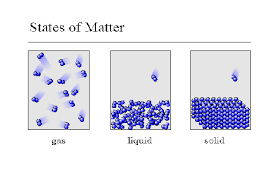
At higher temperatures
a)
particles in an object have less energy
b)
particles in an object move faster
c)
a gas contracts
3.
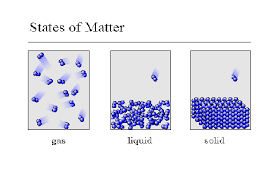
A gas
a)
has a definite shape but no definite volume
b)
has a definite volume but no definite shape
c)
has fast-moving particles
4.
Freezing
a)
Solid to gas
b)
Liquid to solid
c)
Gas to solid
d)
Liquid to gas
5.
Boiling
a)
liquid to gas
b)
gas to solid
c)
gas to liquid
d)
solid to liquid
6.
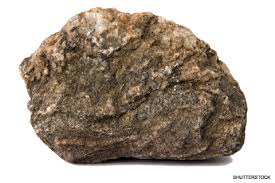
Which state of matter has tightly packed molecules?
a)
solid
b)
liquid
c)
gas
7.

Which state of matter has a definite shape?
a)
solid
b)
liquid
c)
gas
8.
What is happening when my ice cream changes from a solid to a liquid?
a)
freezing
b)
melting
c)
burning
d)
evaporation
9.
Define a liquid.
a)
Indefinite shape, indefinite volume
b)
Definite shape, definite volume
c)
Found in stars
d)
Definite volume, indefinite shape
10.
The state of matter that has no definite size or shape is
a)
Solid
b)
Liquid
c)
Gas
11.
Particles (molecules) in a ______________________ have more energy than the other states of matter.
a)
gas
b)
solid
c)
liquid
12.
Particles of a liquid
a)
are tightly packed together and stay in a fixed position.
b)
have no viscosity.
c)
decrease in volume with increasing temperature.
d)
are free to move around one another but still touch.
13.
What term describes a solid changing to a gas?
a)
Deposition
b)
Sublimation
c)
Evaporation
d)
Freezing
14.
What is condensation?
a)
gas to solid
b)
gas to liquid
c)
liquid to solid
d)
solid to liquid
15.
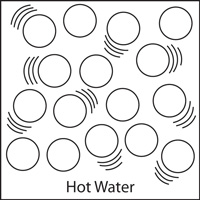
The speed of the molecules determines the _____.
a)
volume
b)
density
c)
pressure
d)
temperature
16.
Which has a greater distance between particles?
a)
Solid
b)
Liquid
17.
The slower the particles in a substance move,
a)
the colder it is.
b)
the warmer it is.
c)
the more energy it has.
d)
the less energy it has.
18.
______________ is a measure of how hot or cold something is; specifically, a measure of the average kinetic energy of the particles in an object, which is a type of energy associated with motion.
a)
Heat
b)
Celsius
c)
Temperature
d)
Speed
19.
Energy due to motion is ____________ energy.
a)
Potential
b)
Energy
c)
Kinetic
d)
Friction
20.
The faster an object moves, the ________ kinetic energy it has.
a)
more
b)
less
c)
none of the above
d)
all of the above
21.
______________ is produced when a rise in temperature causes atoms and molecules to move faster and collide with each other.
a)
Thermal energy
b)
Kinetic Energy
c)
Potential Energy
d)
Magic Crystal Energy
22.
A small portion of matter.
a)
molecule
b)
gas
c)
particle
d)
CO2
23.
If two objects have different temperatures, heat will flow from the cooler object to the warmer one.
a)
True
b)
False
24.
Heat transfer by conduction occurs when...
a)
particles bump into each other
b)
large numbers of atoms move from place to place
c)
atoms give off heat in the form of electromagnetic waves
d)
electromagnetic waves travel from place to place through a vacuum
25.
what is the meaning of conduction
a)
when heat transfers from objects that are not touching
b)
heat rise
c)
cold fall
d)
when heat transfers from objects that are touching
26.
Energy that is transferred from hotter objects to cooler objects is...
a)
Thermal/Heat
b)
Temperature
c)
Electricity
d)
Conduction
100 %

