

wayground logo

Free Printable Worksheets

NEW

Font size

S
M
L
XL
Worksheets

Love Biology

Total questions: 20

Worksheet time: 20mins
Name
Class
Date
1.

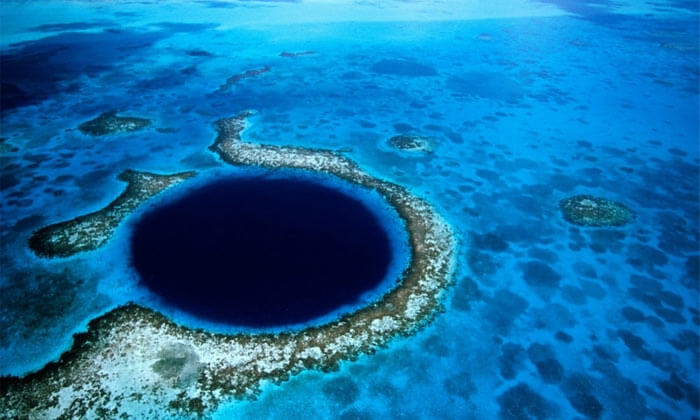
What is happening to the reefs in the ocean?

a)

They're growing!

b)

Ocean acidification is breaking them down.

c)

They're a popular tourist attraction.

d)

Global warming isn't hurting them!

2.
What characteristic did Darwin observe about the finches on the Galapagos Islands?
a)
Their feathers 
b)
Genotypes 
c)
Their beaks
d)
Their body sizes
3.
Which scientist looked at cork under a microscope and labeled the little rooms he saw, 'cells?'
a)
Hooke
b)
Leeuwenhoek
c)
Schwann
d)
Schleiden
4.
If you place a freshwater cell in a salt water solution, what happens to the cell?
a)
nothing
b)
stays the same
c)
swells
d)
shrinks
5.
Which of the following would be the RNA strand transcribed from the following DNA strand: ATTGGCTAG?
a)
UAAGGTTCA
b)
TTAGCCTTT
c)
UAACCGAUC
d)
TTAUUCCTU
6.
Which of the following is an example of a HETEROTROPH?
a)
Grass
b)
Algae
c)
Lemon Tree
d)
Bear
7.
Which of the following is the correct equation for PHOTOSYNTHESIS?
a)
CO+ light + H2O --> O+ Sugar
b)
CO+ sugar + H2O --> O+ light
c)
O2 + light + H2O --> CO+ Sugar
d)
CO+ O2 + H2O --> Light+ Sugar
8.
Particles moving from a high concentration to a lower concentration are demonstrating _____.
a)
diffusion
b)
confusion
c)
permeable response to environment
d)
permanent membrane
9.

Every day your body takes in food and breaks it down into usable materials. The system responsible for performing this task is the

a)

skeletal system

b)

muscular system

c)

digestive system

d)

urinary system

10.
Which of the following is an example of a homozygous dominant genotype?
a)
BB
b)
Bb
c)
bB
d)
bb
11.
The flower of a plant is involved in reproduction.  Which parts are male and which are female?
a)
Male: style; female: filament
b)
Male: xylem; female: anther
c)
Male: stamen; female: pistil
d)
Male: ovary; female: stamen
12.

The cytoskeleton is important because

a)

It gives the cell its shape

b)

It strengthens the cells

c)

It helps the cells move and divide

d)

All of the above

13.

It is the waste collector and recycler in the animal cell

a)

Ribosome

b)

Vesicle

c)

Central vacuole

d)

Lysosome

14.

Which is an example of MACRO evolution?

a)

Tree frogs gaining the ability to stick to walls.

b)

Apes evolving into humans

c)

European humans developing lighter skin.

d)

Pikachu turning into Mewtwo.

15.
Which component of a nucleotide contains the information needed to make proteins?
a)
base
b)
deoxyribose sugar
c)
phosphate
d)
amino acid
16.

what is the deepest part of the ocean?

a)

Kermadec Trench

b)

Tonga Trench

c)

Philippine Trench

d)

Kuril–Kamchatka Trench

e)

Mariana Trench

17.
Which of the following is a characteristic of lipids?
a)
They are polar molecules.
b)
They are nonpolar molecules.
c)
They dissolve in water.
d)
They are hydrophilic.
18.

A set of tubes in the stem of a plant that brings water and other molecules throughout the plant

a)

Phloem

b)

Xylem

c)

Stomata

d)

Thylakoid

19.
Two structures present in plant cells but NOT animal cells are:
a)
Chloroplasts and centrioles
b)
Chloroplasts and cell wall
c)
Chloroplasts and cell membrane
d)
Chloroplasts and ribosomes
20.

Scientists estimate that there are more than 20,000 species of ants. The species range in size from 1 mm long to 38 mm long and live in most environments. The diets of ants range from flowers and seeds to fluids from their own larvae. Ants have been able to successfully inhabit so many different environments because their populations have been able to --

a)

hybridize with other species of insects

b)

adapt to a variety of habitats and food sources

c)

fill niches usually occupied by mammals

d)

occupy habitats that have no other life-forms
