wayground logo

Free Printable Worksheets

Font size

S
M
L
XL
Worksheets

Evolution

Total questions: 76

Worksheet time: 47mins

Name
Class
Date
1.
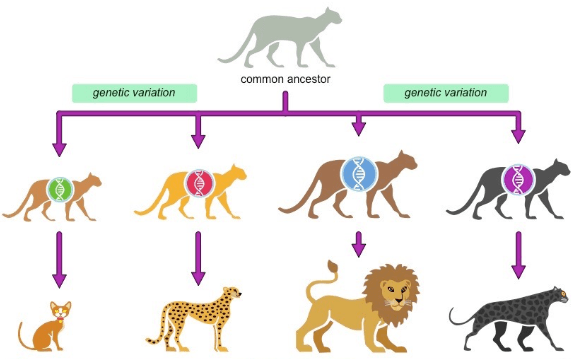
Survival of the Fittest and Evolution were proposed by what scientist?
a)
Charles Darwin
b)
Albert Einstein
c)
Steven Hawking
d)
Isaac Newton
2.
Where the better adapted organisms survive to pass traits along to offspring.
a)
Evolution
b)
Natural Selection
c)
Extinction
d)
Artifical Selection
3.
What is the advantage of having different shaped beaks?
a)
To look different from other species.
b)
To be able to eat the food readily available in the environment.
c)
To protect itself against predators.
d)
To protect itself against prey.
4.
Why are advantageous traits more likely to be passed onto offspring?
a)
Because they are more likely to survive and reproduce.
b)
Because they come from dominant alleles.
c)
Because they come from recessive alleles.
d)
Because the trait is an acquired phenotype.
5.
Mutations are a change in what?
a)
DNA
b)
tRNA
c)
genotype
d)
phenotype
6.
Genetic differences between organisms of the same species
a)
Variation
b)
Adaptation
c)
Behavior
d)
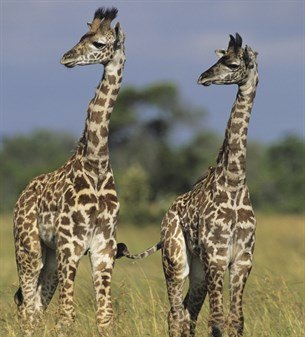
Environment
7.
Study of embryos of various organisms to show a common ancestor because of similarities in development
a)
natural selection
b)
embryology
c)
speciation
d)
evolution
8.
Some organisms that share a common ancestor have features that have different functions, but similar structures.  These are known as
a)
vestigial structures
b)
analogous structures
c)
homologous structures
d)
fossil structures
9.
Which of the following are examples of evidence for evolution?
a)
Fossils and Cellular Structure
b)
Biological Structures 
c)
Genetics/DNA
d)
All of the Above
10.
What is embryology?
a)
the age of organisms
b)
the oldest stage of development
c)
the life span of an organism
d)
the earliest growth stage of development
11.
Natural selection is
a)
survival of the fittest
b)
humans change
c)
two species are the same
d)
more animals survive
12.
This makes an organism more suited to its enviornment
a)
species
b)
lifespan
c)
adaptation
d)
mutation
13.
Relative dating
a)
gives the exact age of rocks and fossils
b)
is when you date your cousin
c)
gives the approximate age of rocks
d)
tells us who to trust
14.
This is a group of organisms of the same species that live in a specific geographical area.
a)
Environment
b)
Evolution
c)
Biological diversity
d)
Populations
15.
These are natural differences within a species.
a)
Evolution
b)
Genetic variation
c)
Biological diversity
d)
Populations
16.
This is the trace or remains of an organism that lived long ago, most commonly preserved in sedimentary rock.
a)
Competiton
b)
Extinction
c)
Evidence
d)
Fossil
17.
What increases genetic variation when animals move from one population to another
a)
genetic drift
b)
sexual selection
c)
bottleneck effect
d)
gene flow
18.
______ _________ explains how two or more organisms could evolve similar traits even though they are not related to each other.
a)
convergent evolution
b)
reproductive isolation
c)
derived characters
d)
hybrid vigor
19.
Individuals that are better able to cope with the challenges of their environment tend to  
a)
Decrease in population over time.
b)
Leave more offspring than those less suited to the environment.
c)
Leave fewer offspring than those less suited to the environment.
20.
Starting in 1954, commercial fishers in the northwest Pacific were paid by weight, rather than by the individual fish, for pink salmon. The fishers increased the use of a type of net that selectively catches larger fish.  Which of the following effects did this change in fishing technique most likely have on the salmon population over the next 20 years?
a)
The average body size of the salmon population decreased significantly.
b)
The average body size of the salmon population increased significantly.
c)
The average body size of the males in the salmon population increased, and the females stayed the same.
21.
Which of the following statements gives the most likely explanation for the presence of two very similar species of squirrels living on opposite sides of the Grand Canyon?
a)
One squirrel traveled across the canyon and started a new population on the other side.
b)
One squirrel traveled across the canyon and interbred with a different population on the other side.
c)
Members of one single squirrel species were geographically separated by the formation of the canyon.
d)
Members of two different squirrel species migrated from two different places to opposite sides of the canyon. 
22.
Structures with no function that are remnants of an organism’s evolutionary past are
a)
Not visible organisms.
b)
Vestigial
c)
Young in origin
d)
Useful to the organism
23.
The hypothesis that evolution of a species occurs in periods of rapid change separated by periods of little or no change is called
a)
divergence
b)
gradualism
c)
punctuated equilibrium
d)
isolation
24.
The formation of new species is a process known as ____________________, which is typically the product of divergence. 
a)
gradualism
b)
speciation
c)
reproductive isolation
d)
subspecies
25.
Which of the following is a term for a group of similar organisms that can reproduce fertile offspring?
a)
individual
b)
population
c)
species
d)
fossil
26.
The diagram shows fossils in different rock layers. Which of these statements about the age of these fossils is most likely correct?
a)
Fossil A and C are the same age
b)
Fossil B is older than fossil C
c)
Fossils A is older than fossil B
d)
Fossil D is older than fossil C
27.
Darwin wrote that organisms with traits that are best suited to the environment will ________________
a)
increase in number
b)
become extinct
28.
Another word for adapt is ____________.
a)
change
b)
create
29.
The separation of a group of individuals from the rest of the population is referred to as 
a)
genetic drift
b)
natural selection
c)
geographic isolation
d)
survival of the fittest
30.

What type of evidence is shown in this picture?

a)

Fossils

b)

Homologous Structures

c)

Vestigial Structures

d)

DNA

31.

What type of evidence are shown in the picture above?

a)

Fossils

b)

Embryology

c)

Homologous Structures

d)

Vestigial Structures

32.

The process by which two populations of the same species become so different that they can no longer interbreed.

a)

natural selection

b)

artificial selection

c)

speciation

d)

fossilization

33.
The fossil record provides evidence that 
a)
Fossils cannot be dated.
b)
All species were formed during Earth’s formation and have changed little since then.
c)
The fossilized species have no connection to today’s species.
d)
Older species gave rise to more-recent species.
34.
The gradual change in species over time is...
a)
Evolution
b)
Nucleotide 
c)
Adaptation
d)
Natural Selection
35.
The white feathers of a snowy owl allow it to blend in with its environment during the winter months (snow). This is an example of ________________
a)
Species
b)
Environmental Change
c)
Adaptation
d)
Variation
36.

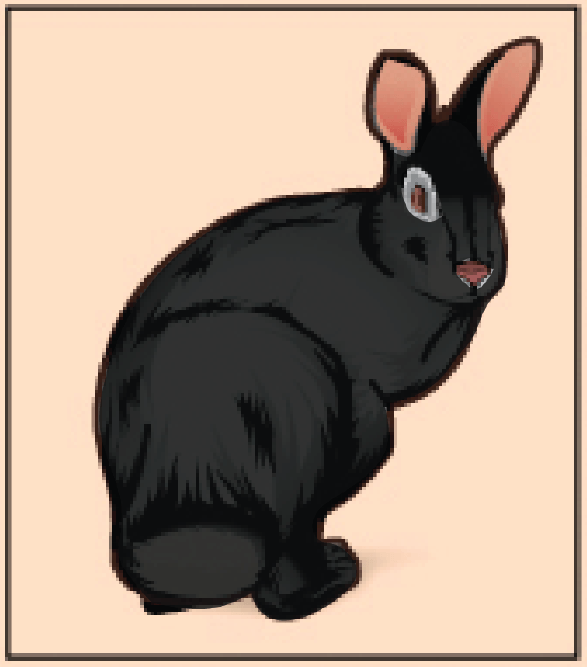
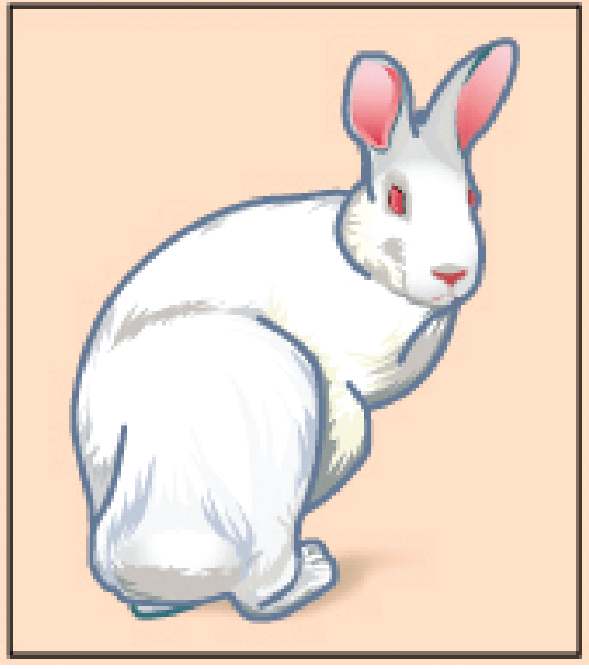
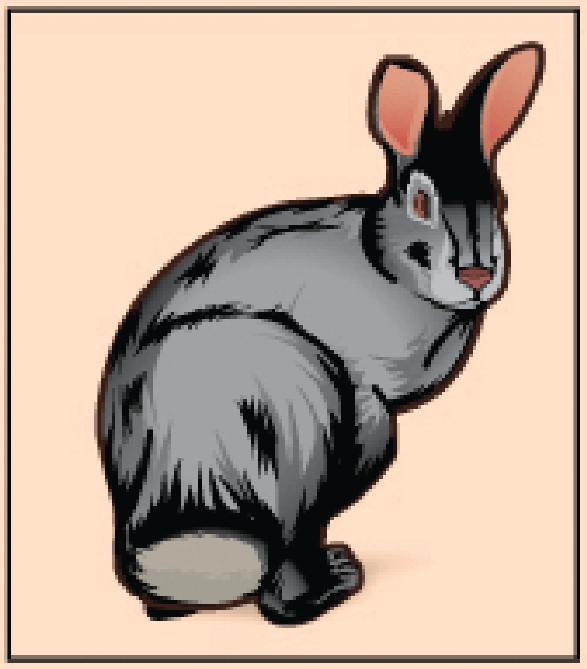
Which of these will be more successful in a cold region with NO snow? (think about the color that will be warmer)

a)
b)
c)
d)
37.

Evolution is a gradual process. What does "Gradual" mean?

a)

Quick

b)

Slow

c)

Round

d)

Graded

38.

A mistake or change in the DNA is called a...

a)

Mutation

b)

Mutilation

c)

Fossil

d)

Species

39.
Genetic drift is change in the allele frequency of a population due to...
a)
random chance
b)
natural selection
c)
non-random mating (sexual selection)
d)
artificial selection
40.

What type of speciation would involve mating during different seasons?

a)

geographic isolation

b)

reproductive isolation

c)

habitat isolation

d)

gametic isolation

41.

A flood drowns a large portion of an insect population, with only a few random individuals surviving. This is an example of ______.

a)

genetic drift

b)

adaptation

c)

natural selection

42.
In the graph shown, how many species of lizards seem to have beneficial adaptations?
a)
1
b)
2
c)
3
d)
4
43.

Beak shape, camouflage, and webbed feet are all examples of which type of adaptation?

a)

Behavioral Adaptation

b)

Physical Adaptation

44.

Hibernation is an example of which type of adaptation?

a)

Behavioral Adaptation

b)

Physical Adaptation

45.
Gene flow happens when
a)
species die
b)
species migrate
c)
natural selection occurs
d)
species change colors
46.
All genes present in a population is called:
a)
Genetic Drift
b)
Gene Flow
c)
Gene Pool
47.
Fossils sometimes show that a single species or a small group of species has evolved into diverse forms that live in different ways. An example of this would be a group of present-day mammals all having a common ancestor.   Which term describes this phenomenon?
a)
adaptive radiation
b)
convergent evolution
c)
gradualism
d)
mutualism
48.
 Biologists have considered two different explanations to the rate of evolution: gradualism and punctuated equilibrium. How would the fossil record indicate that an organism had evolved via punctuated equilibrium? 
a)
The fossil record would show a slow, steady rate of change from a common ancestor.
b)
The fossil record would be incomplete, and numerous holes would exist within the ancestral record.
c)
The fossil record would show rapid change over an extended period of time, with occasional periods of little change.
d)
The fossil record would show little change over long periods of time, followed by a sudden, brief period of rapid change. 
49.

Natural selection is the process that passes down ____________________ traits.

a)

Same

b)

Old

c)

Useless

d)

Favorable

50.

The process in which an animal cannot reproduce any more and dies out is known as _________________________.

a)

Speciation

b)

Extinction

c)

Evolution

d)

Natural Selection

51.

When there is a difference in population based on genes, it is said to be a _______________.

a)

Mutation

b)

Speciation

c)

Extinction

d)

Genetic Variation

52.
A population moving from on place to another.
a)
speciation
b)
geographic isolation
c)
genetic drift
d)
migration
53.

The female birds of paradise tend to look for the most colorful, best dancing males to make babies together.

a)

Genetic Drift

b)

Non-random mating

c)

Gene flow

d)

Mutation

54.
What does the picture represent?
a)
Founder Effect
b)
Mutations
c)
Bottleneck effect
d)
Gene Flow
55.

What are the 2 types of adaptations?

a)

behavioral and physical

b)

wings and beaks

c)

physical and emotional

d)

behavioral and mental

56.

This image shows

a)

Gene flow

b)

Genetic Drift

c)

Mutation

d)

Population mechanics

57.
Which best helps scientist determine the age of fossils?
a)
physical traits
b)
genetic makeup
c)
reproductive strategy
d)
radioactive isotopes
58.

What type of structures are shown?

a)

Homologous

b)

Analogous

c)

Vestigial

d)

Heterologous

59.
 In a small population, a random change in allele frequency is called
a)
Genetic drift
b)
Natural selection
c)
Adaptive radiation
d)
Evolution
60.
When birds cannot interbreed because they have different mating songs, they are separated by
a)
Temporal isolation
b)
Behavioral isolation
c)
Geographic isolation
d)
Habitat isolation
61.
A situation in which allele frequencies change as a result of the migration of a small subgroup of a population is known as the
a)
Descent with modification
b)
Bottleneck effect
c)
Founder effect
d)
Survival of the fittest
62.
Two related species that live in the same area but mate during different seasons are separated by
a)
Temporal isolation
b)
Behavioral isolation
c)
Geographic isolation
d)
Habitat isolation
63.
When individuals with either extreme version of a trait have a greater fitness than those with the average version; this is a type of selection called
a)
stabilizing selection
b)
directional selection
c)
sexual selection
d)
disruptive selection
64.
When individuals with the AVERAGE form of a trait have the highest fitness; this is a type of selection called
a)
stabilizing selection
b)
directional selection
c)
sexual selection
d)
disruptive selection
65.
When individuals that display a more extreme form of a trait have a greater fitness then those with an average form of trait; this is a type of selection called
a)
stabilizing selection
b)
directional selection
c)
sexual selection
d)
disruptive selection
66.
The hypothesis that evolution of a species occurs gradually over time as a slow and constant process is known as
a)
speciation
b)
punctuated equilibrium
c)
gradualism
d)
microevolution
67.
One species causes another species to change because they "work together" (live in the same environment)
a)
Punctuated Equilibirum
b)
Co-Evolution
c)
Divergent Evolution
d)
Convergent Evolution
68.
What type of evolution occurs when there is the same species living in two different environments?
a)
Co-Evolution
b)
Punctuated Equilibrium
c)
Divergent Evolution
d)
Convergent Evolution
69.
What type of evolution occurs when there is a different species in the same environment?
a)
Co-Evolution
b)
Punctuated Equilibrium
c)
Divergent Evolution
d)
Convergent Evolution
70.
What type of evolution where there is a sudden, rapid change then no change for a long time?
a)
Co-Evolution
b)
Punctuated Equilibrium
c)
Divergent Evolution
d)
Convergent Evolution
71.
What type of evolution is the following:
The Galapagos tortoises share a common ancestor, but they have different neck lengths to help them in their environment.
a)
Divergent Evolution
b)
Convergent Evolution
c)
Co-Evolution
d)
Punctuated Equilibrium
72.
What type of evolution is the following:
Horse evolution shows long stable periods of little evolution interrupted by brief periods of rapid change.
a)
Divergent Evolution
b)
Convergent Evolution
c)
Co-Evolution
d)
Puntuated Equilibrium
73.
What type of evolution is the following:
Ostriches (birds) and giraffes (mammals) are both native to the savannahs of Africa. They share the same characteristic of a very long neck.
a)
Divergent Evolution
b)
Convergent Evolution
c)
Co-Evolution
d)
Punctuated Equilibrium
74.
What type of evolution is the following:
Ants are the correct size and weight needed to open the flowers of the peony plant. The peony plant provides food for the ant and the ant fertilizes the peony's flowers.

a)
Divergent Evolution
b)
Convergent Evolution
c)
Co-Evolution
d)
Punctuated Equilibrium
75.
Evolution toward similar characteristics in unrelated species, resulting from adaptations to similar environmental conditions.
a)
Fossil
b)
Fitness
c)
Convergent Evolution
d)
Divergent Evolution
76.
Evolution of one or more closely related species into different species; resulting from adaptations to different environmental conditions.
a)
Fossil
b)
Fitness
c)
Convergent Evolution
d)
Divergent Evolution