
 Worksheets
Photosynthesis yr2 JCT
Total questions: 23
Worksheet time: 16mins
Name
Class
Date
1.
Which organelle performs PHOTOSYNTHESIS?
a)
Chloroplast
b)
Mitochondria
2.
Which of the following is the correct equation for PHOTOSYNTHESIS?
a)
CO2 + light + H2O --> O2 + Sugar
b)
CO2 + sugar + H2O --> O2 + light
c)
O2 + light + H2O --> CO2 + Sugar
d)
CO2 + O2 + H2O --> Light+ Sugar
3.
What is the ultimate ORIGINAL source of energy for living things
a)
Sugar
b)
Sun
c)
Moon
d)
Carbon Dioxide
4.
What is the pigment in chloroplasts that performs photosynthesis?
a)
Chlorosynthesis
b)
Chlorophyll
c)
Chloroplast
d)
Green
5.

Which organelle is responsible making food (Glucose) using sunlight?
a)
Cell Membrane
b)
Nucleus
c)
Chloroplast
d)
Mitochondria
6.
Select all that are raw materials for Photosynthesis.
a)
Water
b)
Carbon Dioxide
c)
Oxygen
d)
Sunlight (Light Energy)
e)
Glucose (Sugar/food)
7.
Select all that are products of Photosynthesis.
a)
Water
b)
Carbon Dioxide
c)
Oxygen
d)
Sunlight (Light Energy)
e)
Glucose (Sugar/food)
8.
Which gas is removed from the atmosphere during photosynthesis?
a)
hydrogen
b)
oxygen
c)
nitrogen
d)
carbon dioxide
9.
What are the products of photosynthesis?
a)
water and carbon dioxide
b)
oxygen and glucose
c)
oxygen and carbon dioxide
d)
oxygen and water
10.
Plants need ________ for photosynthesis
a)
oxygen
b)
soil
c)
carbon dioxide
d)
sugar
11.
What is photosynthesis?
a)
The process in which humans eat their food
b)
When a photographer takes a photo.
c)
To get your pictures from the photo lab.
d)
The process in which plants make their food.
12.
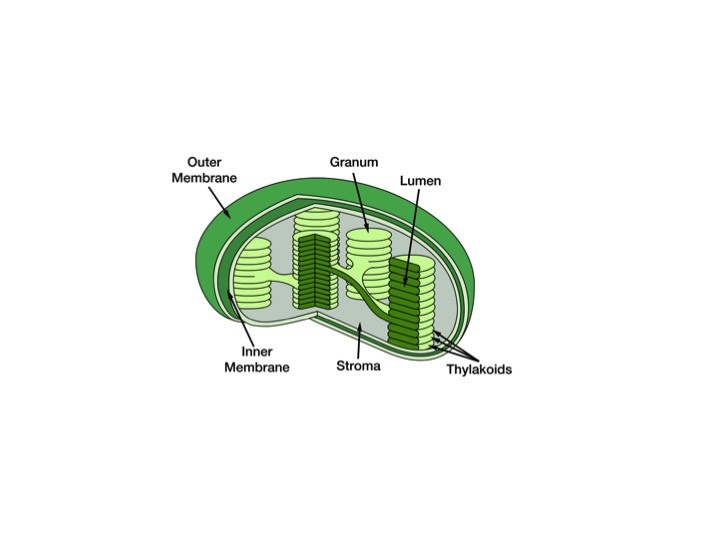
Chloroplasts are...
a)
Structures of animal cells to produce ATP
b)
Organelles where lipids are elaborated
c)
Specialized structures of plants where food is made
d)
Waste organelle of plants
13.
How does most of the water needed by the plant get into its leaves?
a)
It enters through the stomata
b)
The roots absorb it and then it travels up the xylem
c)
It's made during a chemical reaction in the stem
d)
The flowers capture water and deliver it to the leaves
14.

Why do plants conduct photosynthesis?
a)
To make light
b)
To make mitochondria
c)
To make glucose
d)
To release carbon dioxide
15.
How does carbon dioxide get into the leaves of a plant?
a)
It's absorbed by the roots
b)
It's made in a chemical reaction in the stem
c)
It enters through the stomata
d)
It goes through the flowers
16.
Which of these conditions would decrease the rate of photosynthesis in a plant?
a)
Above average precipitation
b)
Changing the daylight hours from 14 hrs to 10 hrs
c)
Changing the CO2 concentration from 380 ppm to 410 ppm
d)
All of these choices
17.
____________________ provides the energy necessary for photosynthesis.
a)
water
b)
sunlight
c)
glucose
d)
soil
18.
The ____________ is the most photosynthetic part of a plant.
a)
leaf
b)
flower
c)
roots
d)
stem
19.
Glucose is a ...
a)
sugar
b)
carbohydrate
c)
source of quick energy
d)
all are correct
20.
A leaf is the broadest part of the plant and this is good for photosynthesis because, the broad leaf....
a)
curls up when touched
b)
increases surface area
c)
catches rain water
d)
stores lipids for the plants
21.
The vascular tissue of the plant that transports water is the...
a)
roots
b)
phloem
c)
xylem
d)
stem
22.
The formula for glucose is...
a)
C12 H22 O11
b)
NaCl
c)
NaOH
d)
C6 H12 O6
23.
The leaf structure that allows carbon dioxide to enter the leaf and Oxygen to exit the leaf is...
a)
phloem
b)
stomata
c)
vein
d)
stem
100 %

