Wayground logo

Free Printable Worksheets

Font size

S
M
L
XL
Worksheets

In Class Review for Test- The Atom

Total questions: 49

Worksheet time: 37mins

Name
Class
Date
1.
Something that takes up space and has mass.
a)
volume
b)
matter
c)
mass
d)
density
2.
A state of matter that has a definite volume and shape.
a)
solid
b)
liquid
c)
gas
d)
matter
3.
The amount of space something takes up
a)
density
b)
volume
c)
mass
d)
matter
4.
A watermelon has more matter than a grape, so it has more
a)
mass
b)
eat
c)
solid
d)
greater
5.
Solids have a definite _______________.
a)
smell
b)
shape
c)
picture
d)
sound
6.
Water in its solid form is _____________.
a)
a vapor
b)
ice
c)
a liquid
d)
boiling
7.
Volume is ______________.
a)
length X width
b)
height X length
c)
length X width X height
d)
width X height
8.
What cannot be broken down into other substances?
a)
Compound
b)
Mixture
c)
Solids
d)
Element
9.
The electron was discovered in 1897.  Who discovered it?
a)
Ernest Rutherford
b)
John Dalton
c)
J. J. Thomson
d)
Niels Bohr
10.
Who concluded that atoms consisted largely of empty space with most of the mass concentrated in the center?
a)
J. J. Thomson
b)
Max Planck
c)
Ernest Rutherford
d)
Niels Bohr
11.
Rutherford referred to the center of the atom, where the mass was concentrated, as _____
a)
the kernel
b)
the nucleus
c)
the focus
d)
the heart
12.
Everything is made up of little tiny things called _____
a)
compounds
b)
molecules
c)
atoms
d)
solids
13.
From the diagram, which particles are indicated with the arrow?
a)
electrons and protons
b)
protons and neutrons
c)
electrons and neutrons
d)
photons and nucleons
14.
These particles orbit around the nucleus of an atom.  What are they called?
a)
electrons
b)
protons
c)
neutrons
d)
photons
15.
If an atom was the size of a football stadium, the nucleus would be _____
a)
too small to see
b)
barely visible
c)
the size of a marble
d)
the size of a house
16.

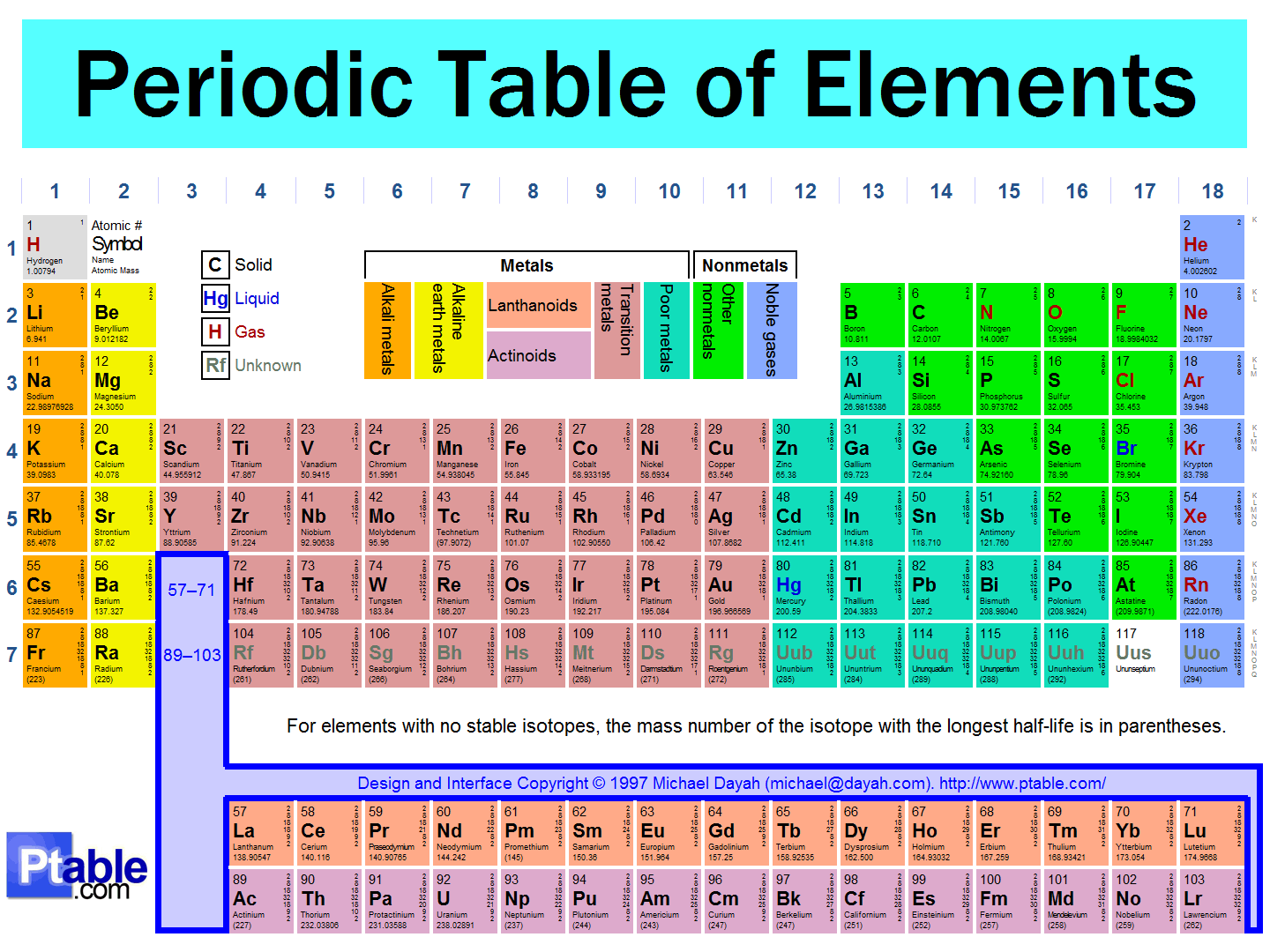
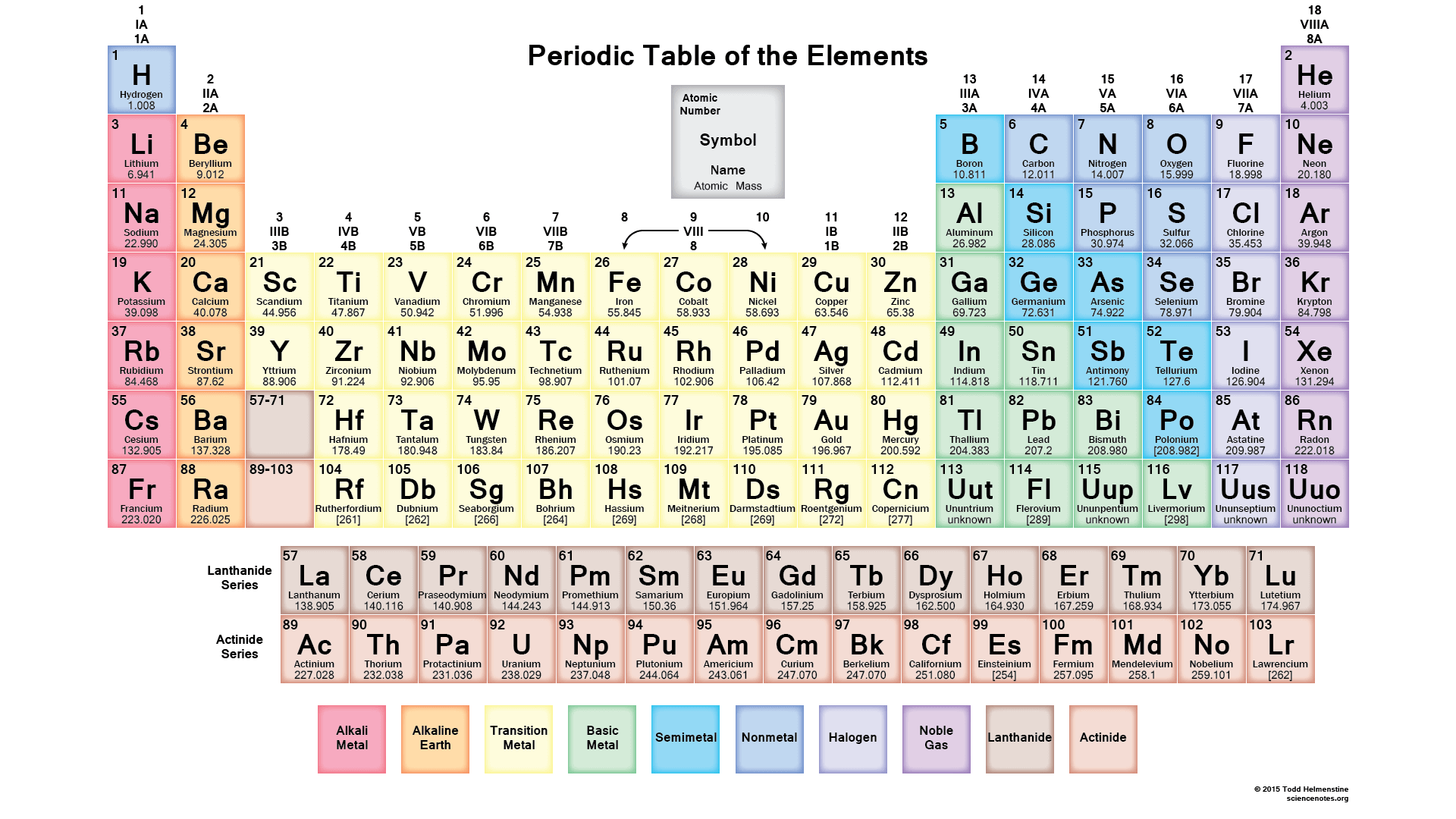
What is the atomic mass of Neon?

a)

10

b)

20.18

c)

10.18

d)

9.82

17.
How many protons are in Beryllium?
a)
4
b)
9
c)
5
d)
2
18.
How many neutrons are in a Gold atom?
a)
79
b)
196
c)
118
d)
275
19.
What is the atomic mass of Gold?
a)
79
b)
196.9665
c)
117
d)
275
20.

What is the mass number of Hydrogen?

a)

1

b)

2

c)

3

d)

0

21.
How many electrons does an Iodine atom have?
a)
53
b)
126
c)
73
d)
179
22.
What number is circled?
a)
Number of Neutrons
b)
Number of Protons
c)
Atomic Mass
d)
Number of Electrons
23.
How many neutrons does an Oxygen atom have?
a)
8
b)
16
c)
24
d)
7.999
24.
What is the number highlighted?
a)
Atomic number
b)
Atomic mass
c)
Number of protons
d)
Number of electons
25.

the positively charged subatomic particle contained in the nucleus of an atom

a)

proton

b)

neutron

c)

electron

d)

matter

26.

a subatomic particle, contained in the nucleus of an atom, having the same mass as a proton but no electrical charge

a)

proton

b)

neutron

c)

electron

d)

matter

27.

a negatively charged subatomic particle that orbits the nucleus of an atom

a)

proton

b)

neutron

c)

electron

d)

matter

28.

one or two letters that represent the name of an element

a)

element name

b)

element symbol

c)

atomic number

d)

atomic mass

29.

a row on the Periodic Table of Elements

a)

family

b)

period

c)

row

d)

isotope

30.

one of several forms of a single element, which contains the same number of protons, but different numbers of neutrons

a)

isotope

b)

ion

c)

orbital

d)

nucleus

31.

an atom or group of atoms that has gained or lost one or more electrons and is now either positively or negatively charged

a)

isotope

b)

ion

c)

orbital

d)

nucleus

32.

The vertical (up and down) columns in the Periodic Table are called

a)

groups

b)

towers

c)

periods

d)

atomic numbers

33.
Sodium (Na) is found in period 
a)
3
b)
2
c)
4
d)
1
34.

Sodium (Na) is found in group

a)

1

b)

2

c)

3

d)

4

35.
Which of the following atomic symbols for bromine is written correctly?
a)
bR
b)
BR
c)
Br
d)
br
36.
A rock has a mass of 14g and a volume of 2cm3. What is the density of the rock?
a)
7 mL
b)
7 g/cm3
c)
28 g/cm3
d)
1/7 g/cm3
37.
What is the density of a liquid that has a mass of 27g and a volume of 30mL?
a)
0.9 g/mL
b)
3 g/mL
c)
57 g/mL
d)
810 g/mL
38.
What is the formula for density?
a)
density = mass x volume
b)
density = mass / volume
c)
density = mass + volume
d)
density = mass - volume
39.
Calculate the Volume
a)
410 cm3
b)
420 cm3
c)
402 cm3
d)
401 cm3
40.
What is the volume of the rock? The water level is displaced from 20 mL to 23 mL with the rock.
a)
3 mL
b)
23 mL
c)
20 mL
d)
43 mL
41.
What is the most dense metal?
a)
Aluminum 
2.7 g/cm3
b)
Steel
7.14 g/cm3
c)
Nylon
1.2 g/cm3
d)
Copper 
8.14 g/cm3
42.

What family is Argon in?

a)

Halogens

b)

Transition Metals

c)

Noble Gases

d)

Alkali Metals

e)

Alkali Earth Metals

43.

What family is Chlorine in?

a)

Halogens

b)

Transition Metals

c)

Noble Gases

d)

Alkali Metals

e)

Alkali Earth Metals

44.

What family is Cobalt in?

a)

Halogens

b)

Transition Metals

c)

Noble Gases

d)

Alkali Metals

e)

Alkali Earth Metals

45.

What family is Iron in?

a)

Halogens

b)

Transition Metals

c)

Noble Gases

d)

Alkali Metals

e)

Alkali Earth Metals

46.

What family is Hydrogen in?

a)

Halogens

b)

Transition Metals

c)

Noble Gases

d)

Alkali Metals

e)

Alkali Earth Metals

47.

What family is Magnesium in?

a)

Halogens

b)

Transition Metals

c)

Noble Gases

d)

Alkali Metals

e)

Alkali Earth Metals

48.

What family is Sodium in?

a)

Halogens

b)

Transition Metals

c)

Noble Gases

d)

Alkali Metals

e)

Alkali Earth Metals

49.

Who discovered the solar system model?

a)

Bohr

b)

Dalton

c)

Rutherford

d)

Thomson