
 Worksheets
The Periodic Table
Total questions: 69
Worksheet time: 1hrs 8mins
Which of the following elements is a nonmetal in group IVA?
Carbon (C)
Silicon (Si)
Tin (Sn)
Lead (Pb)

Which pair of elements would most likely have similar properties?
Calcium (Ca) and cobalt (Co)
sodium (Na) and chlorine (Cl)
boron (B) and phosphorus (P)
oxygen (O) and sulfur (S)
Which two elements are in the same period?
boron (B) and lithium (Li)
beryllium (Be) and calcium (Ca)
phosphorus (P) and oxygen(O)
boron (B) and phosphorus (P)
Which one of the following is a likely property of magnesium, Mg?
brittle
conducts electricity
dull
low melting point
Find the element in Period 4 and Group VIIA. What is
this element’s chemical symbol?
Mn
Br
Rf
I
Boron (B) is a metalloid because it is a___.
good conductor of electricity and malleable
poor conductor of electricity and dull
good conductor of electricity and shiny
poor conductor of electricity and shiny.
Horizontal rows on the Periodic Table are called...
periods.
groups.
families.
blocks.
Vertical columns on the Periodic Table are called...
periods.
groups.
sisters.
blocks.
The elements that are located along the staircase on the Periodic Table are called...
metals
nonmetals
metalloids
gases
Most elements on the periodic table are classified as ____________.
Gases
Metalloids
Metals
Nonmetals
Which of the following groups is the most reactive?
Alkali metals
Alkaline earth metals
Boron family
Carbon family

How many periods are there on the periodic table?
7
9
10
18
How was Mendeleev's periodic table arranged?
by atomic mass
by the number of isotopes
by atomic number
by electron configuration
Mendeleev left gaps in his periodic table...
because the table was too small.
for common compounds.
because the table was too big.
for undiscovered elements.
The elements on the modern periodic table are arranged by...
atomic number.
name.
chemical symbol.
atomic mass.
Which elements do not react due to the fact that their outermost s and p sublevels are full of electrons?
chalcogens
halogens
pnictogens
noble gases
Which of the following describes the group 18 elements?
malleable
solids at room temperature
high melting points
unlikely to react with other elements
Based on its location on the periodic table, which of these elements most likely has chemical properties most similar to boron (B)?
magnesium (Mg)
aluminum (Al)
neon (Ne)
chlorine (Cl)
Which of the following elements would most likely be a shiny, silver-colored solid at room temperature, conduct electricity, and flatten when hit with a hammer?
silicon (Si)
carbon (C)
sulfur (S)
tin (Sn)
Which is part of the nitrogen family?
sulfur
iron
sodium
phosphorus
Which element is a metalloid?
Al
As
Br
Sb

Which color on the image of the periodic table corresponds with the halogens.
red
black
blue
orange
Which color on the image of the periodic table corresponds with the noble gases.
red
black
blue
orange
Which color on the image of the periodic table corresponds with the transition metals.
red
black
blue
orange
Which color on the image of the periodic table corresponds with the metalloids.
yellow
gray
white
blue
Which is the most reactive metal?
aluminum
magnesium
calcium
Which is an alkaline earth metal?
barium
scandium
sodium
gallium
Alkaline Earth Metals 2 or IIA
Noble Gases 18 or VIIIA
Halogens 17 or VIIA
Alkali Metals 1 or IA
What are the elements in groups 3-12 of the periodic table called?
Transition metals
Non-metals
Metalloids
Metals
Hydrogen is a:
Alkali metal
Metalloid
Nonmetal
Noble gas
The period for Bromine is ___________.
3
5
4
7
Beryllium is in group number______.
IIA
IA
IIIA
IVA
Which group has the most reactive nonmetals?
nitrogen family
noble gases
oxygen family
halogens
Use the periodic table to identify which element is located in group 7 and period 6
Sg
Lv
At
Re
What family of elements does xenon belong?
metalloids
halogens
noble gases
pnictogens
What electron pattern is observed for the oxygen family?
Outermost energy level has 2 electrons
Outermost energy level has 6 electrons
Outermost energy level has 7 electrons
Outermost energy level has 8 electrons

How many valence electrons are in this atom?
2
8
3
13

How many valence electrons are in this atom?
82
4
8
18
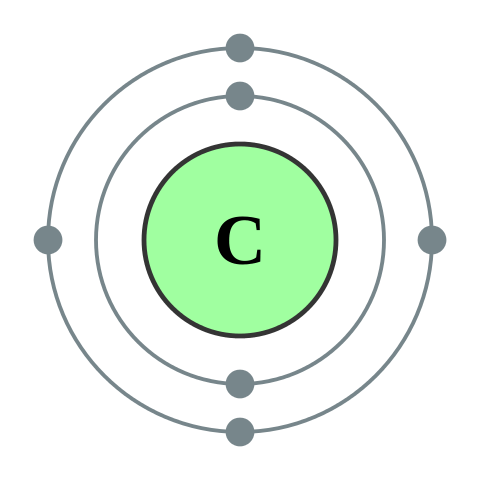
How many valence electrons does carbon have?
4
5
6
7
Electrons found in the outermost energy level of an atom are called...
core electrons.
nuclear electrons.
valence electrons.
ions.
USE THE PERIODIC TABLE
How many valence electrons does phosphorus have?
31
4
15
none of the above
How many valence electrons are found in the carbon family?
4
3
14
16
Which group has the greatest number of valence electrons?
alkali metals
alkaline earth metals
halogens
oxygen family
The ns2 elements are known as the...
alkali metals
alkaline earth metals
transition metals
inner transition metals
The representative elements are also called the...
Group A elements.
Group B elements.
d-block elements.
f-block elements.
Who arranged the known elements into horizontal rows of increasing atomic mass leaving gaps for as yet undiscovered elements?
Mendeleev
Meyer
Newlands
Moseley
What element was later discovered by a French scientist that exactly matched the missing place Mendeleev left one step away from aluminum?
Mendelevium
Gallium
Technetium
Manganese

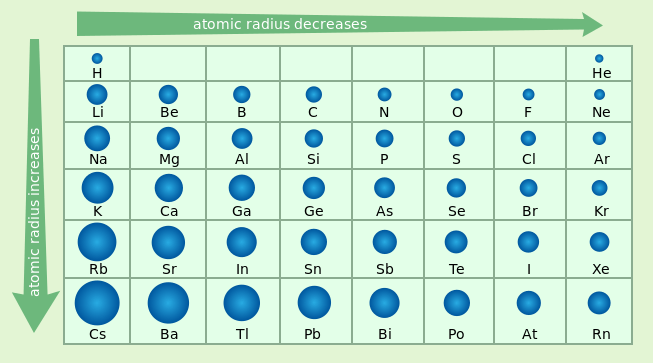


the ability of an atom to attract electrons from another atom in a compoun

phosphorus (P)
tin (Sn)
antimony (Sb)
germanium (Ge)

Which list arranges the elements Na, Li, K, Rb, and Cs in order of increasing ionization energy (from left to right)?
Cs; Rb; K; Na; Li
Cs; Li; Na; K; Rb
Na; Li; K; Rb; Cs
Li; Na; K; Rb; Cs

What is a positive ion called?
anion
cation
isotope
covalent
What is a negative ion called?
anion
cation
covalent
isotope


How many valence electrons?
2
3
4
5

