wayground logo

Free Printable Worksheets

Font size

S
M
L
XL
Worksheets

5th Grade 3rd Q Exam

Total questions: 118

Worksheet time: 2hrs 44mins
Name
Class
Date
1.
What is a PUSH or PULL of an object?
a)
Motion
b)
Force
c)
Friction
d)
Gravity
2.
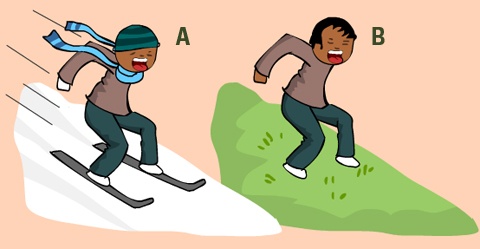
Why is it harder for the boy in Image B to get down the hill?
a)
Motion
b)
Friction
c)
Work
d)
Displacement
3.
What is a force that works AGAINST MOTION?
a)
Force
b)
Motion
c)
Gravity
d)
Friction
4.
Why does a rolling ball stop?
a)
Gravity
b)
Friction
c)
Waterfalls
d)
Sand
5.
A push or pull that causes a change in motion
a)
Friction
b)
Gravity
c)
Force
d)
Mass
6.
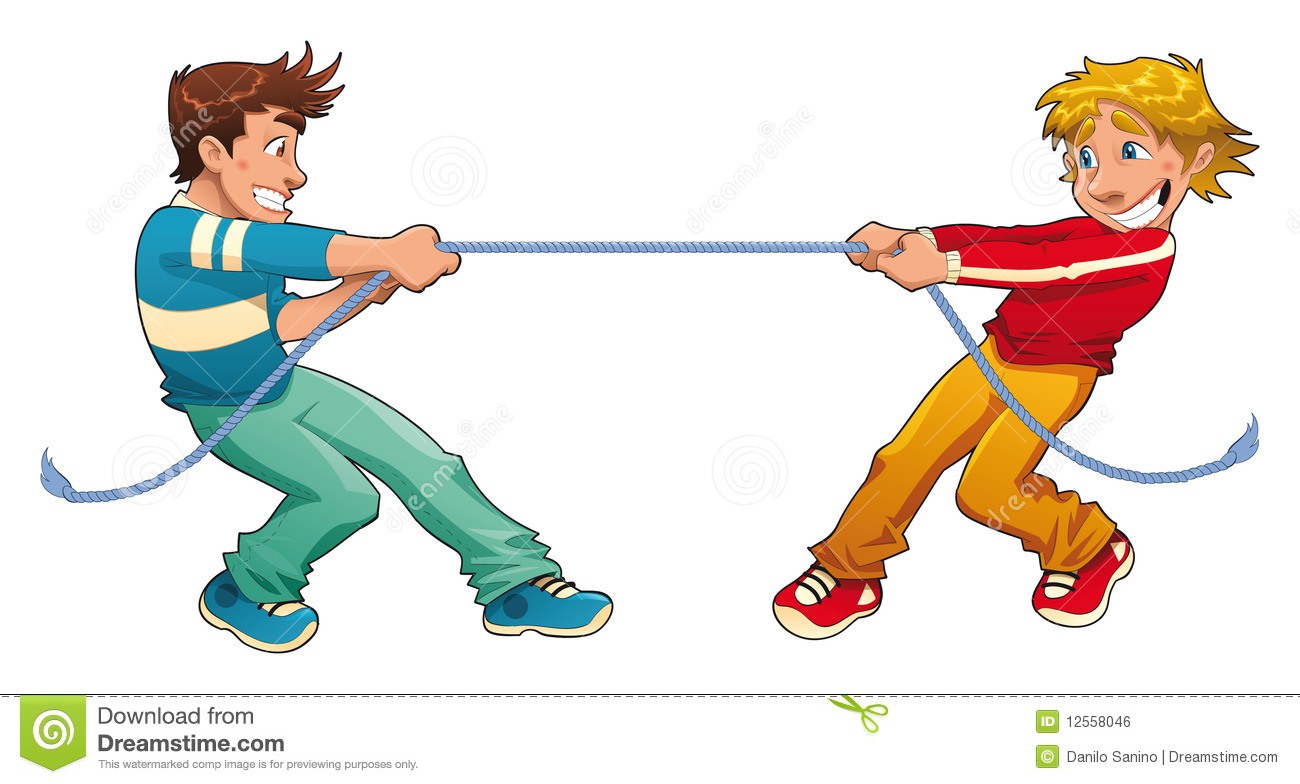
If these boys are pulling with the same amount of force.  What will happen?
a)
The boy in blue will win.
b)
They will not move at all.
c)
The boy in red will win.
d)
Both will fall down.
7.
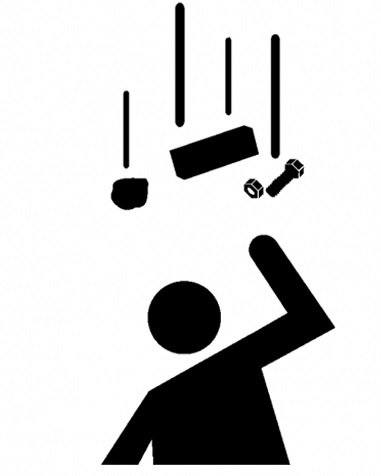
What pulls a ball back to earth?
a)
Gas
b)
Gravity
c)
Friction
d)
Molecules
8.
What is the standard unit force is measured in?
a)
Newtons
b)
pounds
c)
grams
d)
meters
9.
 The diagram shows forces acting on a box. 
Which statement best describes what will happen to the box as a result of these forces being applied? 
a)
The box will move up. 
b)
The box will move to the left.
c)
The box will move to the right. 
d)
The box will remain stationary.
10.
What is a force?
a)
a push or pull
b)
speed or acceleration 
c)
potential or kinetic energy
d)
balanced or unbalanced force
11.
When objects remain in the same place, it is called...
a)
gravity
b)
friction
c)
balanced force
d)
unbalanced force
12.
What is the force that causes everything to be pulled down to the Earth?
a)
friction
b)
gravity
c)
balanced
d)
unbalanced
13.
An unbalanced force is when objects move in one direction because the force is greater from that direction.
a)
true
b)
false
14.
When an object is getting faster, it is called....
a)
potential energy
b)
kinetic energy
c)
acceleration
d)
deceleration 
15.
What happens when 2 equal forces act on an on an object in the same direction.
a)
no movement; won't move
b)
object will move in the direction of the force
c)
Object will move in the opposite direction of the force
d)
Object flies
16.
What happens when 2 equal forces act on an object in opposing directions?
a)
no movement; won't move
b)
Object will move in the direction of the force
c)
Object will move in the opposite direction of the force
d)
the object flies
17.
What is a contact force?
a)
A force that touches the object to make it move or change directions
b)
force that does not touch the object to make it move or change direction.
18.
Friction is a force that acts in an ___________ direction of movement.
a)
similar
b)
opposite
c)
parallel
d)
west
19.
The 5th graders were playing a game of tug-of-war.  The class was divided equally with half the class on one side of the rope and the other half on the opposite side.  For 5 minutes the students pulled and pulled but neither side could pull the flag to one side or the other.  Choose the description of the forces during the 5th grade tug-of-war.
a)
The forces were unbalanced in the game.
b)
The forces were friction, gravity, and chemical energy.
c)
The students all had the same amount of strength.
d)
The forces were balanced in the game.
20.
What happens when 2 equal forces act on an object in opposing directions?
a)
no movement; won't move
b)
Object will move in the direction of the force
c)
Object will move in the opposite direction of the force
d)
the object flies
21.

If your group wind Tug-O-War you know the forces were...

a)

changed

b)

opposite

c)

balanced

d)

unbalanced

22.

Objects that are acted on by unbalanced forces do what...

a)

change their motion

b)

change their direction

c)

change their speed

d)

change their inertia

23.

the rate at which the velocity of an object changes over time is...

a)

gravity

b)

speed

c)

inertia

d)

acceleration

24.
Forces that are equal causing an object to remain at rest and not move.
a)
unbalanced force
b)
gravity
c)
rest
d)
balanced force
25.
Forces that are not equal causing an object to move
a)
unbalanced force
b)
balanced force
c)
gravity
d)
force
26.
Matter is anything that has _______ and takes up space. 
a)
weight
b)
mass 
c)
the ability to float
27.
__________ is the amount of space something takes up. 
a)
matter
b)
volume
c)
weight
d)
density
28.

A force that acts between two touching objects and that opposes motion

a)

velocity

b)

gravity

c)

friction

d)

balanced forces

e)

unbalanced forces

29.

An object is falling downward through Earth's atmosphere. In which direction is the air resistance force?

a)

Down

b)

Up

c)

Around the object

d)

Through the object

30.

The upward force which is exerted against a falling object is

a)

gravity

b)

terminal velocity

c)

air resistance

d)

intertia

31.
If there are two forces going in the SAME direction, you would ...?
a)
(-) Subtract the forces
b)
(+) Add the forces
c)
Neither
d)
(x) Multiply
32.
Forces that have a force of Zero (0).
a)
Balanced force
b)
Unbalanced force
33.
If the net force is 0 the object will ... 
a)
CHANGES motion
b)
STAY the SAME, NOT Move
34.
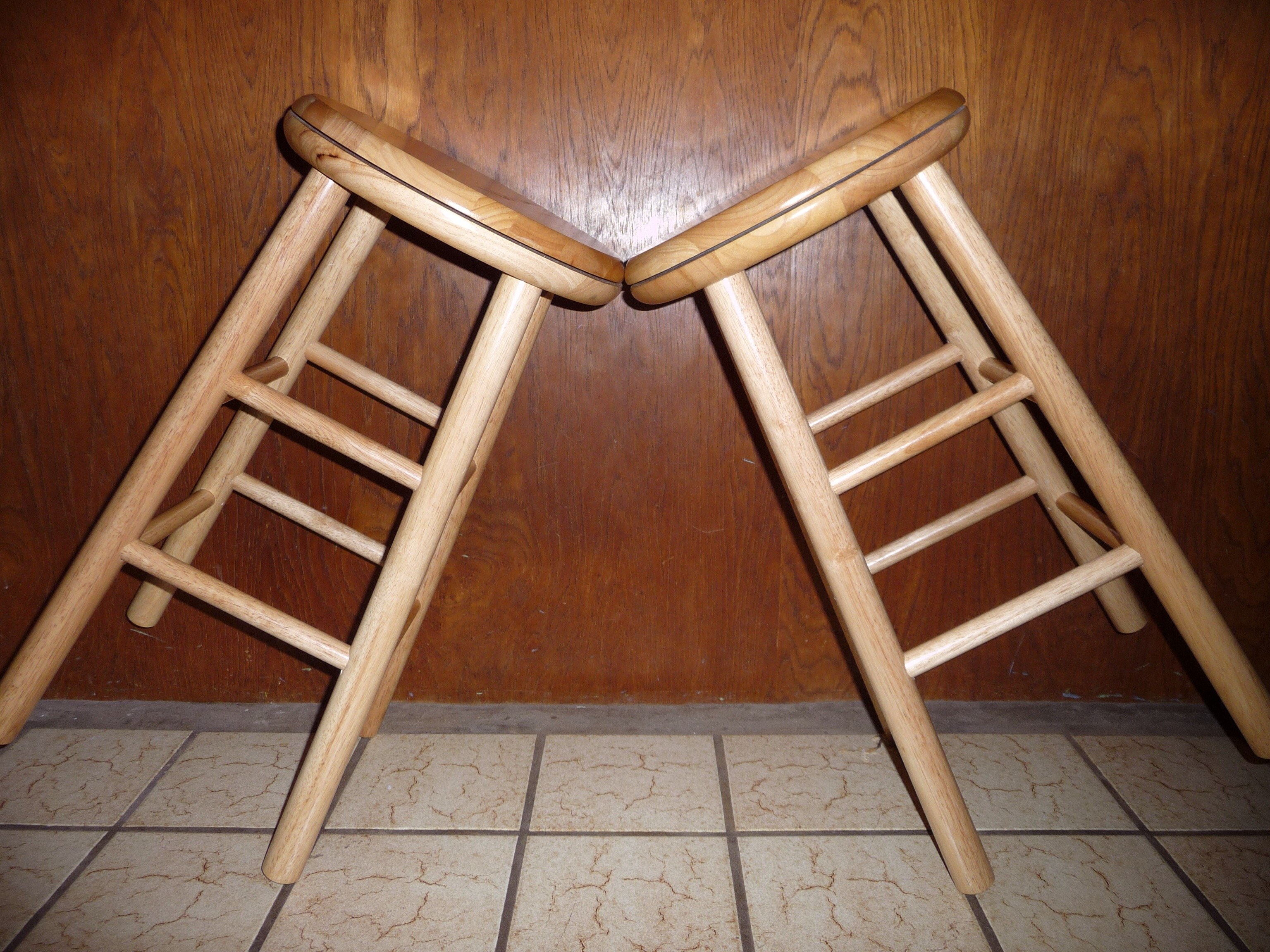
Is this a balanced or unbalance force?
a)
Balanced
b)
Unbalanced
c)
Neither one
d)
Both
35.
Is this a balanced or unbalanced force?
a)
Balanced
b)
Unbalanced
c)
Neither
d)
Both
36.
What is the net force of this object?
a)
0N
b)
50N
c)
25N
d)
5N
37.

What is the term for cells grouped together to perform a specific function?

a)

cell

b)

tissue

c)

organ

d)

organ system

38.

What is the term for tissues grouped together to perform a specific function?

a)

cell

b)

tissue

c)

organ

d)

organ system

39.

What is the term for organs grouped together to perform a specific function?

a)

cell

b)

tissue

c)

organ

d)

organ system

40.

What is the term for the smallest unit of life?

a)

cell

b)

tissue

c)

organ

d)

organ system

41.

What is the term for the organ system that moves blood, gases, and nutrients throughout the body?

a)

circulatory system

b)

respiratory system

c)

nervous system

d)

excretory system

e)

digestive system

42.

What organ system are blood vessels part of?

a)

digestive system

b)

respiratory system

c)

muscular system

d)

nervous system

e)

circulatory system

43.
The veins of the body belong to which organ system?
a)
nervous
b)
lymphatic
c)
digestive
d)
circulatory
44.
 What do tissues form?
a)
Blood 
b)
Organ Systems
c)
Organs
d)
Nails
45.
Which is the correct sequence?
a)
dorsal> immune> lymphatic
b)
lymphatic> dorsal> tissues
c)
tissue> organs> form organ systems
d)
organ> tissues> organ system
46.
How might the cardiovascular system transport materials?
a)
Bloud
b)
Sangre
c)
Sangra
d)
Blood
47.

What is a group of cells that are alike and work together?

a)

a cell team

b)

a tissue

c)

a cell family

48.

A group of tissues that work together is a(n) ______________________.

a)

cell

b)

organ

c)

organ system

49.

Organs that work together are part of a(n) ________________________.

a)

cells

b)

tissue

c)

organ system

50.

What is the correct order of organization?

a)

cells->tissue->organs->organ systems-> organism

b)

tissue->cells->organs->organ systems-> organism

c)

organs->organ systems-> organism->cells->tissue

51.
The respiratory system works together with the ____ system so that all cells of the body receive oxygen. 
a)
nervous
b)
endocrine
c)
circulatory
d)
integumentary
52.
Which organ system includes the heart, blood vessels, and blood?
a)
Digestive system
b)
Circulatory system
c)
Respiratory system
d)
Endocrine system
53.

What is the function of this system?

a)

The protection of vital organs from injury

b)

The production of hormones that regulate growth and metabolism.

c)

The chemical breakdown of food into smaller pieces

d)

The transport of nutrients, water, and oxygen to body cells.

54.

What is the function of this system?

a)

Control body processes

b)

Transport nutrients

c)

Remove waste

d)

Produce hormones

55.
Which is responsible for providing oxygen to cells?
a)
respiratory system
b)
circulatory system
c)
muscular system
d)
nervous system
56.
In which system of the human body does the heart belong?
a)
Nervous
b)
Skeletal
c)
Cardiovascular
d)
Digestive
57.
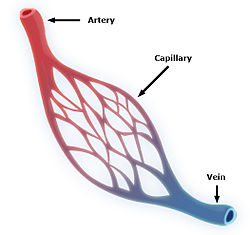
This type of vessel carries blood TO the heart:
a)
vein
b)
nerve
c)
muscle
d)
artery
58.
When oxygen-rich blood is carried AWAY from the heart, it travels through an...
a)
artery
b)
neuron
c)
vein
d)
straw
59.
The smallest type of blood vessel is the:
a)
nerve
b)
vein
c)
capillary
d)
artery
60.
Veins have special ________________ to stop blood from flowing backward.
a)
gravity
b)
valves
c)
arteries
d)
ventricles
61.
The circulatory system works with the __________ system to obtain energy from nutrients that we eat. 
a)
respiratory 
b)
digestive
c)
skeletal
d)
nervous
62.
The combined force of all forces acting on an object is the  ___ force.
a)
net
b)
big
c)
bad
d)
use
63.
Newton's first law (An object at rest stays at rest) applies when forces are 
a)
balanced
b)
unbalanced
c)
even
d)
strong
64.
Newton's second law is applied as the formula _____
a)
Force = Mass X Acceleration
b)
Speed = distance / time
c)
a + b = c
d)
huh?
65.
An object at rest will _______ if no outside forces are applied.
a)
Stay at rest
b)
Increase velocity
c)
Decrease mass
d)
Change direction
66.
For a every force on an object there is an equal and opposite force.
a)
Newton’s first law of motion
b)
Newton’s second law of motion
c)
Newton’s third law of motion
67.
A car you are riding in suddenly stops, but you continue to go forward.
a)
Newton's
1st
Law of Motion
b)
Newton's
2nd
Law of Motion
c)
Newton's
3rd
Law of Motion
68.
You push against a wall and the wall is pushing back on you.
a)
Newton's
1st
Law of Motion
b)
Newton's
2nd
Law of Motion
c)
Newton's
3rd
Law of Motion
69.
What kind(s) of objects have inertia?
a)
all objects with mass
b)
only objects at rest
c)
only objects in motion
d)
only objects whose motion is being changed
70.
F=ma
a)
Newton's
1st
Law of Motion
b)
Newton's
2nd
Law of Motion
c)
Newton's
3rd
Law of Motion
71.
What is Newtons 1st law of motion?
a)
Force= Mass multiplied by acceleration 
b)
An object at rest stays at rest unless acted on an unbalanced force.
c)
For every action there is a equal and opposite  re-action.
d)
Law of gravity 
72.
Which of the following is the smallest unit of life that can carry out all life functions?
a)
the mitochondria
b)
the vacuoles
c)
the nucleus
d)
the cell
73.
Which structures are found in every living cell?
a)
cell membrane and cytoplasm
b)
chloroplasts and mitochondria
c)
a cell wall and nucleus
d)
chloroplasts and cell wall
74.
Which cell structure is found in plant and animals cells and controls what can come into or leave a cell?
a)
cell membrane
b)
cytoplasm
c)
nucleus
d)
vacuole
75.
What is the function of the cell nucleus found in both plant and animal cells?
a)
to produce energy
b)
to control cell activity
c)
to remove waste products
d)
to allow molecules to enter the cell
76.
What is one basic function of the vacuoles?
a)
circulating oxygen
b)
producing food
c)
controlling cell processes
d)
storing water
77.
Chloroplasts in plant cells allow the plant to perform a function that animal cells cannot do.  What is the main function of the chloroplasts found in plant cells?
a)
to absorb light energy and manufacture food
b)
to remove waste materials by active transport
c)
to manufacture chemical energy from food
d)
to control the shape of the cell
78.
All cells need energy to function.  Which cell organelle is responsible for producing energy in the cell?
a)
chloroplasts
b)
mitochondria
c)
nucleus
d)
vacuoles
79.
What is the function of a cell wall?
a)
to protect and support the cell
b)
to perform different functions in each cell
c)
to prevent water from passing through it
d)
to prevent oxygen from entering the cell
80.
In what part of the plant cell does the process of photosynthesis take place?
a)
nucleus
b)
mitochondria
c)
chloroplasts
d)
vacuoles
81.
The basic unit of structure and function in a living things.
a)
chloroplast
b)
nucleus
c)
cell
d)
cell membrane
82.
Which of the following are NOT found in animal cells
a)
chloroplasts and cytoplasm
b)
chloroplasts and cell wall
c)
cell wall and cell membrane
d)
mitochondria and nucleus
83.
The nucleus is like the ____________ of the cell.
a)
foot
b)
hand
c)
stomach
d)
brain
84.

Which of the following converts food into energy for the cell?

a)

vacuole

b)

mitochondria

c)

cytoplasm

d)

cell membrane

85.

The fluid that surrounds the organelles is... (hint... "Try to pull a fast one and..."

a)

chloroplast

b)

cytoplasm

c)

vacuole

d)

cell wall

86.
What do vacuoles do? 
a)
They actually do not have an important role
b)
They protect the cell
c)
They are the brain of the cell
d)
storage area for cells; water storage in plants 
87.
If you were some bad guy trying to sneak into an animal cell, who would be there to stop you?
a)
nucleus
b)
mitochondria
c)
cell membrane
d)
cell wall
88.
Which of the following, found ONLY in plant cells, provides structure?
a)
cell wall
b)
chloroplast
c)
mitochondria
d)
vacuole
89.
Made up of several cells
a)
Single Cellular
b)
Multi-Cellular
c)
Chloroplast
d)
Nucleus
90.
I am the outer most layer of an animal cell. What am I?
a)
cell wall
b)
nucleus
c)
cell membrane 
d)
cell skin
91.
A rigid layer that lies outside the cell's  membrane is...
a)
Cytoskeleton
b)
Cilia
c)
Cell Wall
d)
Flagella
92.
A structure inside a cell that does a certain job is called an ___________________.
a)
cell
b)
organelle
c)
object 
d)
part
93.

Which organelle contains DNA and controls the cell?

a)

Endoplasmic Reticulum

b)

Golgi Apparatus

c)

Nucleus

d)

Vesicles

94.
The purpose of cellular respiration is to produce ?
a)
energy
b)
oxygen
c)
sugar
d)
protein
95.

The release in energy from the sugar that are in plant and animal cells is called...

a)

photosynthesis

b)

transpiration

c)

cellular respiration

d)

transition

96.

A lot of cells of the same kind join together to form-

a)

Tissue

b)

Cells

c)

Organs

d)

Organ systems

97.

Different tissues work together to form

a)

Tissue

b)

Cells

c)

Organs

d)

Organ systems

98.
Organ systems working together form a living _____.
a)
Chloroplast
b)
Tissue
c)
Cell
d)
Organism
99.

Two or more kinds of organs together form an _____.

a)

cell

b)

tissue

c)

organism

d)

system

100.
What kind of energy does an object possess when it's resting on top of the hill?
a)
Potential Energy
b)
None
c)
Kinetic Energy
d)
All
101.
When a rubber band is stretched, it is demonstrating which type of potential energy?
a)
kinetic
b)
elastic potential
c)
gravitational potential
d)
mechanical
102.
The ability to do work or cause change is...
a)
Gravity
b)
Energy
c)
Work
d)
Power
103.
WHEN AN ARCHER BENDS A BOW, WHAT TYPE OF ENERGY INCREASES IN THE BOW?
a)
GRAVITATIONAL
b)
ELASTIC
c)
KINETIC
d)
THERMAL
104.
SAM STUDIED KINETIC AND POTENTIAL ENERGY BY OBSERVING APPLES HANGING ON A TREE DURING A FIELD INVESTIGATION. WHAT TYPE OF ENERGY DO THE APPLES HAVE?
a)
KINETIC
b)
MECHANICAL
c)
GRAVITATIONAL
d)
ELASTIC
105.

What is energy?

a)

moving energy

b)

stored energy

c)

renewable energy

d)

The ability to do work.

106.

What is potential energy?

a)

moving energy

b)

stored energy

c)

renewable energy

d)

non renewable energy

107.

What is kinetic energy?

a)

moving energy

b)

potential energy

c)

stored energy

d)

renewable energy

108.
What type of energy includes both kinetic and potential energy?
a)
mechanical energy
b)
chemical energy
c)
heat energy
d)
sound energy
109.

Which of these is an example of kinetic energy?

a)

a bicycle

b)

a battery

c)

a solar panel

d)

firewood

110.

Kinetic energy depends on _____________ & _____________.

a)

mass, speed

b)

mass, position

c)

mass, weight

d)

speed, distance

111.

Potential energy depends on ____________ & ______________.

a)

mass, speed

b)

mass, position

c)

speed, position

d)

mass, weight

112.
Can energy be created or destroyed?
a)
Yes
b)
No
113.

What type of energy is transformed in the Energy Conversion shown in the image below?

a)

Nuclear Energy

b)

Chemical Energy

c)

Thermal Energy

d)

Electrical Energy

114.
Mechanical energy
a)
energy built up before being in motion
b)
energy released in a chemical reaction
c)
energy of motion
d)
sum of kinetic and potential energy
115.
Can you create energy?
a)
Yes
b)
No
116.
Things make shadows because they ______ light.
a)
BLOCK
b)
PASS
117.
What is light?
a)
A form of energy
b)
A form of sound
c)
bright stuff
d)
A form of excitement
118.

How is light energy transmitted? Light energy is transmitted as _________.

a)

Cells

b)

Waves

c)

Circles

d)

wires