
 Worksheets
Elements of Writing Checks
Total questions: 24
Worksheet time: 20mins
You should always use permanent ink when writing a check.
True
False
When you write a check, the money does not leave your account until ____________________.
the next business day.
there is enough money deposited to cover it.
the check is given to the bank.
the first day of the week.
What is a withdrawal?
Expenses that do not change from month to month.
Money set aside for the future.
Taking money out of a checking or savings account.
Money received, usually from a job, business, or assets
What is a check?
It is how you see how much money you have in your account.
An online only option to pay bills
An order to pay another person or business from an amount at the bank.
It looks like a v but is longer on one end

Which of the following is TRUE about checks? (hint: choose 2 correct answers)
You should endorse the back when writing a check
The amount of money is written both numerically and in words
Checks should show up on your statement within 30 days
You should endorse the back when depositing a check
Which of the following refers to the payee's (the person that receives the check) signature on the back of the check?
signature card
check register
endorsement
bank statement
It's okay to only write the money amount in numbers. You don't have to write it in words too.
True
False
Always use crayons when writing a check.
True
False
When it comes to saving money, you should _________________.
Keep most of your savings in your checking account
Put aside money for savings each month
Choose the savings account with the lowest interest rate
Put anything you can't afford on your credit card
Which part of the check is the least important?
memo line
signature line
routing numbers
check number
Approximately how often does a financial institution (Bank or credit union) send a bank statement through the mail?
yearly
weekly
quarterly
monthly
It is ok to leave the amount portion of a check blank if you are unsure of the amount of an upcoming purchase.
true
false
An individual should sign a check to be cashed when in front of a bank teller (employee).
true
false
Liam wants cash from his bank, but it's Sunday and the bank is closed. How can he get cash from the ATM.
credit card
debit card
savings account
Alex wants new clothes. He plans to visit several stores and does not plan to carry cash or a credit card. How should he pay for his cloths
debit card
online banking
personal loan
steal

When you take out money from the bank. You are making a ____________?
withdrawal
deposit
cash
cheque

This is important because it's documentation of money deposited or withdrawn?
bank receipt
ATM
cash
money
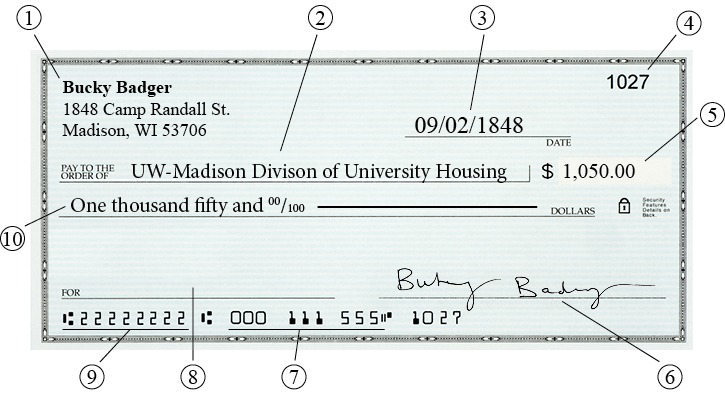
What is labeled number 3?
Check number
Payee
Date
Account number
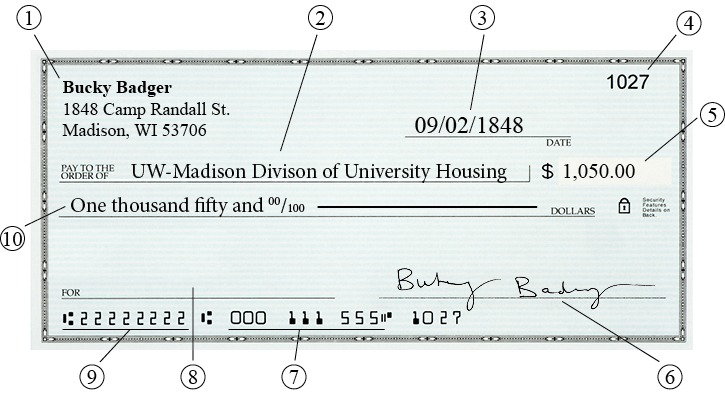
What is labeled number 4?
Date
Account number
Check number
Amount in numbers
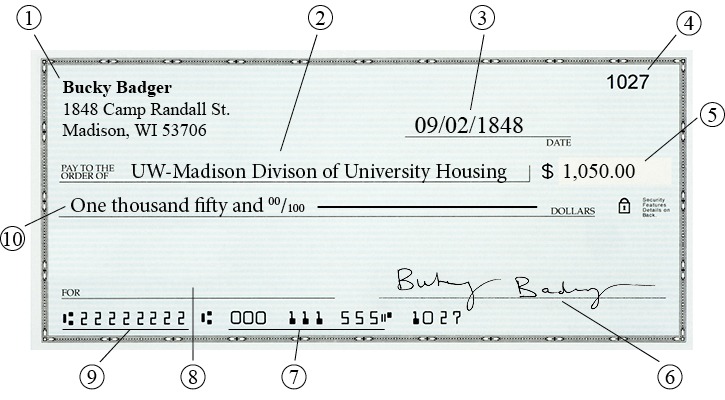
What is labeled number 5?
Account number
Routing number
Amount in words
Amount in numbers
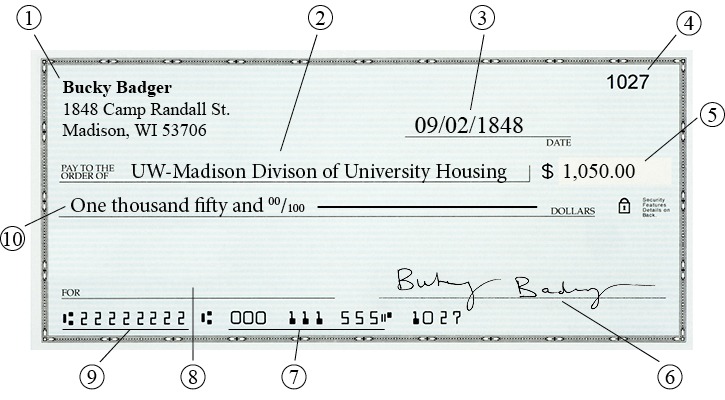
What is labeled number 6?
Payee
Payor
Signature
Bank
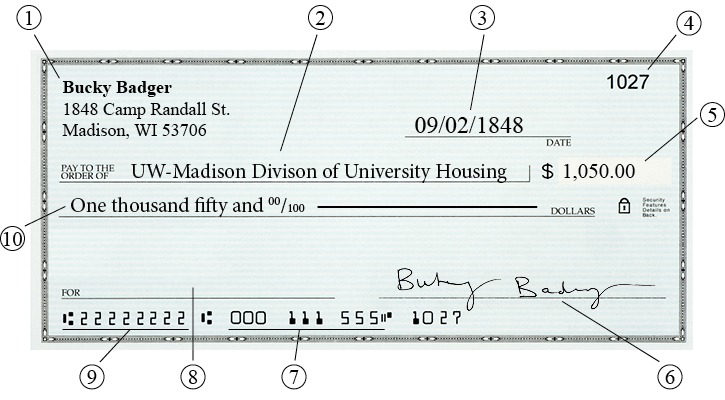
What is labeled number 8?
Memo
Sigature
Payor
Amount in numbers
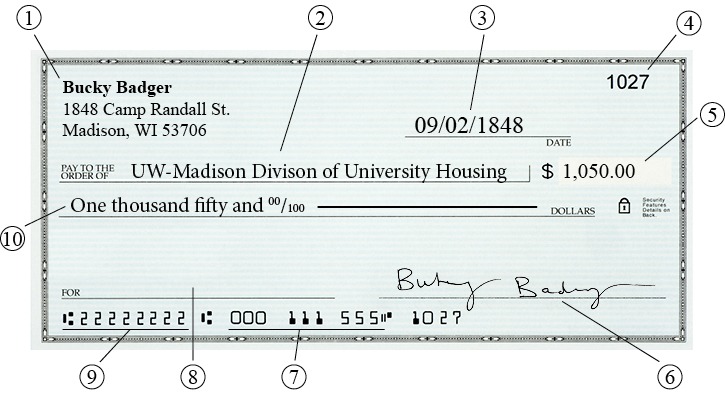
What is labeled number 10?
Payee
Payor
Memo
Amount in words
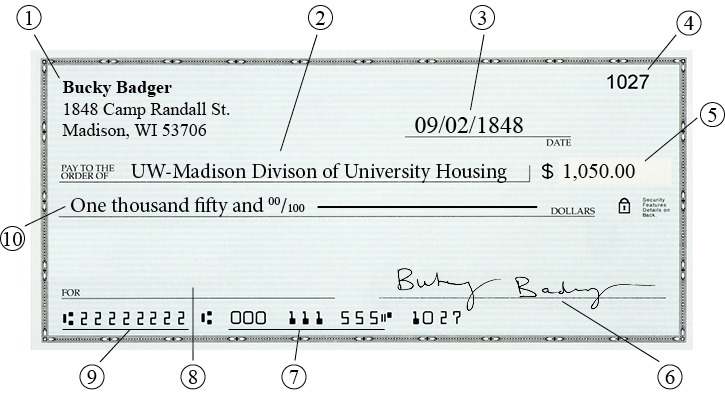
Does the check number appear more than once on the check?
Yes
No

