wayground logo

Free Printable Worksheets

Font size

S
M
L
XL
Worksheets

8th - B3 Part 2

Total questions: 47

Worksheet time: 36mins
Name
Class
Date
1.

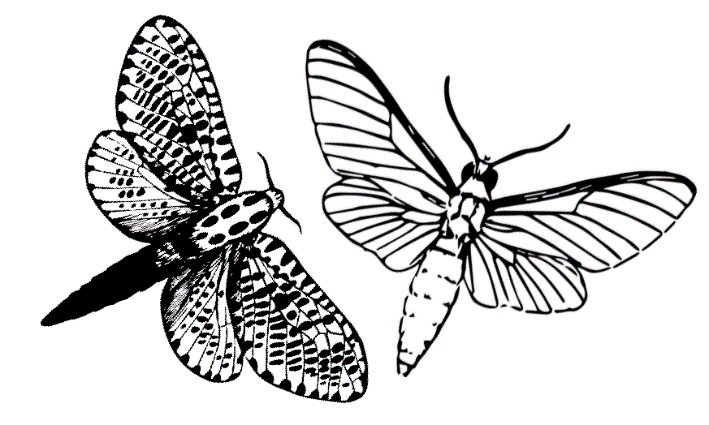
According to natural selection, light colored tree trunks would favor

a)

light colored moths

b)

dark colored moths

c)

red colored moths

d)

red and light colored moths

2.

A physical trait favored by an environmental change can be called an

a)

adaptation

b)

extinction

c)

possibility

d)

mutation

3.
Survival of the Fittest and Evolution were proposed by what scientist?
a)
Charles Darwin
b)
Albert Einstein
c)
Steven Hawking
d)
Isaac Newton
4.
Why are advantageous traits more likely to be passed onto offspring?
a)
Because they are more likely to survive and reproduce.
b)
Because they come from dominant alleles.
c)
Because they come from recessive alleles.
d)
Because the trait is an acquired phenotype.
5.

The "gatekeeper" that controls what enters and enters and exits the cell would be shown by what letter on the diagram above?

a)

A

b)

B

c)

C

d)

D

6.

The "Control Center" of the cell that makes energy for the cell would be shown by which label on the diagram above?

a)

A

b)

B

c)

C

d)

D

7.

The "Powerhouse of the cell" would be shown by which label on the diagram above?

a)

A

b)

B

c)

C

d)

D

8.
Which is a characteristic of bacteria?
a)
large in size
b)
found only in one particular environment
c)
made up of many different cells working together
d)
able to survive as a single cell
9.
What does the digestive system do
a)
breaks down and handles food
b)
pumps blood throughout the body
c)
helps you breathe
d)
helps your arms and legs move
10.
What is responsible for delivering oxygen and removing carbon dioxide from the body?
a)
cell nucleus
b)
excretory system
c)
nervous tissue
d)
respiratory system
11.
Which system works with the skeletal system to make your body move?
a)
muscular
b)
digestive
c)
nervous
d)
circulatory
12.
What is the main organ in the circulatory system?
a)
lungs
b)
brain
c)
veins
d)
heart
13.
The __________ system directs the body to inner and outer changes.
a)
digestive
b)
circulatory
c)
nervous
d)
skeletal
14.

For every action, there is an equal and opposite reaction.

a)

Newton's

1st

Law of Motion

b)

Newton's

2nd

Law of Motion

c)

Newton's

3rd

Law of Motion

15.
At which point is kinetic energy greatest?
a)
W
b)
X
c)
Y
d)
Z
16.
At which point is potential energy greatest?
a)
W
b)
X
c)
Y
d)
Z
17.
Which of these objects is an insulator?
a)
Copper Wire
b)
Paper Clip
c)
Steel Pole
d)
Rubber Gloves
18.
Electricity that flows in a closed path is called a
a)
path
b)
current
c)
circuit
19.
The needle on a compass is attracted to (points to) what?
a)
Treasure
b)
The Atlantic Ocean
c)
The East Coast
d)
The North Pole of the planet Earth
20.

If sound is louder or a light is brighter, What does this mean about the amplitude of the wave?

a)

The Amplitude is smaller

b)

The Amplitude is greater

c)

The Amplitude is always the same

d)

The Amplitude is louder

21.

In the picture, which number point to the wave's amplitude?

a)

1

b)

2

c)

3

d)

4

22.

In the picture, which number points to the wave's wavelength?

a)

1

b)

2

c)

3

d)

4

23.

Electricity happens when:

a)

Protons bump into each other

b)

Electrons move from one place to another

c)

Potential energy is stored

d)

A car strikes a power line

24.

What does a magnet stick to?

a)

Tree

b)

Plastic straw

c)

Iron

d)

Aluminum

25.

Every magnet has:

a)

A south pole

b)

A north pole

c)

A magnetic field

d)

All of the above

26.

Which is the best written response for this question: Explain and give two examples for potential energy.

a)

Potential energy is a rock at the top of a hill and a roller coaster at the top.

b)

potential energy is stored energy.

c)

Potential energy is stored energy for example a rock at the top of a hill and a roller coaster at the top.

d)

Potential energy is going up for example a rock at the top of a hill and a roller coaster at the top.

27.

What is an example of the third law of motion?

a)

Pulling a tablecloth from under a dish

b)

Pushing a shopping cart vs pushing a car

c)

A rocket blasting off

28.

What does kinetic energy do?

a)

It is due to the motion

b)

It starts and stops the motion

c)

Gotta go fast

d)

An object that moves faster

29.

What is potential energy?

a)

It will go in the future

b)

Stopping an object

c)

It goes faster

d)

It moves upward

30.

The mass and the ______ of an object affect the amount of energy it possesses.

a)

Friction

b)

Gravity

c)

Thermal energy

d)

Speed

31.

How does gravity affect kinetic energy?

a)

It decreases

b)

It increases

c)

Stays the same

d)

All of the above

32.
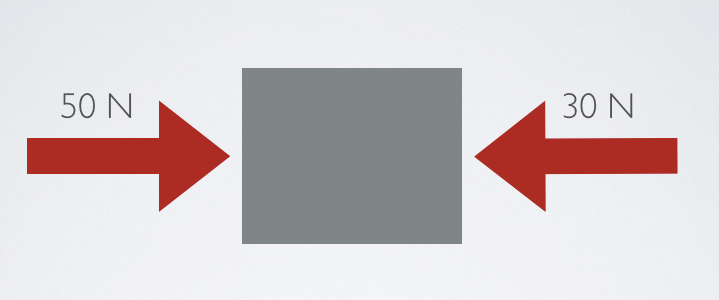
How will this object move? 
a)
It won't move. 
b)
It will move to the right. 
c)
It will move to the left. 
d)
It will move up. 
33.

These forces are...

a)

Balanced

b)

Unbalanced

34.

These forces are...

a)

Balanced

b)

Unbalanced

35.
Which of these objects is an insulator?
a)
Copper Wire
b)
Paper Clip
c)
Steel Pole
d)
Rubber Gloves
36.
Current electricity flows through
a)
wires
b)
string
c)
rubber
d)
plastic
37.
Electricity flows from which side of the battery?
a)
negative
b)
positive
c)
I have no idea
38.
Are all mutations bad?
a)
Yes
b)
No
39.

Which organelle is DNA usually found in?

a)

cell membrane

b)

vacuole

c)

chloroplast

d)

nucleus

40.
Purple (P) is dominant to the white (p).
According to the Punnett Square, what is the probability of an offspring being purple?
a)
25%
b)
0%
c)
100%
d)
50%
41.
What is the yellow seed genotype?
a)
aa
b)
Aa
c)
AA
d)
AA or Aa
42.
What is an inherited trait?
a)
a trait that you recieve from your parent
b)
Ice Cream Cone
c)
Gatorade
d)
the change of an animal
43.
Which is an example of an inherited trait?
a)
pierced ears
b)
dyed hair
c)
green eyes
d)
broken arm
44.
Which option most closely relates to how CRISPR works?
a)
"shake and bake"
b)
"cut and paste"
c)
"hide and seek"
d)
"live and love"
45.

A stretch of DNA with instructions for one trait.

a)

Chromosome

b)

Gene

c)

Nucleus

d)

DNA

46.

Half of these come from one parent, the other half come from the other parent.

a)

Chromosomes

b)

Genes

c)

DNA

d)

Nuclei

47.

These contain specific instructions that make each living creature unique.

a)

DNA

b)

Genes

c)

Chromosomes

d)

Nucleus