wayground logo

Free Printable Worksheets

NEW

Font size

S
M
L
XL
Worksheets

9 PASS body Systems

Total questions: 66

Worksheet time: 43mins

Name
Class
Date
1.
___________ are the building blocks of life.
a)
cells
b)
legos
c)
blocks
d)
blood
2.
Which of the following body systems work together for support, protection, and movement?
a)
respiratory and cardiovascular
b)
skeletal and muscular
c)
skeletal and integumentary
d)
digestive and respiratory
3.
Which system enables the body to move, moves food through the digestive system, and keeps the heart beating?
a)
skeletal 
b)
muscular
c)
digestive
d)
nervous
4.
Which system includes bones, cartilage, and ligaments?
a)
nervous
b)
muscular
c)
skeletal
d)
excretory
5.

What bone is highlighted?

a)

Skull (Cranium)

b)

Mandible

c)

Clavicle

d)

Scapula

6.

What bone is highlighted?

a)

Skull (Cranium)

b)

Mandible

c)

Scapula

d)

Clavicle

7.

What bone is highlighted?

a)

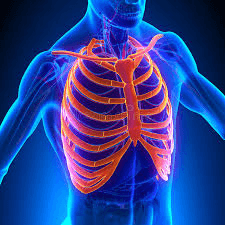
Ribs

b)

Vertebrae

c)

Clavicle

d)

Femur

8.

What bone is highlighted?

a)

Radius

b)

Ulna

c)

Humerus

d)

Carpals

9.

From wrist to fingertip, what is the order of bones?

a)

Carpals, metacarpals, phalanges

b)

Phalanges, metacarpals, carpals

c)

Carpals, phalanges, metacarpals

d)

Metacarpals, carpals, phalanges

10.
What is the place where two bones meet?
a)
hinge
b)
bone
c)
spot
d)
joint
11.
What is the name for the connector that attaches muscle to bone?
a)
ligament
b)
tendon
c)
patella
d)
string
12.
What is the name for the connector that attaches bone to bone?
a)
ligament
b)
tendon
c)
patella
d)
string
13.
The adult skeletal system is composed of how many bones?
a)
216
b)
371
c)
206
d)
199
14.
The joints in your knees and elbows are most similar to:
a)
a clock
b)
a screw
c)
a wheel
d)
a door hinge
15.

Bending your head back until it hurts is an example of ________.

a)

A) flexion

b)

B) extension

c)

C) hyperextension

d)

D) circumduction

16.
Name this joint
a)
pivot
b)
saddle
c)
gliding
d)
hinge
17.
Which joint allows for the widest range of movement?
 
a)
Gliding 
b)
Saddle 
c)
  Ball and socket 
d)
Hinge
18.
carpals and tarsals are examples of this type of joint
a)
condyloid
b)
gliding
c)
hinge
d)
saddle
19.
Name the joint.
a)
Saddle
b)
Ball and Socket
c)
Ellipsoid
d)
Hinge
20.
Carpals and tarsals (flat bones) are examples of this type of joint
a)
condyloid
b)
gliding
c)
hinge
d)
saddle
21.
What are joints
a)
A place where one bone meets 
b)
A place where  two  bones meet 
c)
Bones don't meet 
d)
A place where three bones meet 
22.
The skull is an example of what type of joint?
a)
Cartilaginous
b)
Synovial
c)
Fibrous
23.
Fibrous joints are?
a)
freely moveable
b)
partially moveable
c)
immovable
24.
Skeletal muscles are attached to the _________.
a)
Stomach
b)
Lungs
c)
Bones
d)
Involuntary Muscles
25.
What is a body system?
a)
A group of cells that work together and perform a specific job in the body
b)
A group of organs that work together and perform a specific job in the body
c)
A group of tissues that work together and perform a specific job in the body
d)
A group of body parts that that work together and perform a specific job in the body
26.
Your skeletal system is made up of _______
a)
all your muscles 
b)
The spinal cord, brain and nerves
c)
Your heart, veins and arteries 
d)
all of your bones 
27.
True or False: While each body system has a special job of its own ... many body systems work together and rely on one another
a)
True
b)
False
28.

What is the function of the digestive system?

a)

It transports blood and oxygen to your cells

b)

It breaks down food so the nutrients can be absorbed by your body

c)

It helps you breathe by taking in oxygen and transporting carbon dioxide out of your body

d)

It helps you move

29.

What is the function of the muscular system?

a)

The function is movement of the body through muscles

b)

The function is to get rid of waste

c)

The function is to process food for nutrients and energy

d)

The function is to protect you against disease

30.

What is the function of the cardiovascular / circulatory system?

a)

To provide nutrients to the whole body

b)

To maintain homeostasis for the body

c)

To fight off infection or disease

d)

To transport nutrients, oxygen, and blood throughout the body

31.

What is the function of the immune system?

a)

To digest food

b)

To fight against pathogens and diseases

c)

To help you breathe

d)

To remove waste from the body

32.

What is the function of the respiratory system?

a)

To digest your food

b)

To remove waste from the body

c)

To take in oxygen and remove carbon dioxide

d)

To fight disease

33.

What is the function of the excretory/urinary system?

a)

Removes liquid waste from your body

b)

digests food

c)

helps you breathe

d)

circulates your blood

34.

True or False: Your respiratory system uses your nose and mouth only to remove oxygen and take in carbon dioxide

a)

True

b)

False

35.

You’re sick, but no one is home. You need soup and Gatorade. You get enough strength to leave your bed and go make soup. What body systems are working together to help you move and fight disease?

a)

excretory and digestive

b)

muscular and immune

c)

skeletal and immune

d)

immune and digestive

36.

What is the function of the skeletal system?

a)

Movement of the body

b)

transports oxygen, blood, nutrients throughout the body

c)

removes waste

d)

supports the body by holding it up; muscles are attached to help with movement

37.

How do the body systems work together when you accidentally touch a hot pan?

a)

The cardiovascular/circulatory system sends signals to your hand to move it, and your nervous system moves your hand

b)

The nervous system (brain, spinal cord, and nerves) send a signal to your hand to move it, and your muscular system causes your hand to move

c)

The digestive system moves your hand, and the cardiovascular/circulatory system sends signals to your hand

d)

The nervous system causes your hand to move, and the muscular system breaks down nutrients for your muscles to move

38.

When I RUN up the stairs, what four systems am I using?

a)

Cardiovascular, Skeletal, Muscular, and Respiratory

b)

Excretory/Urinary, Skeletal, Digestive, and Muscular

c)

Muscular, Skeletal, Respiratory and Digestive

39.

What muscle is the arrow pointing toward?

a)

biceps

b)

traps

c)

pecs

d)

triceps

40.

What muscle is the arrow pointing to?

a)

Pectoralis (Pecs)

b)

Biceps

c)

Triceps

d)

Lats

41.

What muscle is the arrow pointing to?

a)

Biceps

b)

Triceps

c)

Lats

d)

Quads

42.
a)
Quadriceps
b)
Satorius
c)
Hamstring
d)
Gastronecmius
43.
a)
Latissmius Dorise
b)
Erectors
c)
Deltoids
d)
Abdominal
44.
a)
Abdominal
b)
External Oblique
c)
Erectors
d)
Satorius
45.
a)
Trapezius
b)
Gluteals
c)
Deltoid
d)
Hamstring
46.
a)
Hamstrin
b)
Quadricep
c)
Tibialis Anterior
d)
Gastrocenmius
47.
a)
Glutueal
b)
Hamstring
c)
Quadricep
d)
External Oblique
48.
a)
Hamstring
b)
Quadriceps
c)
Gastronecmius
d)
Satorius
49.
a)
Abdominal
b)
External Oblique
c)
Pectorals
d)
Trapezius
50.
a)
Latissimius Dorsi
b)
Trapezius
c)
Triceps
d)
Erectors
51.

This is showing the major muscle group on your back, called what?

a)

latissimus dorsi

b)

trapezius

c)

pectorals

d)

external obliques

52.

These muscles that make up someone's "six pack" are really called what?

a)

extermal obliques

b)

gluteus maximus

c)

rectus abdominus

d)

gastrocnemius

53.
What do sit-ups do for the body? 
a)
Strengthens your calf muscles 
b)
Helps you loose weight 
c)
Strengthens your stomach muscles 
d)
None of the above
54.
Which of the following exercises would best strengthen the pectoral muscles
a)
Lunges
b)
Bicep curls
c)
Crunches
d)
Chest press
55.
What is the opposing muscle group for the biceps? 
a)
Quadriceps
b)
Abdominals
c)
Trapezius
d)
Triceps
56.
Your QUADS can be found in your . . .
a)
arms
b)
back
c)
legs
d)
shoulders
57.
Squats focus on what part of your body?
a)
legs
b)
arms
c)
abs
d)
head
58.
Planks work which muscle(s)?
a)
arms
b)
abs
c)
legs
d)
all of the above
59.
What type of muscle can be found in the heart?
a)
Smooth
b)
Skeletal
c)
Cardiac
60.
Smooth muscle can be found in the:
a)
Intestines
b)


Heart

Heart

c)
Bicep
d)
Brain
61.
Voluntary muscle is...
a)
muscle that has to be told when to move
b)
muscle that moves automatically
c)
muscle that needs to be stretched regularly
d)
muscle that makes up the heart and stomach
62.
Standing on tip toe
a)
Dorsiflexion
b)
Plantar flexion
c)
Inversion
d)
Eversion
63.
Flexion...
a)
Decreases angle of the joint
b)
Increases angle at the joint
c)
Moves limb away from midline
d)
Moves limb toward midline
64.
Moving a limb away from midline
a)
Pronation
b)
Abduction
c)
Adduction
d)
Flexion
65.
Movement of a limb toward the body midline
a)
Abduction
b)
Flexion
c)
Adduction
d)
Pronation
66.
Movement of bone around its longitudinal axis (ball and socket joint)
a)
Circumduction
b)
Flexion
c)
Rotation
d)
Supination