
 Worksheets
Sense organs
Total questions: 28
Worksheet time: 14mins
Which of the following statements about sense organs is INCORRECT?
They are responsible for producing senses.
They contain sensory cells.
They are responsible for detecting stimuli.
There are five sense organs in humans.
Which of the following eye defects can be corrected by wearing suitable glasses?
(1) Astigmatism
(2) Short sight
(3) Long sight
(1) and (2) only
(1) and (3) only
(2) and (3) only
(1), (2) and (3)

Which of the following correctly describes how hearing aids work?
They directly stimulate the sensory cells in the cochlea.
They directly send signals to the brain.
They amplify the sound vibrations entering the ear.
They raise the pitch of sound entering the ear.
Which of the following animals can detect sound with the highest frequency?
Dog
Human
Bird
Bat
Which of the following is the function of cochlea?
Producing the sense of hearing
Converting sound into vibrations
Producing signals after detecting the vibrations from the eardrum
Transmitting signals to the brain
Which of the following is the cause of illusion?
The brain is tired.
The brain fails to work.
The brain misinterprets the signals.
The signals are not interpreted by the brain.
Which of the following statements about reaction time is INCORRECT?
It can be improved with practice.
It varies among individuals.
It is a continuous variation.
It is the time between detecting a stimulus and producing a sense.
Which of the following statements about sound is correct?
Sound with higher frequency always has a higher sound level.
Sound cannot travel in liquid.
Sound can travel in vacuum.
The pitch of sound is related to its frequency.

Senses that respond to chemicals in solution utilize which of the following:
nerve endings
chemoreceptors
mechanoreceptors
photoreceptors

Which of the following senses are most closely related:
touch and smell
smell and taste
taste and hearing
hearing and smell

The nerves associated with smell are referred to as the:
olfactory receptor cells
smell cells
gustatory receptor cells
umami cells
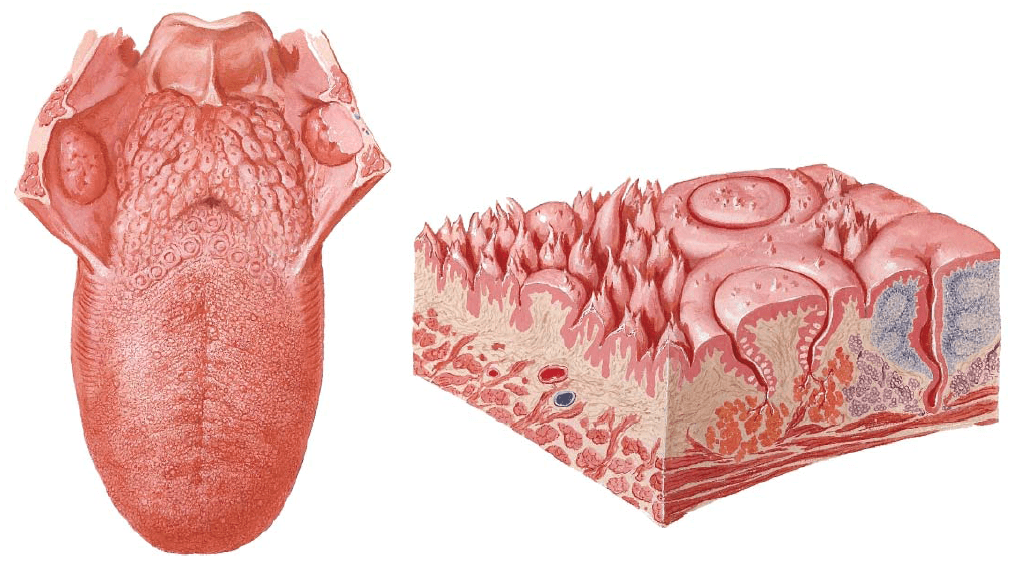
Small projections located on the tongue’s surface where taste buds are located are known as:
papillae
gustatory cells
olfactory epithelium
mucous producing glands
taste receptor cells are called:
taste buds
taste papillae
Meissner's corpuscles
rods & cones
About what percent of taste is smell?
0%
25%
50%
80%
100%

