wayground logo

Free Printable Worksheets

NEW

Font size

S
M
L
XL
Worksheets

Science Enzymes

Total questions: 23

Worksheet time: 18mins

Name
Class
Date
1.
What is a substance called if it speeds up a chemical reaction?
a)
reusable
b)
catalyst
c)
specific
d)
fragile
2.

Enzymes are an example of

a)

Lipids

b)

Carbohydrate

c)

Protein

d)

Nucleic Acid

3.
What is the purpose  of an enzyme?
a)
give permission for the reaction
b)
raise activation energy
c)
speed up reactions
d)
control how many reactions occur
4.
The area that the substrate fits into on the enzyme is called the:
a)
Active Site
b)
Allosteric Site
c)
DiSulphide Bridge
d)
β-Pleated Sheet
5.
Enzymes are considered to be 
a)
Lipids
b)
Carbohydrate
c)
Protein
d)
Nucleic Acid
6.
Where do substrates bind on an enzyme?
a)
voltage-gated channels
b)
surface receptor
c)
calcium channels
d)
active site
7.
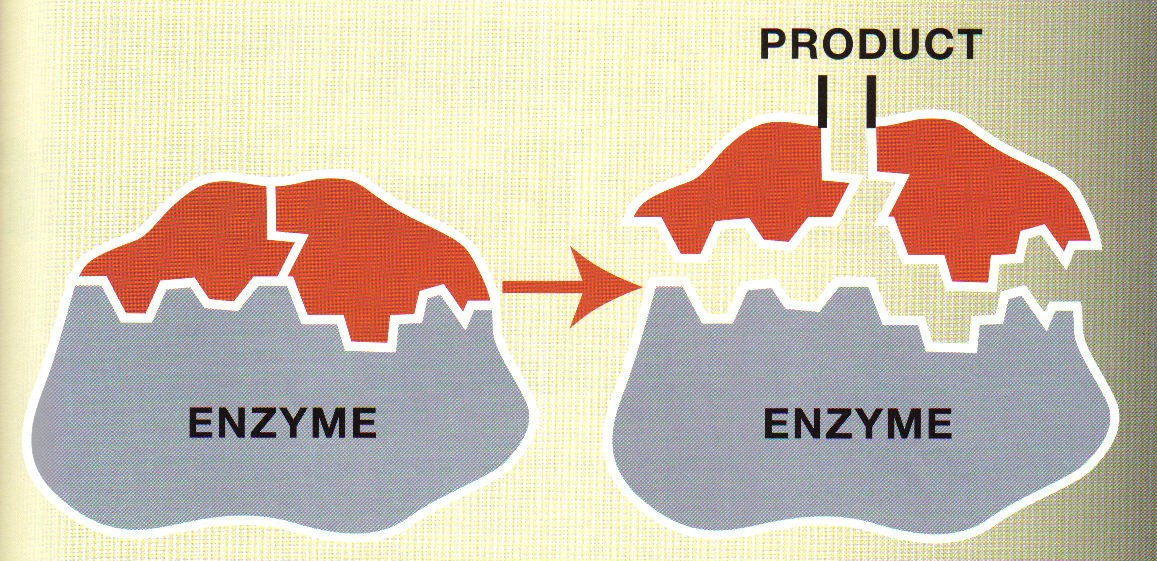
What is structure A?
a)
Substrate
b)
Active site
c)
Enzyme
d)
Products
8.
What 3 letters do enzymes typically end in?
a)
-ose
b)
-ase
c)
-ese
d)
-tic
9.
What makes an enzyme substrate specific?
a)
Size
b)
Shape
c)
Name
d)
Location it is found in
10.
What is structure D?
a)
Substrate
b)
Active site
c)
Enzyme
d)
Products
11.
What is structure C?
a)
Substrate
b)
Active site
c)
Enzyme
d)
Products
12.
What is structure E, F, G?
a)
Substrate
b)
Active site
c)
Enzyme
d)
Products
13.
Which of these do NOT affect enzyme activity?
a)
Temperature
b)
pH
c)
Competitive Inhibitors
d)
Carbohydrates
14.
What are signs that a chemical reaction has taken place?
a)
Color change
b)
Gas bubbles
c)
Solid forming
d)
All of the above
15.

Food is chewed in the mouth and mixed with _________?

a)

the liver

b)

gastric juices

c)

saliva

d)

bile

16.

Food travels down the __________ into the stomach.

a)

small intestine

b)

gallbladder

c)

oesophagus

d)

stomach

17.

Food leaves the stomach and travels to the ___________.

a)

small intestine

b)

large intestine

c)

mouth

d)

liver

18.

Waste foods are separated from solids and liquids in the __________________.

a)

small intestine

b)

large intestine

c)

liver

d)

stomach

19.

_________ are absorbed into the blood.

a)

saliva

b)

gastric juices

c)

bile

d)

nutrients

20.

Which organ produces bile, a power gastric juice used to break down fats.

a)

the liver

b)

the gallbladder

c)

the heart

d)

the pancreas

21.

How much saliva do we produce in each day?

a)

about a gallon

b)

about 2 liters

c)

about 1 liter

d)

about 20 ml

22.

What does your tongue do?

a)

It produces insulin.

b)

It produces bile.

c)

nothing

d)

It moves food around your mouth.

23.

The mouth, teeth, and tongue _____ food.

a)

chew

b)

digest

c)

stomach