wayground logo

Free Printable Worksheets

NEW

Font size

S
M
L
XL
Worksheets

Chemistry Semester Review (Friday DLD)

Total questions: 70

Worksheet time: 53mins

Name
Class
Date
1.

What is a representation of an ion?

a)

Li

b)

Na-22

c)

O-2

2.

What charge does an atom have when it GAINS electrons?

a)

Positive

b)

Negative

c)

Neutral

3.

What is the mass number of bromine?

a)

35

b)

45

c)

80

d)

79.904

4.

How many neutrons does this bromine atom have?

a)

35

b)

45

c)

80

5.

What type of atom is this?

a)

Neutral atom

b)

Cation

c)

Anion

d)

Isotope

6.

What two particles determine the mass number?

a)

Protons and electrons

b)

Electrons and neutrons

c)

Protons and neutrons

7.

What type of atom is this?

a)

Normal Atom

b)

Cation

c)

Anion

d)

Isotope

8.

What is the mass number of this Neon atom?

a)

10

b)

11

c)

21

d)

20

9.

How many electrons does this magnesium ion have?

a)

24

b)

12

c)

10

d)

14

10.

What does it change in an ion?

a)

The number of electrons

b)

The number of protons

c)

The number of neutrons

11.

What is the representation of an isotope?

a)

N-3

b)

Al+3

c)

Si

d)

P-33

12.

How many neutrons does this Neon atom have?

a)

21

b)

11

c)

10

d)

12

13.

What happens to this atom?

a)

It LOSES electrons

b)

It GAINS electrons

c)

It GAINS protons

d)

It LOSES protons

14.

What is the atomic number of this element?

a)

12

b)

24

c)

23

15.

What type of atom is element C?

a)

Normal atom

b)

Ion

c)

Isotope

16.

What is the mass number of this element?

a)

12

b)

24

c)

23

d)

11

17.
What is the charge on a lithium atom that looses 1 electron?
a)
+1
b)
0
c)
-1
d)
-2
18.
Is the element shown in this image an ion, isotope or normal atom?
a)
atom
b)
isotope
c)
cation (+ ion)
d)
anion (- ion)
19.
What is the net charge on the element shown above? 
(Calcium - atomic number 20)
a)
cation +1 charge
b)
cation +2 charge
c)
anion -1 charge
d)
anion -2 charge
20.
What element is this?  What is the mass number of this atom?
a)
sodium, 23
b)
magnesium, 23
c)
magnesium, 12
d)
sodium, 11
21.
Elements which are shiny, conduct electricity and heat are called
a)
metal
b)
nonmetal
c)
metalloid
d)
nonexistent
22.
If an atom had the same properties as fluorine (F), it would probably be located in
a)
period 1.
b)
period 2.
c)
group 2.
d)
group 17.
23.
Atoms with similar properties are most likely located...
a)
in the same period.
b)
in the same group.
c)
in different periods.
d)
to the right and left of each other.
24.
Group Name and Number for Neon
a)
Alkaline Earth Metals 2 or 2A
b)
Noble Gases 18 or 8A
c)
Halogens 17 or 7A
d)
Alkali Metals 1 or 1A
25.
Which of these is a property of metals?
a)
It's malleable
b)
It can't conduct electricity
c)
They are used in food
d)
It's very brittle
26.
Which of these grouping of elements could have the characteristic of brittle?
a)
Metal
b)
Nonmetal
27.
Which of the following is a good conductor of heat?
a)
Metal
b)
Nonmetal
c)
Metalloid
28.
Some characteristics of a metal are that it is malleable and ductile.
a)
TRUE
b)
FALSE
29.
If a material can easily be drawn into the shape of a wire, it is
a)
Ductile
b)
Magnetic
c)
Malleable
d)
Reactive
30.
Iron is a good conductor, malleable and magnetic. What type of element is Iron? 
a)
Metal
b)
Nonmetal
c)
Metalloid
d)
Pretty
31.
Which element is a metalloid?
a)
Titanium
b)
Selenium
c)
Potassium
d)
Polonium
32.
Molten compound conducts electricity.
a)
ionic compound
b)
covalent compound
33.
Molten compound does NOT conduct electricity.
a)
ionic compound
b)
covalent compound
34.
Have a high m.p. (1000°C-3000°C)
a)
ionic compounds
b)
covalent compounds
35.
Have a low m.p. (< 200°C)
a)
ionic compounds
b)
covalent compounds
36.
When dissolved in water, the solution is a good conductor of electricity.
a)
ionic compounds
b)
covalent compounds
37.
When dissolved in water, the solution does NOT conduct electricity.
a)
ionic compounds
b)
covalent compounds
38.
forms ions in solution
a)
ionic compounds
b)
covalent compounds
39.
electrolytes
a)
ionic compounds
b)
covalent compounds
40.
nonelectrolytes
a)
ionic compounds
b)
covalent compounds
41.

Is the following compound ionic or covalent?

LiBr

a)

Ionic

b)

Covalent

42.

Is the following compound ionic or covalent?

PBr5

a)

Ionic

b)

Covalent

43.

Is the following compound ionic or covalent?

A material with a high melting point

a)

Ionic

b)

Covalent

44.

Is the following compound ionic or covalent?

A material that has a low boiling point

a)

Ionic

b)

Covalent

45.

Is the following compound ionic or covalent?

Cl2

a)

Ionic

b)

Covalent

46.

Is the following compound ionic or covalent?

Cu(NO3)2

a)

Ionic

b)

Covalent

47.

Is the following compound ionic or covalent?

Ag2O

a)

Ionic

b)

Covalent

48.

Is the following compound ionic or covalent?

A material that LOSES and GAINS electrons

a)

Ionic

b)

Covalent

49.

Is the following compound ionic or covalent?

A material that contains two nonmetals

a)

Ionic

b)

Covalent

50.

Is the following compound ionic or covalent?

A material that contains a metal and a nonmetal

a)

Ionic

b)

Covalent

51.

Which of the following is TRUE about ionic compounds?

a)

They have low melting and boiling points.

b)

They can conduct electricity in the solid state.

c)

They are stronger than covalent bonds.

d)

They are usually formed from 2 metals.

52.

Which of the following is NOT TRUE about covalent compounds?

a)

They have low melting and boiling points.

b)

They are formed from 2 nonmetals.

c)

They can conduct electricity when dissolved in water (aqueous).

53.

LiBr is called

a)

lithium bromine

b)

lithium (I) bromine

c)

lithium bromide

d)

lithuim (I) bromide

54.

The name of FeCl₂ is

a)

iron chloride

b)

iron (II) chloride

c)

iron (I) chloride

d)

iron dichloride

55.
A covalent compound made of one sulfur and two oxygen atoms would be named
a)
sulfur dioxide.
b)
sulfur oxide.
c)
disulfur oxide.
d)
sulfide oxygen.
56.
The covalent compound N2O5 would be named
a)
nitrogen oxide.
b)
dinitrogen oxide.
c)
nitrogen pentoxide.
d)
dinitrogen pentoxide.
57.
The chemical formula for an ionic compound of potassium and oxygen is
a)
KO.
b)
K2O.
c)
K2O2.
d)
KO2.
58.
The chemical formula for an ionic compound of aluminum and chlorine is
a)
AlCl.
b)
ClAl.
c)
AlCl3.
d)
Al3Cl.
59.
What is the correct formula for the compound, lithium oxide?
a)
LiO
b)
Li2O
c)
LiO2
d)
Li2O2
60.
Name the following ionic compound: BeCl2
a)
beryllium chlorine
b)
beryllium II chloride
c)
beryllium chloride
d)
beryllium dichloride
61.
From the following ionic compounds, choose the name-formula pair that is not correctly matched.
a)
sodium sulfide  Na2S
b)
ammonium nitrate 
NH4NO3
c)
sodium sulfate 
Na2SO3
d)
calcium oxide  CaO
62.
 Fill in the blank to balance the chemical equation. 
2KI  +  ____Cl  2KCl  +  I2
a)
1
b)
2
c)
3
d)
4
63.
What coefficient should go in the blank space to balance the chemical equation? 
2Al  +____  HCl   →    2AlCl3  +  3H2
a)
2
b)
4
c)
3
d)
6
64.
Which of the following reactions is balanced?
a)
2CH4 + O2 -> CO2 + H2O
b)
CH4 + 2O2 -> CO2 + H2O
c)
CH4 + 2O2 -> CO2 + 2H2O
d)
None of the chemical equations are balanced.
65.
Which of the following shows the correct way to balance the chemical equation?
Fe + O2 -> Fe2O3
a)
4Fe + 3O2 -> 2Fe2O3
b)
2 Fe + 3O2 -> Fe2O6
c)
4 Fe + O6 -> 2Fe2O3
d)
None of the options are correctly balanced.
66.
The Law of Conservation of matter states that the total amount of matter ______________ after it undergoes change.
a)
disappears
b)
stays the same
c)
weighs less
d)
explodes
67.
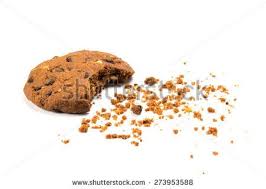
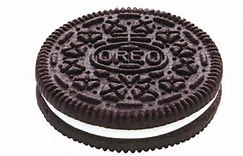
An oreo cookie weighs 20 grams.  It gets crushed into crumbs for a recipe.  How much do its crumbs weigh?
a)
15 grams
b)
25 grams
c)
20 grams
68.
What is the Law of Conservation of mass?
a)
Mass is created in a chemical reaction
b)
Mass is created in a physical change
c)
New chemicals formed from a chemical reaction have a larger overall mass than the original reactants
d)
Mass is never created or destroyed
69.
What tool might a scientist use to demonstrate the Law of Conservation of Matter?
a)
ruler
b)
beaker
c)
thermometer
d)
balance scale
70.

Mrs. Roth's tea cup and hot tea weigh 100 grams. She stirs in 10 grams of sugar. How much is the total amount of matter in Mrs. Roth's tea cup and tea now?

a)

100 grams

b)

110 grams

c)

90 grams