wayground logo

Free Printable Worksheets

Font size

S
M
L
XL
Worksheets

APES - Energy

Total questions: 50

Worksheet time: 2hrs 40mins

Name
Class
Date
1.

Which fuel contains the most SULFUR?

a)

wood

b)

oil

c)

natural gas

d)

coal

2.

Type of fuel source that causes DEFORESTATION

a)

Solar energy

b)

Nuclear fission

c)

Geothermal

d)

Biomass

3.

Which of the following 2 use PASSIVE solar energy?

a)

south-facing room with windows

b)

solar oven

c)

solar panels

d)

photovoltaic cells

4.

Law holding perpetrator liable for clean-up of hazardous waste

a)

RCRA

b)

CERCLA

c)

CWA

d)

ANWR

5.

Select the 2 main sources of RENEWABLE energy in the US

a)

wind energy

b)

solar energy

c)

hydroelectric energy

d)

geothermal energy

e)

biomass energy

6.

Fuel with the GREATEST net-energy potential

a)

petroleum

b)

nuclear energy

c)

natural gas

d)

coal

7.
How does biomass reduce our carbon footprint by producing less CO2 than fossil fuels?
a)
Plants absorb the same amount of CO2 that is released when it is burned.
b)
Plants remove CO2 from the atmosphere and put it permanently into the ground.
c)
Biomass filters CO2 to make it more environmentally stable.
d)
Biomass doesn't release any CO2 when burned.
8.
Which of the following energy sources has the lowest negative environmental impacts?
a)
Biomass
b)
Nuclear
c)
Natural Gas
d)
Solar
9.
Heating and cooling buildings by exchange with shallow groundwater systems is considered a form of ___ energy.  
a)
geothermal
b)
solar
c)
kinetic
d)
potential
10.
What is a possible downside to hydroelectric energy?
a)
generates high levels of pollution 
b)
high startup cost
c)
low functional lifespan
d)
high operation and maintenance cost 
11.
Put the items below in correct sequence for the generation of electricity using the wind
1 – generator converts mechanical energy into electrical energy
2 – wind turns the wind turbine blade
3 – the gear box transfers mechanical energy to the generator
4 – electricity is transferred to the grid
a)
1-2-3-4
b)
2-1-3-4
c)
2-3-1-4
d)
2-4-3-1
12.
Most of the developing countries in the world depend on _______ for their main source of energy.
a)
renewable sources
b)
nuclear
c)
biomass (including wood, manure, etc)
d)
coal
13.
Ultimately, all biofuels are ________, because they are the result of ________.
a)
geological; sedimentation
b)
solar; photosynthesis 
c)
inefficient; decomposition by microorganisms
d)
synthetic; chemical manipulation of hydrocarbons
14.
According to the second law of thermodynamics, whenever one form of energy is transformed into another,
a)
all of the energy is put to work
b)
all of the energy is converted into a less usable form, like heat
c)
some of the energy is converted to a less usable form, like heat
d)
50% of the energy is put to work, the rest is lost as heat
15.
These types of power plants are primarily responsible for acid deposition (including acid rain)
a)
natural gas
b)
petroleum
c)
coal
d)
nuclear
16.
Nuclear energy generates ________ waste instead of _____________.
a)
radioactive, air pollutants
b)
air pollutants, ash
c)
CO2, uranium ore
d)
radioactive, uranium ore
17.
If Canada has a population of 35 million people and the annual consumption of petroleum in Canada is 12 barrels per capita, the total annual consumption is closest to 
a)
420 million
b)
420 billion
c)
5.4 billion
d)
540 million
18.
high level radioactive waste would be ____________. low level radioactive waste would be ___________.
a)
uranium ore, carbon 
b)
exhaust produced from the plant, spent fuel rods
c)
spent fuel rods, exposed clothing
d)
exposed clothing, spent fuel rods
19.
what is the earliest stage of coal? (this has the least amount of energy and is the youngest)
a)
peat
b)
lignite
c)
bituminous
d)
anthracite
20.
which of these FOSSIL FUELS burns the cleanest?
a)
coal
b)
natural gas
c)
motor oil
d)
petroleum
21.
All of the following would increase global greenhouse gas emissions EXCEPT
a)
increasing the number of cars
b)
use natural gas instead of hydroelectric 
c)
replace coal power plants with solar energy
d)
reduce the number of nuclear power plants
22.
which of the following is a pollutant from burning coal
a)
sulfur dioxide
b)
nitrogen oxide
c)
particulate matter
d)
all of these
23.
Most oil in the US is used
a)
in power plants
b)
for transportation
c)
in cooking
d)
as supplements for human and animal health
24.
One gallon of fuel produces 5 lbs of CO2. Two cars drive 100 miles each. The first gets 10 MPG. The second gets 25 MPG. How much LESS CO2 is produced by the second car?
a)
10 pounds
b)
50 pounds
c)
30 pounds 
d)
15 pounds
25.
Which region would have the greatest potential for solar technology?
a)
10 degrees north latitude
b)
40 degrees south latitude
c)
35 degrees north latitude
d)
50 degrees south latitude
26.
in most power plants what is the heat energy used for?
a)
to create steam which turns turbines
b)
to directly power the generator
c)
the heat is transmitted through the electrical grid into homes
d)
nuclear fission which then creates a chain reaction
27.

Nuclear power plants rely on which of the following reactions to generate energy?

a)

Fusion

b)

Half-life

c)

Fission

d)

Fusion or fission

28.
This is an example of...
a)
Fission  reaction
b)
Fusion reaction
c)
Decomposition reaction
d)
Combustion
29.
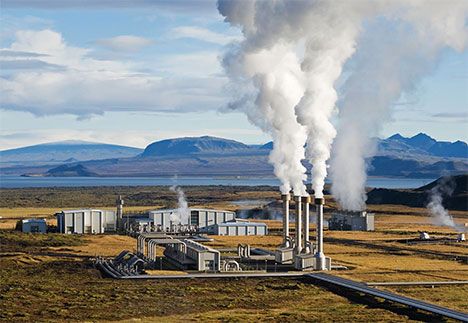
Which type of power plant is this?
a)
Coal Power Plant
b)
Nuclear Power Plant
c)
Solar Power Plant
d)
Hydroelectric Power Plant
30.

Nuclear power uses ____ for fuel.

a)

steel

b)

coal

c)

uranium

d)

hydrogen

31.

The time needed for half of a radioactive sample to decay is called its __________.

a)

decay period

b)

period

c)

transmutation time

d)

half-life

32.

Three Mile Island differed from Chernobyl and Fukushima because...

a)

It wasn't a complete meltdown

b)

The core melted down

c)

Radiation was released

d)

Many people died

33.

Which of the following is considered the worst nuclear disaster ever?

a)

The Chernobyl Nuclear Power Plant Disaster

b)

The Fukushima Daiichi Nuclear Disaster

c)

The Three Mile Island Partial Meltdown

d)

The bombings of Nagasaki and Hiroshima

34.

Which below is considered biomass energy?

a)

charcoal

b)

manure

c)

ethanol

d)

wood

e)

all of these

35.

The country that is the largest producer of oil is

a)

United States

b)

China

c)

Saudi Arabia

d)

Venezula

e)

Japan

36.

A radioactive isotope has a half life of 20 years and a radioactivity level of 40 curies. How many years will it take for the radioactivity level to become 2.5 curies?

a)

10 years

b)

20 years

c)

40 years

d)

80 years

e)

1,200 years

37.

A disadvantage of wind energy is

a)

high efficiency

b)

visual pollution

c)

no CO2 emissions

d)

methane production

e)

can be located at sea

38.

Why is nuclear energy considered non-renewable?

a)

Uranium is a finite energy resource

b)

It requires fossil fuels to build nuclear power plants

c)

Nuclear power causes thermal pollution

d)

Nuclear power releases water vapor into the atmosphere

39.

Which fossil fuel releases the LEAST amount of pollutants into the atmosphere?

a)

Coal

b)

Oil

c)

Natural Gas

40.

Which of the following are potentially negative environmental impacts from fracking?

a)

Groundwater contamination

b)

Release of methane into the atmosphere

c)

Thermal pollution of nearby rivers

d)

Acid mine drainage

41.

The half-life of Zn-71 is 2.4 minutes. If you had 100.0 g at the beginning, how many grams would be left after 7.2 minutes has elapsed?

42.

Which of the following is a potentially negative impact of hydrogen fuel cells?

a)

Hydrogen fuel is created with the use of fossil fuels

b)

Increased water vapor in the atmosphere

c)

Reduction in water sources worldwide to create hydrogen fuel

d)

Release of carbon dioxide from hydrogen-powered vehicles

43.

Which location would be best to build a wind farm?

a)

Along a wetland where birds migrate to

b)

Amongst houses in a neighborhood

c)

Near caves where bats roost

d)

In an agricultural area on farmland

44.
Which is NOT an example of biomass?
a)
wood
b)
crop leftovers (the part of the plant that isn't consumed)
c)
manure and/or trash
d)
petroleum
45.
The world gets MOST of their energy through all of the following sources EXCEPT
a)
natural gas
b)
coal
c)
hydroelectric
d)
oil
46.
Why is solar energy considered renewable energy?
a)
It's cheaper than fossil fuels
b)
The sun's energy would not run out for billions of years
c)
Solar energy recharges batteries
d)
All of them
47.
Heat transferred from beneath the surface of Earth and used to produce energy for human use is...
a)
Hydropower
b)
Wind Energy
c)
Geothermal Energy
d)
Solar Energy
48.

A home is built with clear glass panels that allow sunlight to pass through. This is an example of

a)

Active solar

b)

Passive solar

c)

Parabolic collector

d)

Photovoltaic Cells

49.
How does biomass reduce our carbon footprint by producing less CO2 than fossil fuels?
a)
Plants absorb the same amount of CO2 that is released when it is burned.
b)
Plants remove CO2 from the atmosphere and put it permanently into the ground.
c)
Biomass filters CO2 to make it more environmentally stable.
d)
Biomass doesn't release any CO2 when burned.
50.

Which renewable energy does not require spinning a turbine? (a)  

Choose from the below words
hydroelectric
wind
tidal
photovoltaic cells