wayground logo

Free Printable Worksheets

Font size

S
M
L
XL
Worksheets

Calculus memory

Total questions: 43

Worksheet time: 20mins

Name
Class
Date
1.
a)
b)
c)
2.
a)
b)
c)
d)
3.
a)
b)
c)
d)
4.
a)
b)
c)
5.
a)
b)
c)
6.
a)
b)
c)
7.
a)
b)
c)
d)
8.

 duu=\int\frac{du}{u}=  

a)

 lnu +C\ln\left|u\right|\ +C  

b)

 uo+Cu^o+C  

c)

 eu+Ce^u+C  

d)

 12u2+C\frac{1}{2}u^2+C  

9.

 cosudu\int\cos udu  

a)

 sinu+C\sin u+C  

b)

 sinu+C-\sin u+C  

c)

 12cos2u + C\frac{1}{2}\cos^2u\ +\ C  

d)

 cos(2u)+C\cos\left(2u\right)+C  

10.

 undu=\int u^ndu=  

a)

 lnu+C\ln u+C  

b)

 un+1+Cu^{n+1}+C  

c)

 un+1n+1+C\frac{u^{n+1}}{n+1}+C  

d)

 un1+Cu^{n-1}+C  

11.

 ddx(c)=\frac{\text{d}}{\text{d}x}\left(c\right)=  

a)

 11  

b)

 cc  

c)

 00  

d)

 cxcx  

12.

Derivative of xn

a)

xn+1/(n + 1)

b)

xn+1/(n + 1) + C

c)

n xn-1

d)

n xn-1 + C

13.
What is the derivative of y=f(x)/g(x)?
a)
[f'(x)g(x)-g'(x)f(x)]/[g2(x)]
b)
[g(x)f'(x)+f(x)g'(x)]/[g2(x)]
c)
[g(x)f'(x)-f(x)g'(x)]/[f2(x)]
d)
f'(x)/g'(x)
14.
What is the derivative of y=f(g(x))?
a)
y'=f'(g(x))*g(x)
b)
y'=f'(g(x))*g'(x)
c)
y'=f(g'(x))*g(x)
d)
y'=f'(x)*g'(x)
15.

The acceleration function is the first derivative of...

a)

position

b)

velocity

c)

calculus

d)

particle motion

16.

The formula limh0 (f(x+h)f(x)h)\lim_{h\rightarrow0\ }\left(\frac{f\left(x+h\right)-f\left(x\right)}{h}\right)   represents...

a)

The first derivative

b)

The bane of my existance

c)

A limit of a function

d)

End behavior model

17.

If f'(x) = 0 what does that imply about the x value?

a)

x is a critical point

b)

That the limit does not exist.

c)

The function is changing from increasing to decreasing

d)

x is a point of inflection

18.

If (a,b) is a local minimum, then what will be true about f'(a)?

a)

It's positive

b)

It's negative

c)

It's zero

d)

Cannot be determined

19.
 If (a,b) is a local minimum, then what will be true about f''(a)?
a)
It's postive
b)
It's negative
c)
It's zero
d)
Cannot be determined
20.
a)

Mean Value theorem

b)

Instantaneous Rate of Change

c)

Intermediate Value Theorem

d)

Fundamental Theorem of Calculus

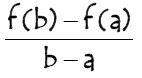
21.
a)

Mean Value Theorem

b)

Instantaneous Rate of Change

c)

Average Rate of Change

d)

Average Value

22.
a)

Average Rate of Change

b)

Instantaneous Rate of Change

c)

Mean Value Theorem

d)

Average Value

23.
a)
position
b)
acceleration
c)
total distance
d)
speed
24.
a)
position
b)
velocity
c)
acceleration
d)
total distance
25.
a)
position 
b)
velocity
c)
acceleration
d)
total distance
26.

Describe an integral of a function from a to b

a)

The total accumulation if the absolute value of f(x)

b)

The net accumulation of f(x) from a to b

c)

Area between f(x) and the x-axis if f(x)>0

d)

All of the above

e)

Only #2 and #3

27.
Does the graph represent an exponential growth or an exponential decay function?
a)
Exponential Growth
b)
Exponential Decay
28.
Is the graph exponential growth or decay?
a)
Exponential growth
b)
Exponential decay
29.
The carrying capacity of a population growing logistically is the largest population the environment can support.
a)
True
b)
False
30.

The parameter k in the logistic function
  f(x)=c1+aektf\left(x\right)=\frac{c}{1+ae^{-kt}}  affects the rate at which the curve approaches its asymptote c.

a)

True

b)

False

31.

 f(x)=451+15e1.3xf\left(x\right)=\frac{45}{1+15e^{-1.3x}}  Using the given function, what is the horizontal asymptote(s)

a)

y=0

b)

y=45

c)

y=15

d)

y=0 and y=45

32.

What is the value of c (Carrying Capacity)  in the logistic function  y=751+24e0.125xy=\frac{75}{1+24e^{-0.125x}}  ?

a)

 c=24c=24  

b)

 c=0.125c=0.125  

c)

 c=25c=25  

d)

 c=75c=75  

33.
What is csc(x) equivalent to?
a)
1/sin(x)
b)
1/tan(x)
c)
sin(x)
d)
1/cos(x)
34.
Please select the correct solution
a)
csc2 x
b)
cot2 x
c)
sin2 x
d)
sec2 x
35.
Please select the correct solution 
cos 2 x + sin x=  
a)
1
b)
csc 2 x + sec 2 x
c)
sinx
d)
1 - sinx
36.
*
a)
csc2 x
b)
cot2 x
c)
sin2 x
d)
sec2 x
37.
*
a)
csc2 x
b)
sec2 x
c)
cot2 x
d)
tan2 x
38.

1 - sin2x =

a)

cos2x

b)

cos2x+1

c)

csc2x

d)

tan2x

39.

Check all the identities of  Cos(2θ)Cos\left(2\theta\right)   

a)

 sin2θcos2θ\sin^2\theta-\cos^2\theta  

b)

 cos2θsin2θ\cos^2\theta-\sin^2\theta  

c)

 1+tan2θ1+\tan^2\theta  

d)

 12sin2θ1-2\sin^2\theta  

e)

 2cos2θ12\cos^2\theta-1  

40.
Determine the integral rule of the given expression:
a)
-1/ + C
b)
lnx + C
c)
ln|x| + C
d)
-1/x + C
41.
Determine the integral rule of the given expression:
a)
-cos2x + C
b)
tanx + C
c)
ln|tanxsecx| + C
d)
⅓sec³x + C
42.
Determine the integral rule of the given expression:
a)
secxtanx + C
b)
sec2x + C
c)
½tan²x + C
d)
ln|sec x| + C 
43.

Choose formulas representing Volumes of rotations

a)

V=2πabxf(x)dx (washer)V=2\pi\int_a^bxf\left(x\right)dx\ \left(washer\right)

b)

V=2πabxf(x)dx (shell)V=2\pi\int_a^bxf\left(x\right)dx\ \left(shell\right)

c)

V=πabf(x)2dx (Disc)V=\pi\int_a^bf\left(x\right)^2dx\ \left(Disc\right)

d)

V=πab xf(x)2dx (Disc)V=\pi\int_a^b\ xf\left(x\right)^2dx\ \ \left(Disc\right)

e)

V=πabf(x)2g(x)2dxV=\pi\int_a^bf\left(x\right)^2-g\left(x\right)^2dx Washer