wayground logo

Free Printable Worksheets

NEW

Font size

S
M
L
XL
Worksheets

EA6: Homework week ending 4.5.20

Total questions: 75

Worksheet time: 38mins
Name
Class
Date
1.
What is the transfer of heat by movement of liquids or gases?
a)
Radiation
b)
Convection
c)
Conduction
d)
Heat
2.
What is a transfer of heat energy by electromagnetic waves?
a)
Radiation
b)
Convection
c)
Conduction
d)
Heat
3.
What is the measurement of the average kinetic energy of a substance?
a)
Kinetic energy
b)
Temperature
c)
Thermal energy
d)
Potential energy
4.
What is a substance that does NOT conduct heat well?
a)
Conductor
b)
Insulator
c)
Convector
d)
Radiator
5.
What is a substance that DOES conduct heat well?
a)
Conductor
b)
Insulator
c)
Convector
d)
Radiator
6.
What is the total amount of kinetic energy in a substance?
a)
Potential energy
b)
Kinetic energy
c)
Thermal energy
d)
Temperature
7.
What is the transfer of kinetic energy from one substance to another?
a)
Heat
b)
Energy
c)
Thermal energy
d)
Temperature
8.
What is the energy of the movement of particles in a substance?
a)
Potential energy
b)
Kinetic energy
c)
Thermal energy
d)
Temperature
9.
Hot coffee is stirred with a spoon; the spoon gets hot due to
a)
conduction
b)
convection
c)
radiation
10.
Near the ceiling of a room the air is warmer; the warm air rises because of
a)
conduction
b)
convection
c)
radiation
11.
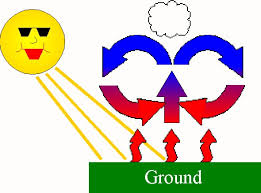
Warm air over the beach rises while cooler, dense air from the ocean rushes in due to
a)
conduction
b)
convection
c)
radiation
12.
Warm air rises and the cool air sinks demonstrates this type of heat transfer. 
a)
conduction
b)
convection
c)
radiation
d)
Insolation 
13.
Ironing a shirt is an example of...
a)
condensation
b)
conduction
c)
convection
d)
radiation
14.
The way the heat is moving from the hot coffee is called...
a)
convection
b)
radiation
c)
insulation
d)
conduction
15.
Carole owns a two story house with a heating and cooling unit on each floor. In the winter she mostly uses the downstairs unit because the volume of warm air __________ and __________ warming the whole house through __________.
a)
expands, rises, convection
b)
expands, sinks, conduction
c)
contracts, rises, conversion
d)
contracts, sinks, contraption
16.
A toaster toasting bread is an example of 
a)
condensation
b)
conductio
c)
convection
d)
radiation
17.
In how many ways does heat move around the universe?
a)
One
b)
Three
c)
Two
d)
Ten
18.
A microwave oven uses which of the following to heat foods.
a)
Microwave elves
b)
Radiation
c)
Convection
d)
Conduction
19.
In heat transfer, heat always flows from the _______________ substance to the _______________ substance.
a)
Hotter to colder
b)
Colder to hotter
c)
Hotter to hotter
d)
Colder to colder
20.
The type of heat transfer that happens through direct contact of molecules or particles with each other is ___________________.
a)
Convection
b)
Conduction
c)
Radiation
d)
insulation.
21.
Which statement is true?
a)
The quicker a molecule moves, the colder it is.
b)
The slower a molecule moves, the warmer it is.
c)
The quicker a molecule moves, the warmer it is
d)
The movement on molecule don�t affect its temperature
22.
Which of the following is the best example of conduction?
a)
A light bulb warming a lampshade
b)
An egg cooking in a frying pan
c)
Water boiling in a pot
d)
Gases circulating in the atmosphere
23.
What kind of heat transfer happens when the sun is heating your body?
a)
Conduction
b)
Radiation
c)
Convection
d)
Density
24.
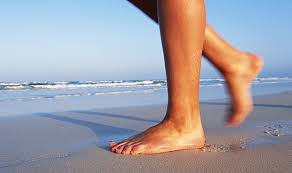
Walking on the warm sand sand with your bare feet demonstrates this type of heat transfer. 
a)
conduction
b)
convection
c)
radiation
25.
You get sunburned due to __________ from the sun.
a)
conduction
b)
convection
c)
radiation
26.

Boiling Water

a)

Conduction

b)

Convection

c)

Radiation

27.

Curling Iron

a)

Conduction

b)

Convection

c)

Radiation

28.

Weather Patterns

a)

Conduction

b)

Convection

c)

Radiation

29.

Sun Bathing

a)

Conduction

b)

Convection

c)

Radiation

30.

Mantle

a)

Conduction

b)

Convection

c)

Radiation

31.

Lava Lamp

a)

Conduction

b)

Convection

c)

Radiation

32.

Heat Lamps

a)

Conduction

b)

Convection

c)

Radiation

33.

Stir frying vegetables is an example of

a)

Convection

b)

Conduction

c)

Radiation

34.

A spoon in a cup of hot soup becomes warmer

a)

Convection

b)

Conduction

c)

Radiation

35.

Grilling Hamburgers OVER a charcoal flame.

a)

Convection

b)

Conduction

c)

Radiation

36.

A hot air balloon rises because of

a)

Convection

b)

Conduction

c)

Radiation

37.

You feel the heat from a campfire

a)

Convection

b)

Conduction

c)

Radiation

38.

A raw egg begins to fry as it hits a heated frying pan

a)

Convection

b)

Conduction

c)

Radiation

39.
What are the three states of matter?
a)
solid, volume, mass
b)
density, volume, mass
c)
solid, liquid, gas
d)
density, gas, volume
40.
Something that takes up space and has mass.
a)
volume
b)
matter
c)
mass
d)
density
41.
A state of matter that has a definite volume and shape.
a)
solid
b)
liquid
c)
gas
d)
matter
42.
The amount of space something takes up
a)
density
b)
volume
c)
mass
d)
matter
43.
A watermelon has more matter than a grape, so it has more
a)
mass
b)
eat
c)
solid
d)
greater
44.
Solids have a definite _______________.
a)
smell
b)
shape
c)
picture
d)
sound
45.
Liquid matter takes the shape of _______.
a)
a gas
b)
water
c)
a pet
d)
Its container
46.
Water in its solid form is _____________.
a)
a vapor
b)
ice
c)
a liquid
d)
boiling
47.
The amount of matter something contains is its ______________.
a)
gas
b)
solid
c)
weight
d)
mass
48.

What covers 70% of the earth's surface

a)

Ocean

b)

Rivers

c)

Lakes

d)

Ponds

49.

Which word descries how deep the water is in a given location

a)

Ocean Trench

b)

Sediment

c)

Depth

d)

Abyssal Plain

50.

Amount of salt found in water

a)

Photic Zone

b)

Gulf Stream

c)

Photosynthesis

d)

Salinity

51.

The amount of mass per unit of volume

a)

Density

b)

Metric Units

c)

Mass

d)

Volume

52.
Which is a non-living part of an ecosystem?
a)
Sunlight
b)
Air
c)
Water
d)
All of these
53.

There are _____ oceans in the world

a)

4

b)

6

c)

5

d)

9

54.
As oceans become deeper, the water pressure ___________________.
a)
increases
b)
decreases
c)
stays the same
55.

The Largest Ocean is ________________?

a)

Pacific

b)

Atlantic

c)

Indian

d)

Arctic

56.

When a mountain sticks out of the water an ______________ is formed.

a)

Volcano

b)

land mass

c)

big rock

d)

Island

57.
In which ecosystem would I find the following things:
1. A lot of mammals
2. Usually warm weather
3. Very few trees
4. Fertile soil
a)
grassland
b)
forest
c)
ocean
d)
estuary
58.
The following picture is an example of...
a)
population
b)
community
c)
microorganism
d)
predator
59.
Which list contains only biotic factors of an ecosystem?
a)
deer, microorganisms, and roses
b)
rocks, water, and sand
c)
rainbow trout, water, and microorganisms
d)
oak trees, dirt, and grass
60.
Which one would be considered  an abiotic factor of an ecosystem?
a)
a wave in the ocean
b)
a fish jumping out of the water
c)
a horse running across the field
d)
an elm tree
61.
Which word describes the relationships (or interactions) between living and nonliving things?
a)
ecosystem
b)
population
c)
community
d)
habitat
62.
Any living thing is the definition for what vocabulary word?
a)
Organism
b)
Population 
c)
Limiting factor
d)
Communtiy
63.
Which of the following ecosystems is AQUATIC?
a)
Wetlands
b)
Oceans
c)
Forests
64.
What does the term "aquatic" mean?
a)
Water-based ecosystem
b)
Land-based ecosystem
65.
Which of the following describes the leaves in a coniferous forest?
a)
circular-shaped
b)
square-shaped
c)
pointy with needles
66.
In a temperate forest, the trees are...
a)
many different colors almost Fall-like
b)
all one main color
c)
very sticky and humid
67.
All of the nonliving parts of an ecosystem are __________.
a)
biotic
b)
biology
c)
abiotic
d)
biography
68.
What are biotic factors?
a)
dead things
b)
living things/ organisms
c)
weather
d)
plants
69.

A snake is a ____________ part of an ecosystem.

a)

loud

b)

biotic

c)

temper-bionic

d)

figure of speech

70.

A DECOMPOSER

a)

Makes its own energy

b)

Eats other organisms

c)

Eats DEAD organisms

d)

Makes salad

71.

A PLANT is a

a)

Producer

b)

Consumer

c)

Decomposer

d)

Abiotic

72.

A MUSHROOM is a

a)

Herbivore

b)

Carnivore

c)

Omnivore

d)

Decomposer

73.
A straight line or organisms that show one organism eating or using the energy from only the previous organism is called a
a)
Food Web
b)
Food Chain
c)
Decomposer
d)
Ecosystem
74.
Any organism that lives by hunting upon other organisms is called a 
a)
predator
b)
prey
c)
decomposer
d)
producer
75.
An animal hunted or seized for food, especially by a carnivorous animal, is called
a)
ecosystem
b)
consumer
c)
prey
d)
decomposer