Wayground logo

Free Printable Worksheets

Font size

S
M
L
XL
Worksheets

Earth, Moon, Sun - 3/31

Total questions: 50

Worksheet time: 3590secs

Name
Class
Date
1.
Why does the Moon shine Brightly at night?
a)
It is like the Sun.
b)
It reflects light from the Sun.
c)
Light from the stars make it look like it is shining.
d)
Light from Earth make it shine.
2.
There are always 24 hrs in each day. Why is this true?
a)
Earth always rotates at the same speed.
b)
The Sun is at the center of the Solar System.
c)
The Moon always has the same side facing Earth.
d)
Earth tilts on its axis.
3.
The Northern Hemisphere is tilted toward the Sun during the months of June,July, and August.What season would be occurring?
a)
Fall
b)
Winter
c)
Spring
d)
Summer
4.
Which of the following best explains why the Sun appears to move across the sky every day?
a)
The Sun orbits around Earth.
b)
Earth rotates on its axis.
c)
Earth orbits around the Sun.
d)
The Sun rotates on its axis.
5.
Seasons are caused by the _______.
a)
position of the Moon.
b)
distance of Earth from the Sun.
c)
tilt of the Earth as it moves around the Sun.
d)
Sun getting warmer and colder.
6.
The time between today's sunrise and tomorrow's sunrise would be about__________. 
a)
12 hours
b)
24 hours
c)
36 hours
d)
48 hours
7.
The time it takes Earth to make one revolution around the Sun is about one _____________.
a)
season
b)
day
c)
month
d)
year
8.

Sun appears to rise in the__________and set in the ________.

a)

West, East

b)

East, East

c)

East, West

d)

West, West

9.

At what time of the day will a shadow of a lamppost be the shortest?

a)

8 AM

b)

12 PM

c)

6 PM

d)

2 AM

10.

Which force keeps the planets orbiting the Sun?

a)

Gravity

b)

Magnetism

c)

Wind

d)

Electricity

11.
When the Northern Hemisphere is pointing towards the sun, what season is the Southern Hemisphere?
a)
Winter
b)
Spring
c)
Fall
d)
Summer
12.
What is the Earth's tilt in degrees?
a)
25.3 degrees
b)
32.5 degrees
c)
28.5 degrees
d)
23.5 degrees
13.
Day and night is caused by the _____________ of earth on its axis.
a)
revolution
b)
orbit
c)
rotation
14.
How long does it take the Earth to make one REVOLUTION around the Sun?
a)
12 hours
b)
24 hours
c)
365 1/4 days
d)
29.5 days
15.
As the Earth travels around the sun, this tilt causes different areas of the Earth’s surface to get different amounts of daylight at different times of the year. The angle of the Sun’s rays to the surface also causes areas to have more or less of the Sun’s energy. This causes the ________.
a)
months
b)
day and night
c)
seasons
d)
years
16.
Sunlight hits Earth’s surface most directly at the _______. Because of this, this particular area doesn't experience seasons.
a)
north pole
b)
south pole
c)
equator
17.
On December 25, what season will the Southern Hemisphere be in?
a)
Spring
b)
Summer
c)
Winter
d)
Fall
18.
On June 23, what season will the Northern hemisphere be in?
a)
Summer
b)
Winter
c)
Spring
d)
Fall
19.
What season is this?
a)
Winter
b)
Fall
c)
Spring
d)
Summer
20.
What season is this?
a)
Winter
b)
Summer
c)
Fall
d)
Spring
21.
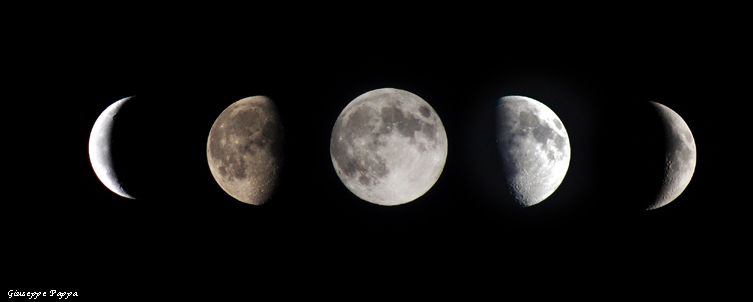
A solar eclipse only happens during a ________ moon.
a)
New
b)
Cresent
c)
Gibbous
d)
Full
22.
Which of the following is not true about a total solar eclipse?
a)
It can be viewed once a year from every spot on earth
b)
It is dangerous to look at without the proper device
c)
When it happens, the moon blocks all of the sun except the corona
d)
You must be within the moon's umbra to see it
23.
A solar eclipse only occurs during which moon phase?
a)
1st Quarter
b)
New Moon
c)
Full Moon
d)
3rd Quarter
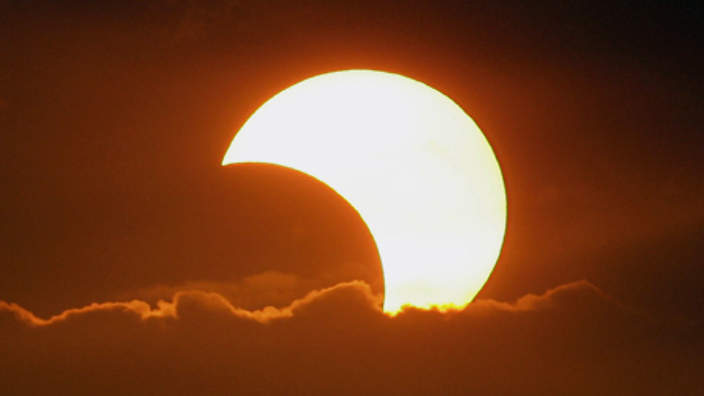
24.
a)
solar eclipse
b)
lunar eclipse
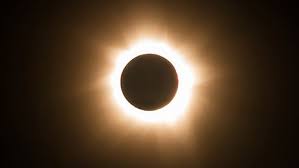
25.
This image is an example of
a)
Lunar Eclipse
b)
Full Moon
c)
New Moon
d)
Solar Eclipse
26.
In order to have an eclipse, the Moon, Sun and Earth have to be?
a)
Below each other
b)
Above each other
c)
In alignment
27.
Which type of eclipse occurs when the Moon comes directly between Earth and the Sun?
a)
Lunar eclipse
b)
Solar eclipse
28.
a)
solar eclipse
b)
lunar eclipse
29.
During a solar eclipse...
a)
The sun is blocked by the moon
b)
The Earth is blocked moon
c)
The moon is blocked by the sun
d)
You are blocked
30.
An eclipse in space is when....
a)
one object passes through the shadow of another object.
b)
two shadows collide.
c)
the moon is in the waxing crescent phase.
d)
the Sun and Moon are side by side.
31.
What is the order during a lunar eclipse
a)
sun, moon, earth
b)
sun, earth, moon
32.
When Earth moves into the moon’s shadow, a solar eclipse takes place. Which phase represents the appearance of the moon during a solar eclipse?
a)
full moon
b)
new moon
c)
third quarter
d)
waning gibbous
33.
Which type of eclipse occurs when the Earth comes directly between the Sun and Moon?
a)
Lunar eclipse
b)
Solar eclipse
34.
A lunar eclipse can occur only during the _________________.
a)
Full moon
b)
New moon
c)
Waxing moon
35.

Choose two answers:


Which two philosophers/scientists believed and proved that the Sun is in the center of the universe?

a)

Ptolemy

b)

Copernicus

c)

Aristotle

d)

Galileo

36.

promoted by Aristotle and Ptolemy - the sun and the planets orbit Earth

a)

rotation

b)

Heliocentric Model

c)

equator

d)

Geocentric Model

37.

promoted by Nicolaus Copernicus and proven by Galileo - the planets orbit the sun

a)

rotation

b)

Heliocentric Model

c)

equator

d)

Geocentric Model

38.

Choose two answers:


Which two philosophers/scientists believed and proved that the Sun is in the center of the universe?

a)

Ptolemy

b)

Copernicus

c)

Aristotle

d)

Galileo

39.

Which picture means "geo"?

a)
b)
c)
d)
40.

Which picture shows "-centric"?

a)
b)
c)
d)
41.
What happens when the area in which you live tilts away from the sun?
a)
It is summer.
b)
It is spring.
c)
It is winter.
d)
It is fall.
42.
In winter, the axis of the earth is pointed away or toward the sun?
a)
towards
b)
up
c)
down
d)
away
43.
In summer, the axis of the earth is pointed away or toward the sun?
a)
towards
b)
up
c)
down
d)
away
44.
In spring/summer, the axis of the earth is pointed away or toward the sun?
a)
towards
b)
Neither away or toward
c)
away
45.
Why is it warmer in the summer?
a)
Closer to the sun
b)
More direct light from Earth's tilt
c)
Stronger light from the sun
d)
Earth spins slower
46.
What season is depicted in the picture?
a)
summer
b)
winter
c)
fall 
d)
spring
47.
What season is depicted in the picture?
a)
summer
b)
winter
c)
fall 
d)
spring
48.
Which season is taking place in the Southern Hemisphere in Position 1?
a)
Winter
b)
Spring
c)
Summer
d)
Fall
49.
Which season is taking place in the Northern Hemisphere in Position 4?
a)
Winter
b)
Spring
c)
Summer
d)
Fall
50.
Which season is taking place in the Northern Hemisphere in Position 3?
a)
Winter
b)
Spring
c)
Summer
d)
Fall